







Why Choose Our Best-Selling Vertical Blind Alternatives?
- Proven Customer Favorites
- Most Purchased
- Styles That Work in Any Room
- Popular Choices
- Cordless & Child-Safe Options

Shop With Confidence
At Blinds Chalet, every order is backed by our commitment to trusted quality and customer satisfaction. Our custom-sized Vertical Blind Alternatives are made to fit your windows perfectly, and with our easy installation guides, updating your home has never been simpler. Shop with confidence knowing you’re getting blinds designed for style, durability, and a flawless fit.
Traditional vertical blinds remain a practical window treatment for sliding glass doors and wide windows, but they are no longer the only option. Homeowners looking for a different appearance, improved insulation, stronger room darkening or easier coordination with other window treatments can choose from several modern alternatives.
Among the most popular vertical blind alternatives are panel track blinds, roller shades, vertical cellular shades and drapery panels. Each solves a different problem. Panel tracks emphasize modern side-to-side operation, roller shades provide a clean minimalist appearance, vertical cellular shades add insulation, and drapery brings softness and decorative flexibility.
There is no single alternative that is best for every home. The right choice depends on the size of the opening, how frequently the door is used, your privacy and light-control requirements, available stacking space and the style of the room.
If you want a detailed head-to-head evaluation of the different products, start with our Vertical Blind Alternatives: Comparing Your Best Options guide. For help narrowing the choices based on your specific needs, read How to Choose Vertical Blind Alternatives.
What Are the Most Popular Alternatives to Vertical Blinds?
Panel track blinds, roller shades, vertical cellular shades and drapery are among the most commonly considered replacements for traditional vertical blinds. Updated vertical blinds also remain worth considering when the existing operating style works well but you want newer materials, colors or fabrics.
| Window Treatment | Why Homeowners Consider It | Best For | Primary Limitation |
|---|---|---|---|
| Panel Track Blinds | Modern appearance and side-to-side operation | Sliding doors and wide windows | Panels require stacking space |
| Roller Shades | Minimal design and extensive fabric selection | Modern rooms and divided sliding doors | Active-door shade usually needs to be raised |
| Vertical Cellular Shades | Insulation and compact side-to-side operation | Energy-efficient sliding-door applications | Fewer decorative fabric choices than some alternatives |
| Drapery Panels | Decorative flexibility and broad coverage | Bedrooms, living rooms and layered treatments | Fabric stack can require substantial wall space |
| Updated Vertical Blinds | Familiar operation and adjustable light control | Frequently used patio doors | Individual vanes may not provide the desired contemporary look |
1. Panel Track Blinds: A Popular Modern Replacement
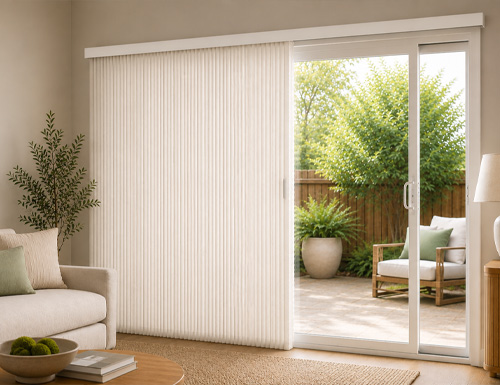
Panel track blinds are one of the most direct alternatives to traditional vertical blinds because they retain the convenient side-to-side operating direction while replacing narrow vanes with wide fabric panels.
The panels hang from a multi-channel track and overlap as they move across the opening. This makes panel tracks particularly well suited to sliding glass doors, patio doors, oversized windows and even room dividers.
Why Homeowners Choose Panel Track Blinds
- Wide panels create a contemporary appearance.
- Side-to-side operation works naturally with sliding doors.
- Large expanses of glass can be covered with one coordinated system.
- Available fabrics may include decorative, light-filtering, solar and room-darkening materials.
- Panel materials can often coordinate with shades on nearby windows.
What to Consider Before Choosing Panel Tracks
The primary consideration is stacking space. When the treatment is opened, the wide panels overlap and gather along one or both sides. Depending on the track configuration, the stack may cover part of the glass.
Panel overlap can also affect privacy and room darkening. An opaque fabric may block visibility through the material, but small gaps can still occur where adjacent panels overlap.
For a more detailed evaluation, read the pros and cons of panel track blinds.
2. Roller Shades: A Popular Minimalist Alternative
Roller shades are a popular alternative when homeowners want a cleaner and less visually dominant treatment. Instead of stacking along the side of the opening, the fabric rolls above the window or door.
Roller shades also provide one of the broadest selections of fabric types. Depending on the product, you can choose solar screen, light-filtering, decorative, room-darkening or blackout materials.
Why Homeowners Choose Roller Shades
- Simple, modern appearance.
- Fabric rolls compactly above the opening.
- Wide selection of colors, textures and opacities.
- Multiple shades can provide independent control over different sections of glass.
- Motorized operation is available on many roller shade products.
- Easy to coordinate with roller shades on nearby windows.
What to Consider Before Choosing Roller Shades
The biggest consideration is door access. Roller shades move vertically while a sliding glass door moves horizontally. The shade covering the active door panel generally needs to be raised before someone walks through the doorway.
Multiple roller shades can solve part of this problem by allowing the stationary sections to remain covered while only the active shade is raised. However, separate shades may also create small light and privacy gaps between units.
For a complete explanation of this configuration, read Can Roller Shades Work on Sliding Glass Doors?.
3. Vertical Cellular Shades: A Popular Energy-Efficient Alternative
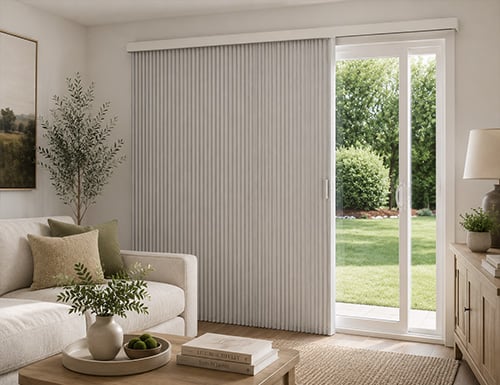
Vertical cellular shades are an especially attractive alternative for homeowners who want the convenience of horizontal operation combined with the insulating characteristics of cellular shade construction.
Instead of individual vertical vanes, the treatment uses honeycomb-shaped fabric that expands across the opening. The cells trap air within the treatment and create an additional insulating layer between the room and the glass.
Why Homeowners Choose Vertical Cellular Shades
- Honeycomb construction helps reduce heat transfer.
- Side-to-side operation is well suited to sliding doors.
- Continuous fabric creates a softer appearance than individual vertical vanes.
- Opaque materials can provide strong privacy.
- Room-darkening fabrics can reduce incoming light.
- They can coordinate visually with horizontal cellular shades on nearby windows.
What to Consider Before Choosing Vertical Cellular Shades
Vertical cellular shades are strongest when insulation and practical sliding-door operation are priorities. They may offer fewer decorative materials than roller shades, panel tracks or drapery, and available configurations can vary based on the size of the opening.
They are particularly worth considering on large glass doors where summer heat, winter heat loss or discomfort near the glass is a concern.
Learn more in our Best Energy-Efficient Alternatives to Vertical Blinds guide.
4. Drapery Panels: A Popular Decorative Alternative
Drapery provides a very different look from vertical blinds. Instead of a structured blind or shade, fabric panels soften the opening and can introduce color, texture and pattern into the room.
Drapery can also provide extensive coverage because the treatment can extend beyond the sides, top and bottom of the glass. With an appropriate lining, it can provide strong privacy and room darkening.
Why Homeowners Choose Drapery
- Large selection of colors, textures and patterns.
- Creates a softer and more decorative appearance.
- Can provide excellent privacy with proper overlap.
- Privacy or blackout liners can improve coverage.
- Fabric can extend beyond the entire opening.
- Can be layered with another shade for additional light control.
What to Consider Before Choosing Drapery
Drapery requires space for the fabric to stack when the treatment is opened. The amount of stacking space depends on the width, fullness and construction of the panels.
For a direct comparison with another popular sliding-door option, read Panel Track Blinds vs. Drapery Panels.
5. Updated Vertical Blinds: Sometimes the Best Alternative Is a Better Vertical Blind
Replacing vertical blinds does not always mean changing to a completely different type of window treatment. Modern vertical blinds remain practical for sliding glass doors because they were specifically designed for large openings and horizontal access.
Newer vertical blinds are available in updated colors, textures, vinyls and fabrics that can create a different appearance from older basic vertical blinds.
Why Homeowners Still Choose Vertical Blinds
- Side-to-side operation is convenient for sliding doors.
- Rotating vanes provide adjustable directional light control.
- The treatment can cover very wide openings.
- Individual vanes can often be replaced if damaged.
- They can provide a relatively compact side stack.
When Another Alternative May Be Better
Consider another treatment when your main goals include increased insulation, eliminating narrow individual vanes, creating a softer fabric appearance or coordinating the door with roller or cellular shades throughout the rest of the room.
You can compare these two approaches in our Panel Track Blinds vs. Vertical Blinds guide.
Most Popular Vertical Blind Alternatives for Sliding Glass Doors
Sliding glass doors require special consideration because the window treatment must cover a large area of glass while still allowing convenient access through the doorway.
For Frequently Used Sliding Doors
Panel track blinds and vertical cellular shades are strong alternatives because they open horizontally. Traditional vertical blinds also remain highly practical when frequent door access is more important than replacing the operating style.
For Occasionally Used Sliding Doors
Roller shades become more appealing when the door is not opened constantly, especially if separate shades can be aligned with the active and stationary glass panels.
For Decorative Sliding Doors
Drapery provides the greatest flexibility when the treatment is intended to become part of the room's overall design.
For additional recommendations by application, read our guide to the best window treatments for sliding glass doors.
Most Popular Alternatives for Privacy
Opaque vertical cellular shades, roller shades and lined drapery are strong choices when nighttime privacy is the primary concern. Panel tracks can also provide very good privacy when opaque fabric is used and the panels overlap sufficiently.
The fabric is only part of the privacy equation. Side gaps, center gaps, panel overlap and mounting position can all create direct sightlines even when the material itself is completely opaque.
Solar screen materials should be selected carefully when nighttime privacy is important because fabrics that provide useful daytime privacy may become much easier to see through after dark.
For a detailed privacy comparison, visit our Best Alternatives to Vertical Blinds for Privacy guide.
Most Popular Alternatives for Blackout and Room Darkening
Blackout roller shades, vertical cellular shades and lined drapery are among the strongest choices when reducing incoming light is a priority.
Remember that blackout describes the ability of a material to block light through the fabric. It does not guarantee a completely dark installation. Light can still enter around the edges of the treatment, between multiple roller shades or through panel overlaps.
Panel tracks can provide substantial room darkening with opaque fabrics, but they are generally better described as room-darkening treatments rather than a solution for eliminating every source of light.
See our Best Vertical Blind Alternatives for Blackout & Room Darkening guide for more detailed recommendations.
Most Popular Energy-Efficient Alternatives
Vertical cellular shades stand out when insulation is one of the main reasons for replacing vertical blinds. Their honeycomb cells trap air and create an insulating layer between the room and a large expanse of glass.
Solar roller shades address a different energy concern by helping reduce direct solar heat and glare. Lined drapery can also provide broad insulating coverage when it extends beyond the edges of the opening.
If energy efficiency is one of your top priorities, compare these approaches in our Best Energy-Efficient Alternatives to Vertical Blinds guide.
Most Popular Modern Alternatives
Panel tracks and roller shades are generally the first options to consider when replacing vertical blinds primarily for a more contemporary appearance.
Panel Tracks for an Architectural Look
Wide overlapping panels emphasize the size of the opening and create clean vertical lines. The treatment remains visually present even when closed.
Roller Shades for a Minimal Look
Roller shades provide simple flat fabric when lowered and roll compactly above the opening when raised. They are especially appealing when you want the treatment to visually disappear when open.
If you are deciding specifically between these two options, review our detailed Vertical Blind Alternatives Expert Advice Center for additional product comparisons and buying guidance.
Choose a Vertical Blind Alternative Based on Your Priority
| Your Priority | Start With | Why |
|---|---|---|
| Frequent Door Access | Panel Track Blinds | Horizontal operation follows the movement of the sliding door. |
| Energy Efficiency | Vertical Cellular Shades | Honeycomb construction creates insulating air pockets. |
| Minimal Appearance | Roller Shades | Fabric rolls above the opening when raised. |
| Decorative Style | Drapery | Offers extensive color, texture and pattern choices. |
| Directional Light Control | Vertical Blinds | Individual vanes can rotate without opening the entire treatment. |
| Nighttime Privacy | Opaque Cellular, Roller or Lined Drapery | Opaque materials prevent direct visibility through the fabric. |
| Strong Room Darkening | Blackout Roller or Cellular Shades | Opaque fabrics block light through the material. |
| Glare and Solar Control | Solar Roller Shades | Screen fabrics can reduce glare and direct solar heat while retaining some view. |
Questions to Ask Before Choosing an Alternative
How Often Is the Door Used?
A window treatment that looks attractive may become frustrating if it must be moved every time someone walks through a heavily used patio door. Frequent use tends to favor horizontally opening treatments.
Where Will the Treatment Go When Open?
Panel tracks, cellular shades and drapery stack along the side of the opening. Roller shades roll above it. Consider whether preserving the side view or maintaining immediate door access matters more.
How Much Privacy Do You Need?
Evaluate nighttime privacy separately from daytime privacy. Opaque fabrics are generally the safer choice when the door faces neighboring homes, sidewalks or other areas where privacy matters after dark.
How Much Light Do You Want to Block?
Solar fabrics preserve some view, light-filtering materials soften daylight, room-darkening fabrics substantially reduce light and blackout fabrics block light through the material itself.
Is Energy Efficiency Important?
If reducing heat transfer is one of the primary goals, vertical cellular shades deserve particular consideration because their cellular construction differs fundamentally from flat fabric panels or individual vanes.
Do You Have Enough Mounting and Stacking Space?
Measure the available depth, wall space, door handles, trim and other obstructions before choosing a treatment. The best-looking option will not perform well if it interferes with the door or does not have adequate space to operate.
The Most Popular Option Is Not Always the Best Option
Popularity can help identify products worth considering, but it should not determine your final choice. A roller shade may provide the appearance you prefer but become inconvenient on a door that is opened dozens of times each day. A panel track may provide excellent access but create a side stack you do not want. A vertical cellular treatment may provide superior insulation but offer fewer decorative choices than drapery.
The best vertical blind alternative is the treatment that solves the specific problems created by your opening while fitting the way the room is actually used.
Before ordering, compare door access, fabric opacity, mounting space, stacking requirements, privacy, light control and insulation rather than choosing solely because a particular style is currently popular.
Expert Guidance from Blinds Chalet
Blinds Chalet has helped homeowners shop for custom window treatments since 2006. Large sliding doors and wide windows require more planning than standard windows because the treatment must balance coverage with practical access to the opening.
In our experience, the most successful replacement begins by identifying why the existing vertical blinds are no longer meeting your needs. If appearance is the main concern, panel tracks or roller shades may provide the change you want. If insulation is the issue, vertical cellular shades deserve stronger consideration. If privacy and room darkening matter most, fabric opacity and installation gaps become especially important.
We also recommend considering the treatment in both its fully closed and fully open positions. Side stacking, overhead rolls, panel overlap, door-handle clearance and active-door access can have just as much impact on long-term satisfaction as the fabric or color you select.
Because available sizes, fabrics and operating systems vary by manufacturer and product, always review the specifications and measuring instructions for the exact treatment you plan to order.
Explore More Vertical Blind Alternative Guides
- Vertical Blind Alternatives Expert Advice Center
- Vertical Blind Alternatives: Comparing Your Best Options
- How to Choose Vertical Blind Alternatives
- Can Roller Shades Work on Sliding Glass Doors?
- Best Alternatives to Vertical Blinds for Privacy
- Best Vertical Blind Alternatives for Blackout & Room Darkening
- Best Energy-Efficient Alternatives to Vertical Blinds
- Panel Track Blinds vs. Vertical Blinds
- Panel Track Blinds vs. Drapery Panels
- Pros and Cons of Panel Track Blinds
When you are ready to compare products, browse our vertical blind alternatives, panel track blinds, roller shades, cellular shades and vertical blinds.
Most Popular Vertical Blind Alternatives FAQs
What are the most popular alternatives to vertical blinds?
Popular alternatives to vertical blinds include panel track blinds, roller shades, vertical cellular shades and drapery. Each provides different benefits for sliding doors and wide windows, including modern style, insulation, privacy, light control and convenient operation.
What is the most modern alternative to vertical blinds?
Panel track blinds and roller shades are two popular modern alternatives. Panel tracks use wide fabric panels that slide horizontally, while roller shades provide a minimalist appearance and roll above the opening when raised.
What is the best alternative to vertical blinds for a sliding glass door?
Panel track blinds and vertical cellular shades are strong choices for frequently used sliding doors because they operate horizontally. Roller shades can also work well when the opening is divided into separate shades and the active shade can be raised independently.
What is the best energy-efficient alternative to vertical blinds?
Vertical cellular shades are one of the strongest options when insulation is the priority. Their honeycomb-shaped cells trap air and create an insulating layer between the room and the glass.
What is the best vertical blind alternative for privacy?
Opaque vertical cellular shades, roller shades and lined drapery can provide strong daytime and nighttime privacy. Panel track blinds can also provide very good privacy when opaque fabric and sufficient panel overlap are used.
What is the best vertical blind alternative for blackout?
Blackout roller shades, room-darkening vertical cellular shades and lined drapery are strong choices for reducing incoming light. Blackout fabric blocks light through the material, but gaps around the treatment can still allow some light into the room.
Are panel track blinds a good replacement for vertical blinds?
Yes. Panel track blinds are one of the most direct replacements for vertical blinds because they retain convenient side-to-side operation while replacing narrow individual vanes with wide fabric panels.
Can roller shades replace vertical blinds on patio doors?
Yes. Roller shades can work on patio and sliding doors, particularly when separate shades are aligned with the individual glass sections. The shade covering the active doorway generally needs to be raised before using the door.
Should I replace old vertical blinds or buy newer vertical blinds?
If you like the side-to-side operation and adjustable light control of vertical blinds, newer vertical blinds may still be the best choice. Consider another treatment when your priorities include improved insulation, a different appearance, broader fabric coverage or coordination with shades elsewhere in the room.