







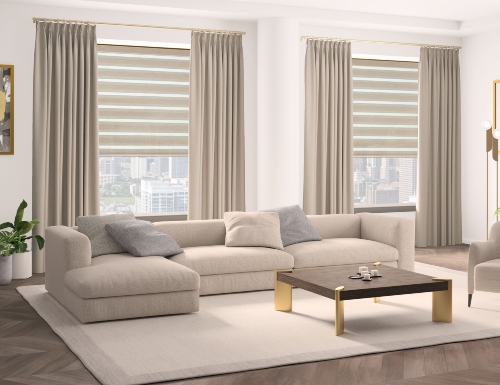

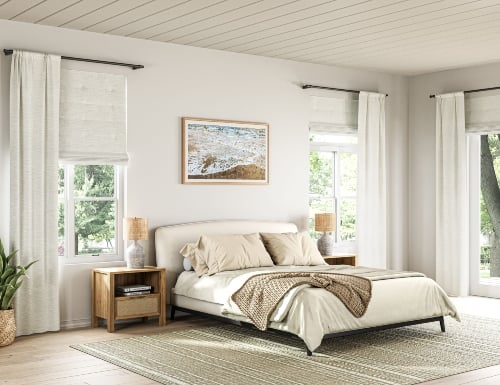
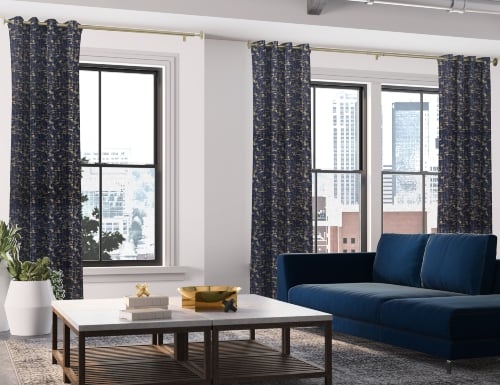
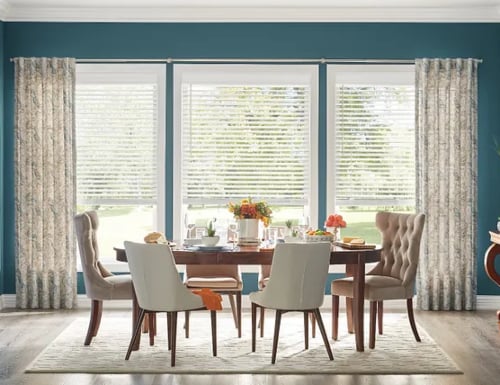
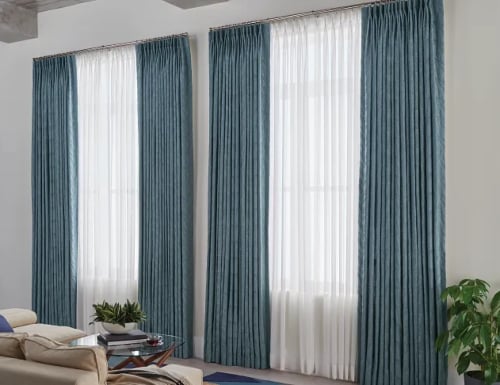
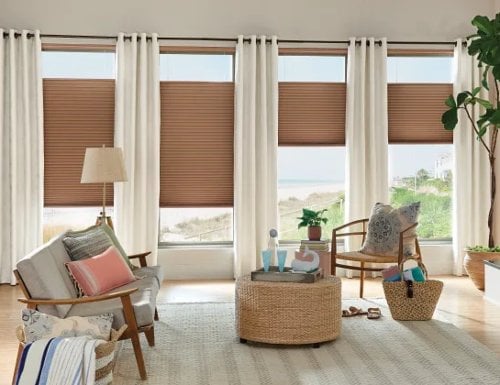
Superior Benefits of Custom Draperies:
- Complete Light Blocking Technology - Eliminate light gaps common with blinds and shades for perfect room darkening
- Energy-Saving Thermal Performance - Reduce heating and cooling costs with our insulating fabric options
- Perfect for Oversized Windows - Ideal solution for wide windows, patio doors, and floor-to-ceiling glass
- Layering Possibilities - Create designer-inspired window treatments by pairing with shades or blinds
- Multiple Lining Options - Choose from standard, blackout, or thermal linings to customize performance
Explore how to layer window coverings.
Find Your Perfect Custom Drapery
Our premium drapery panels come standard with quality liners, but can be upgraded with blackout technology for 100% light elimination or thermal lining for maximum energy efficiency and condensation protection. Selecting our sheer fabric options? We'll craft them without lining to achieve that perfect filtered light effect you desire.
Transform any room with window treatments that combine luxury aesthetics with practical performance, the perfect finishing touch for discerning homeowners.
Custom Drapery Panels - FAQs
What are custom drapery panels and why choose them?
Custom drapery panels are made-to-measure fabric panels tailored to your window size, header style, lining, and hardware. They deliver designer fullness, precise light control, and a polished, room-defining look you can’t get from ready-made curtains.
Which header styles do you offer (pinch pleat, grommet, ripplefold, rod pocket)?
Pleated headers (pinch, Euro, inverted) give tailored folds and work with rings or carriers. Grommet slides smoothly on decorative rods with a modern wave. Ripplefold rides a track for consistent S-curves. Rod pocket is casual and best for stationary panels.
What lining should I choose - privacy, blackout, or interlining?
Privacy linings filter light and protect the face fabric. Blackout blocks most light, improving bedroom darkening. Interlining adds a third layer for body, drape, insulation, and sound softening—great for silks and formal rooms.
How much fullness do I need for drapery panels?
1.5× fullness = crisper lines and budget-friendly yardage. 2× = designer standard with rich folds. 2.5×+ = ultra-luxe volume. Pleated and ripplefold styles build fullness in by design.
How do I measure width correctly, including stack-back and returns?
Measure the rod or track width you want to cover, then add returns (fabric back to the wall) and overlap at the center for two-way draws. For clear view, extend hardware 6–12" past each side for stack-back so panels park off the glass.
How high should I mount the rod and how long should panels be?
Mount rods 4–10" above the window (or near the ceiling) to visually raise the room. Length options: float (½" above floor), kiss (just touching), break (1–2" on the floor), or puddle (4–8" for romance).
Should I order one-way draw or split draw panels—and how many?
Split draw (two panels) meets at center and balances weight. One-way stacks to a single side—great for sliders. Stationary side panels frame the window when blinds or shades do the daily light control.
Can I layer drapery panels with blinds or shades?
Yes—layering adds insulation, sound softening, and style. Use roller, cellular, Roman, or sheer shades for daily control and drapery panels for framing, blackout, and a tailored finish.
Which fabrics work best for custom drapery—solids, linens, velvets, patterns?
Linen/linen blends give relaxed texture; velvet offers luxe weight and room darkening; performance fabrics resist fading and stains; patterns add character—mind the repeat and yardage.
Do I need a decorative rod or a track system—and what about rings or carriers?
Decorative rods suit grommet or ringed pleats. Tracks (corded or motorized) glide easily and can be concealed behind a fascia. Ripplefold uses carriers and snap tape; choose wave fullness (e.g., 80–120%) to set the depth of S-curves.
Will blackout drapery make the room completely dark?
Blackout lining blocks most light through the fabric. For a darker room, add generous side/top overlap, consider returns to the wall, and pair with a shade behind to reduce edge glow.
Are custom drapery panels child-safe?
Choose hand-draw panels, wands, or motorized tracks to avoid loose cords. If using corded traverse rods, install safety tensioners and keep controls out of children’s reach.
How do I care for and clean drapery panels?
Lightly vacuum with a soft brush and spot clean per fabric guidance. Many lined panels are dry-clean only. A garment steamer can relax creases after installation—test on a hidden area first.
Do drapery panels help with noise and energy efficiency?
Yes. Heavier fabrics, blackout linings, and interlining absorb sound and add insulation at the window—helping reduce echoes, drafts, and heat loss/gain.
What about wide windows—will my panels have seams, and how long is production?
Very wide panels may include expertly matched seams to achieve the finished width. Lead times vary by fabric and workroom schedule; custom panels typically deliver within standard made-to-order timeframes.
* Production lead times are only an estimate and does not apply to any colors that are out of stock. Production begins the following business day after ordering. Please allow additional time for shipping.