What Is a Healthy Home?
Healthy Home
Window Treatments
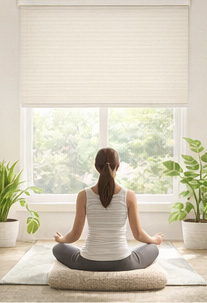
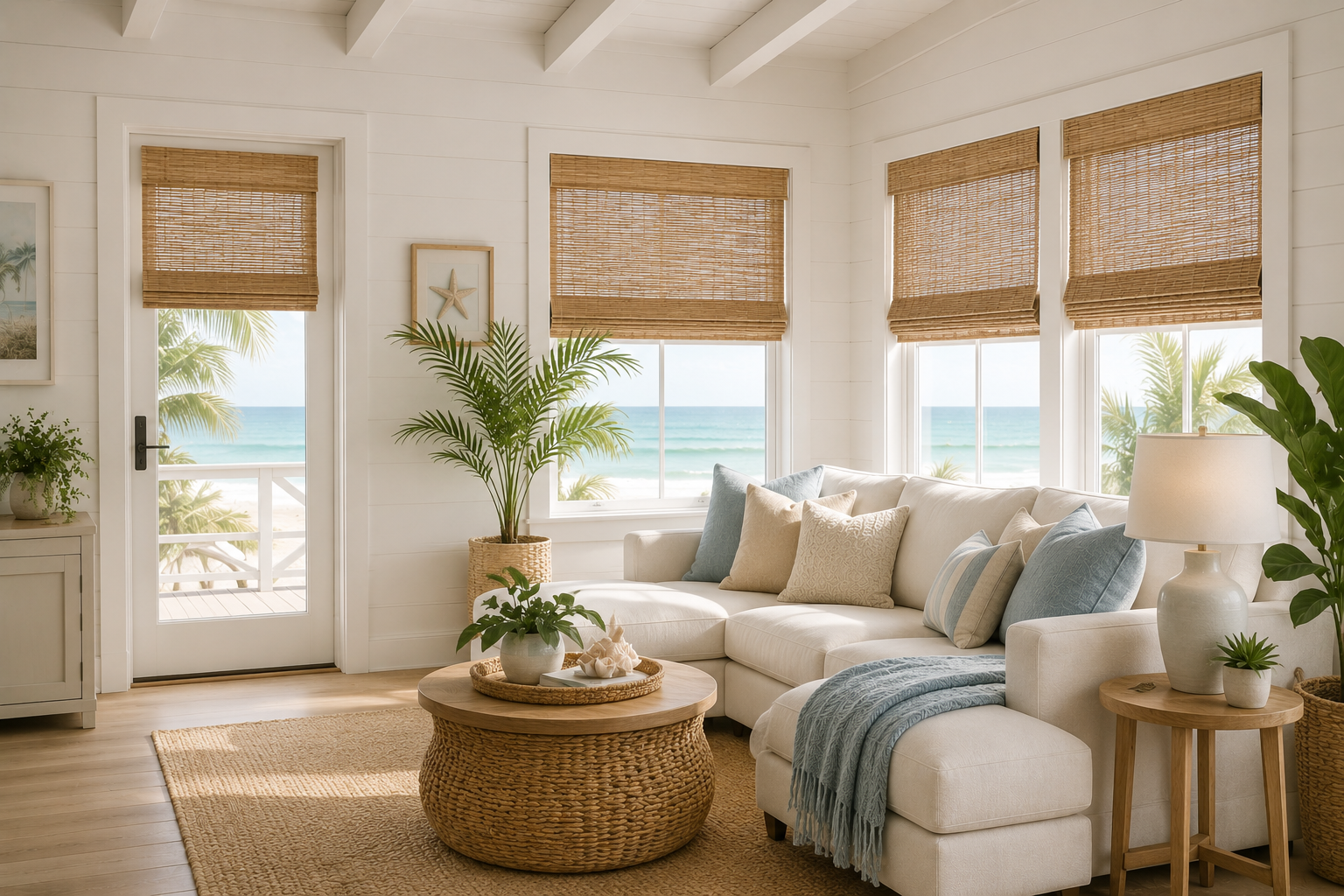
Healthy home window treatments are designed to support a cleaner, more comfortable indoor environment. By choosing products with low chemical emissions, safer materials, and trusted certifications, you can create living spaces that promote better indoor air quality and everyday peace of mind.
Healthier Choices
for Every Room
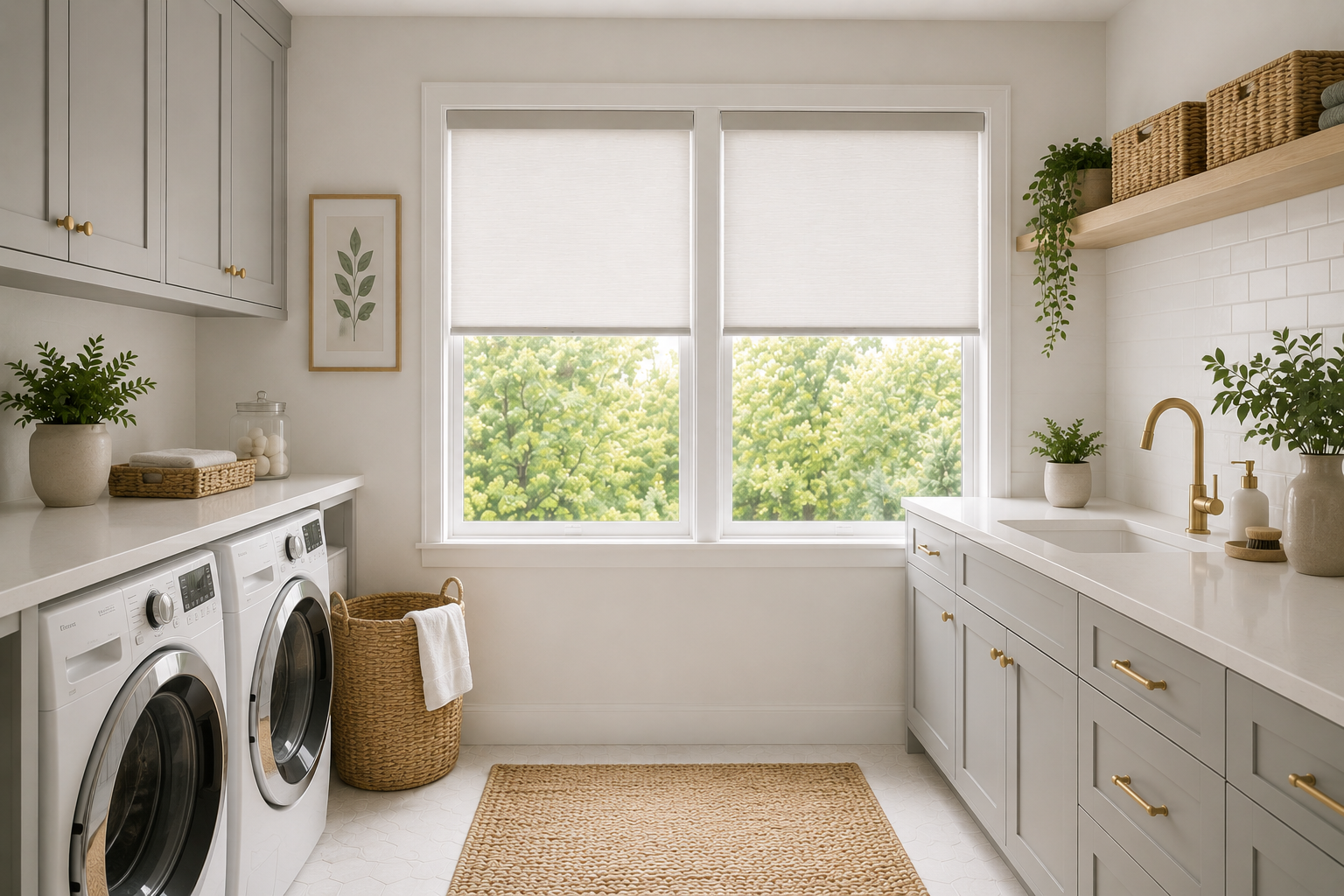
Whether you're furnishing a nursery, bedroom, home office, or the entire house, healthy home window treatments combine beautiful design with features that support everyday wellness. From allergy-friendly materials to cordless operation and easy-to-clean fabrics, it's never been easier to create a home that's as healthy as it is comfortable.
Trusted Certifications for Peace of Mind
Independent certifications make it easier to shop with confidence. Many of our window treatments are available with certifications such as GREENGUARD®, GREENGUARD Gold®, and OEKO-TEX® Standard 100, which verify products have been tested to recognized standards for low emissions or harmful substances.
GreenGuard focuses on low emissions – OEKO-TEX® Standard 100 focuses on non-toxic fabrics.
Why It Matters
Cleaner Indoor Living
Supports healthier indoor environments with lower-emission materials, trusted certifications, and thoughtful product design.
Better for Your Family
Choose window treatments designed with cleaner materials, cordless options, and everyday comfort for every room.
Safer Materials
Look for independently tested products made with materials designed for healthier living spaces.
Browse our expert advice articles below to learn more about styles, features, and how they compare to other window treatments.
Our Healthy Home Window Treatment Resource Center brings together practical buying guides, certification explanations, product comparisons, cleaning advice, and room-specific recommendations. These resources can help you evaluate custom window blinds, custom window shades, and plantation shutters based on the factors that matter most to your household.
No window treatment can make a home healthy by itself, and terms such as “non-toxic,” “chemical-free,” and “eco-friendly” are often used too broadly. Product materials, certifications, manufacturing methods, ventilation, cleaning, moisture control, and overall home conditions all matter. Our goal is to provide clear information so you can compare products without relying on vague marketing claims.
New to Healthy Home Window Treatments? Start Here
Begin with our introductory guides to learn which product details may affect indoor air quality, safety, cleaning, and everyday comfort. These articles explain common certifications, material types, emissions testing, operating systems, and questions to ask before ordering.
Healthy home priorities differ from one household to another. One family may be focused on low chemical emissions, while another may need moisture-resistant products, cordless operation, easy cleaning, or stronger control of dust and allergens. Identifying your main concern will help you narrow the available options.
What Makes a Window Treatment a Healthier Choice?
A healthier window treatment is generally one that fits the needs of the room and household while minimizing unnecessary concerns. Important considerations may include verified low-emission materials, safer operating systems, cleanability, resistance to moisture, durability, and transparent product information.
Look beyond a single marketing phrase. A product may have low emissions but be difficult to clean, or it may be moisture resistant but lack a third-party textile certification. The strongest choice is usually the product that performs well across the factors that matter for the intended room.
Helpful questions include:
- Does the product carry a recognized third-party certification?
- Does the certification apply to the complete product or only one component?
- Are the materials and finishes clearly identified?
- Is the product easy to dust, vacuum, or wipe clean?
- Is the material appropriate for humidity or moisture exposure?
- Is cordless or motorized operation available?
- Are replacement parts and warranty support available?
Understanding Indoor Air Quality and VOCs
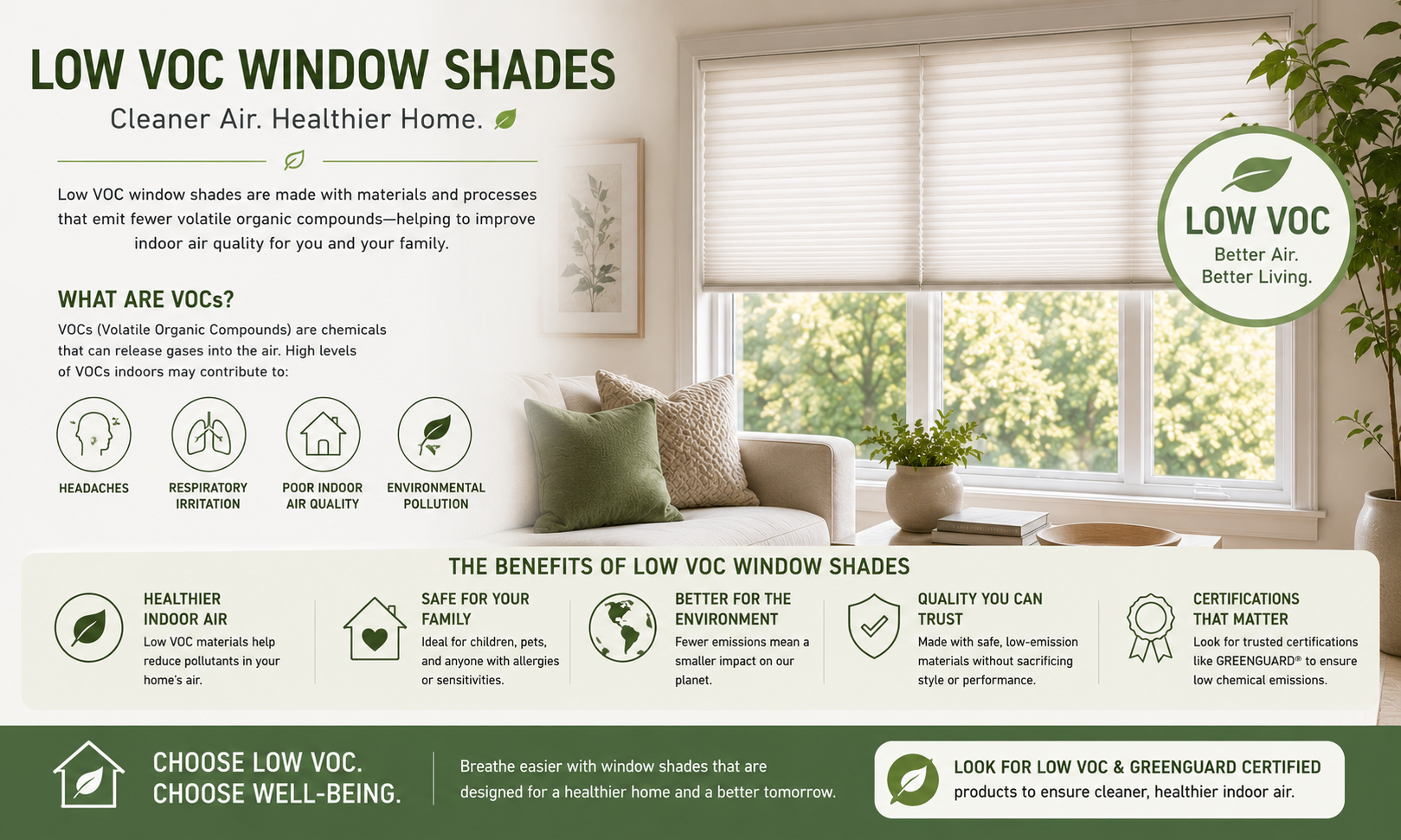
Volatile organic compounds, commonly called VOCs, are chemicals that can be released into indoor air from paints, adhesives, finishes, furnishings, building materials, and household products. Emission levels vary by material, product construction, manufacturing process, age, temperature, and ventilation.
Some window treatments are tested for low chemical emissions through independent certification programs. These certifications can help shoppers compare products, but they do not mean that a product contains no chemicals or that it will be appropriate for every person with sensitivities.
When indoor air quality is a priority, review the exact certification, confirm which product components were tested, and ventilate the room according to the manufacturer’s recommendations after installation.
GREENGUARD-Certified Window Treatments
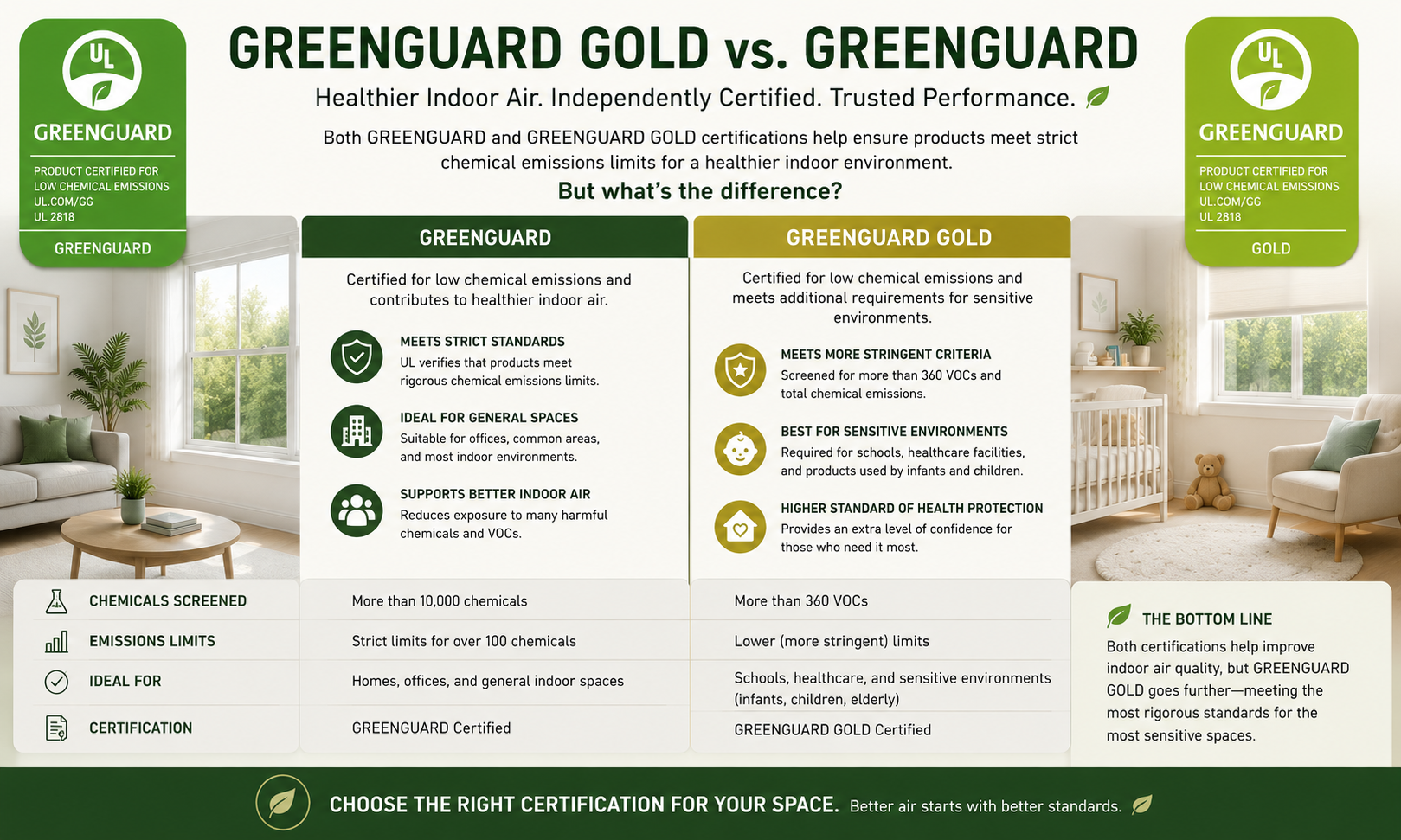
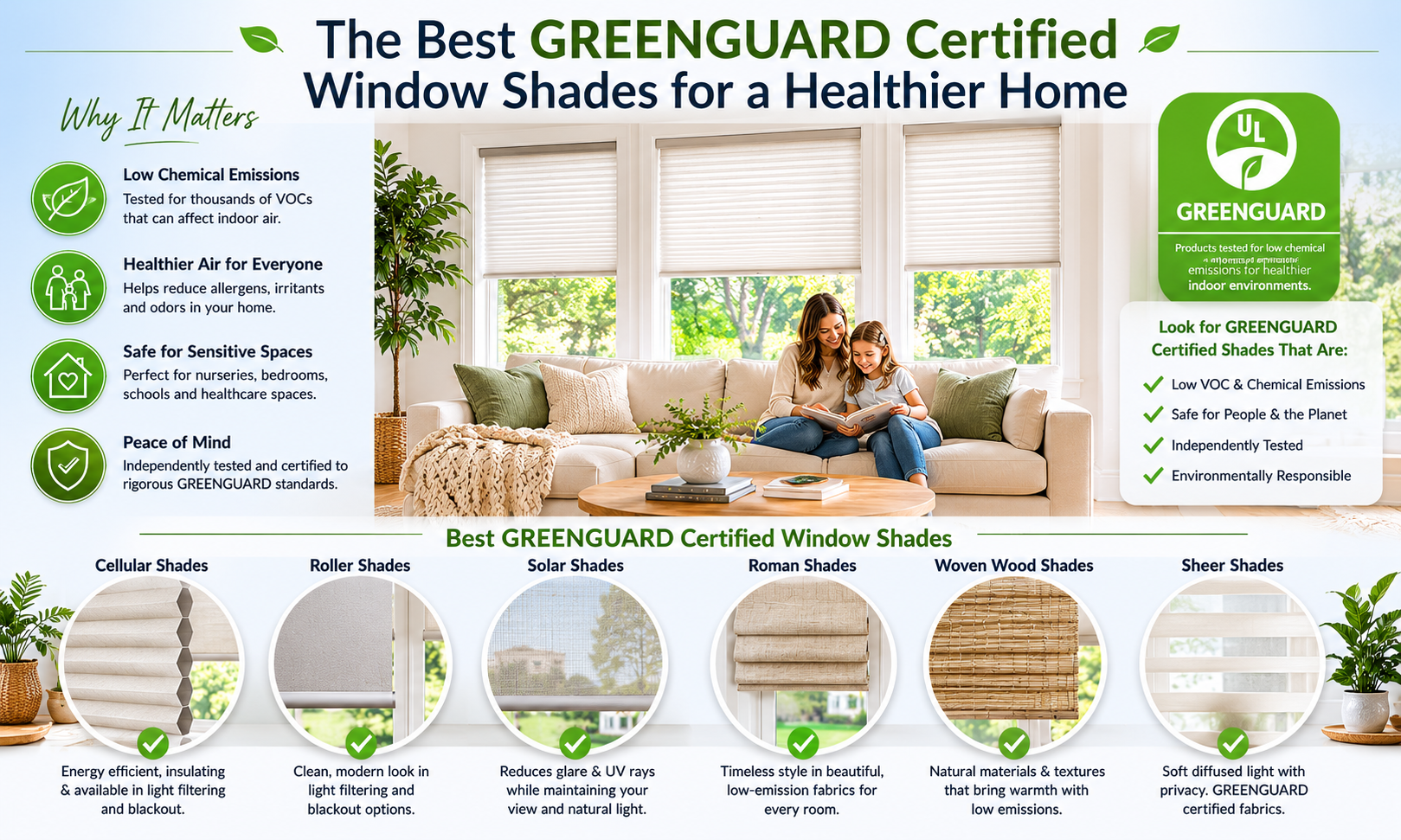
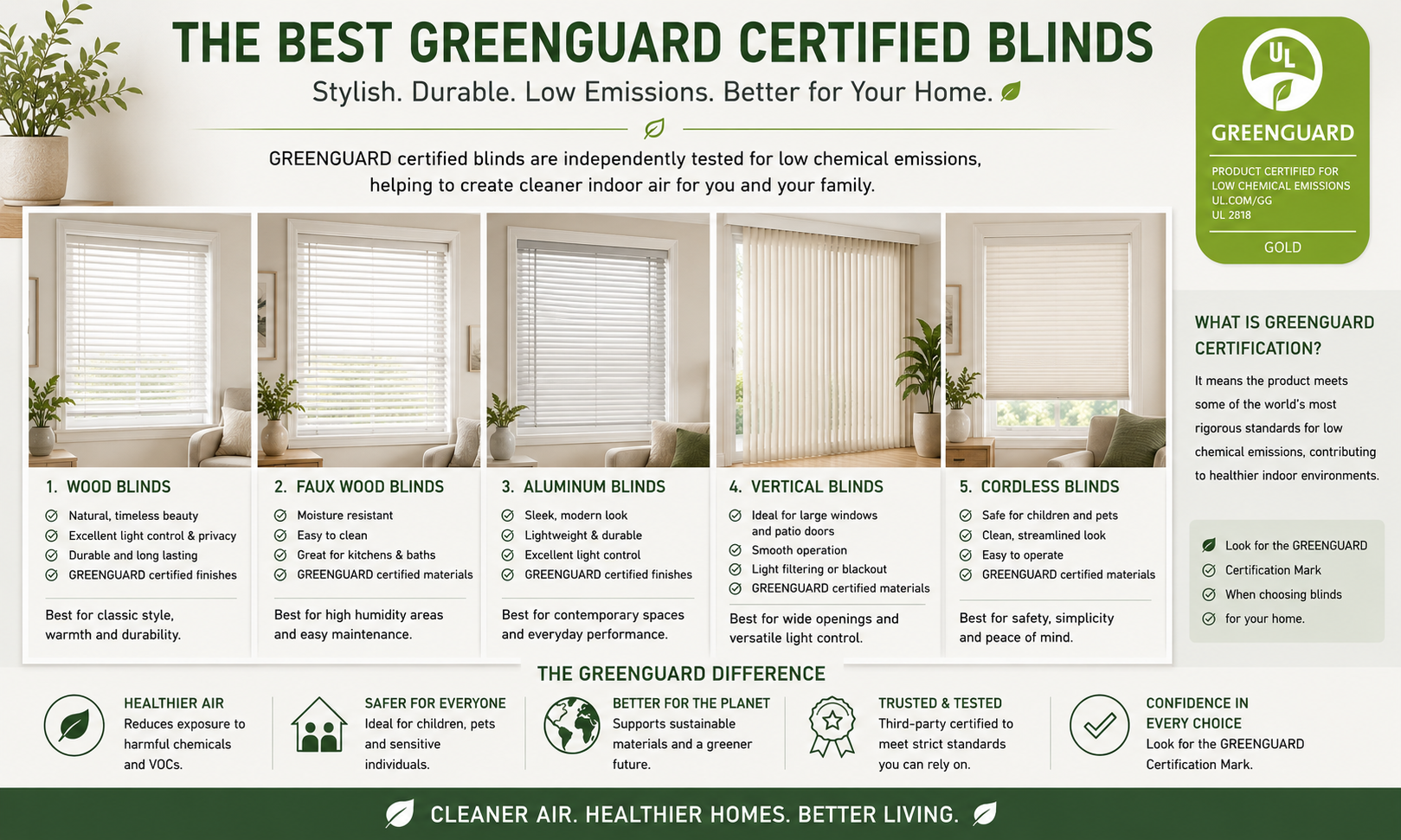
GREENGUARD certification focuses primarily on chemical emissions into indoor air. Products that qualify are tested to determine whether emissions remain within the program’s established limits. GREENGUARD Gold uses more stringent limits and is often associated with products intended for schools, healthcare settings, and other sensitive environments.
Certification should always be verified for the exact product being purchased. One collection, fabric, or operating system may be certified while another product from the same brand is not. A brand name alone is not enough to confirm certification. Shop our collection of window treatments with GREENGUARD certification.
When reviewing a certified product, check:
- The exact certification name
- The product or collection covered
- Whether the certification is current
- Whether the complete shade or only a material component was tested
- Whether optional finishes or upgrades affect certification status
OEKO-TEX-Certified Fabrics and Materials
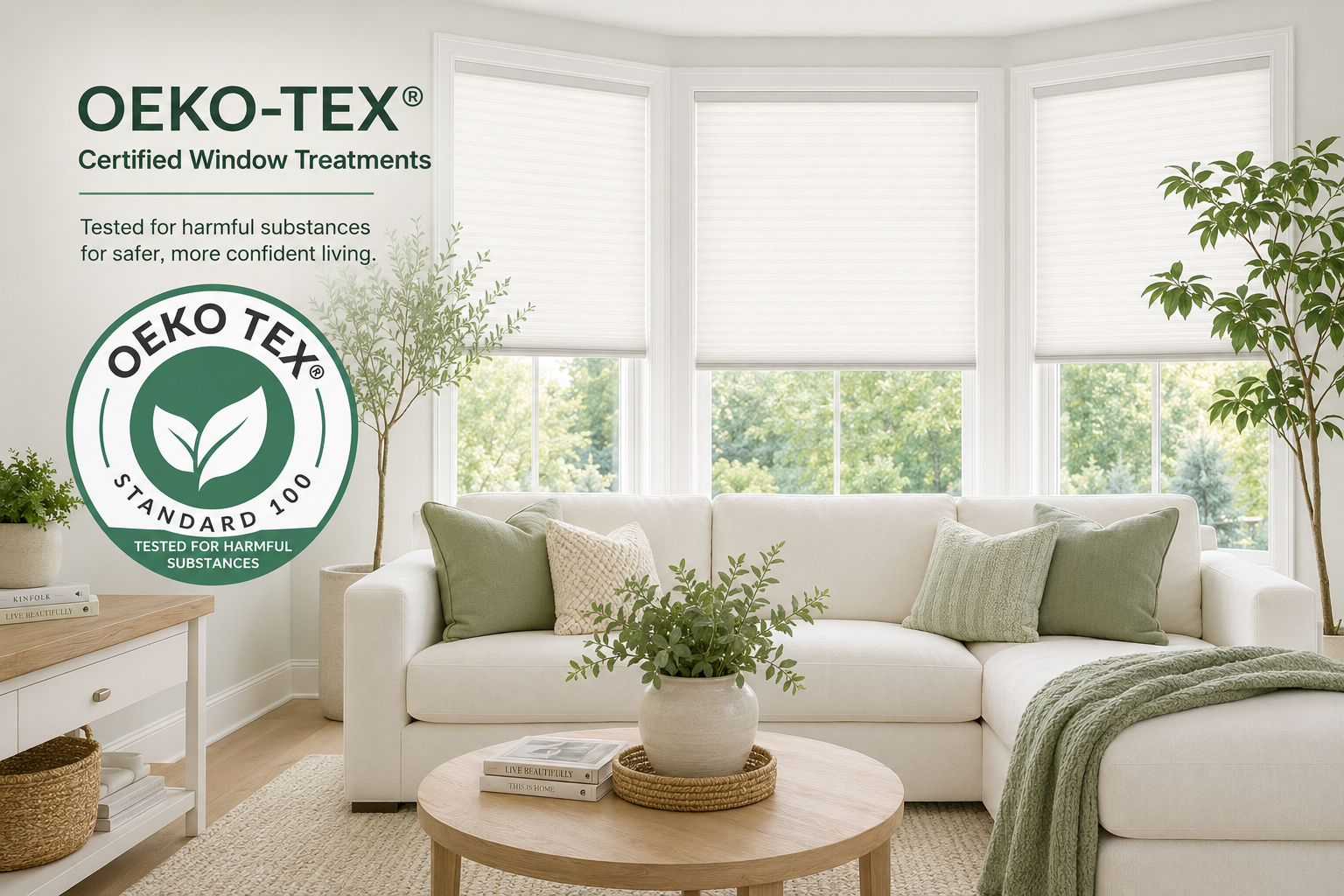
OEKO-TEX STANDARD 100 evaluates textiles and related components for a wide range of regulated and potentially harmful substances. It is commonly used for fabrics, threads, coatings, and textile components that may come into contact with people.
OEKO-TEX certification is different from emissions-focused certification. A fabric may be tested under OEKO-TEX for substances in the textile but may not have been evaluated as a complete assembled window treatment for indoor air emissions.
For a detailed comparison, visit our Window Treatments with OEKO-TEX crertification.
GREENGUARD vs OEKO-TEX
GREENGUARD and OEKO-TEX answer different questions. GREENGUARD focuses on chemical emissions released into indoor air, while OEKO-TEX STANDARD 100 focuses on testing textile materials and components for harmful substances.
Neither certification automatically replaces the other. A product may carry one certification, both certifications, or neither. The best certification depends on whether your main concern is indoor air emissions, textile content, or a broader combination of product attributes.
When comparing two products, confirm that you are evaluating the same certification level and that the certification applies to the actual product configuration you intend to order.
Low-VOC and Low-Emission Window Treatments
The term “low VOC” can be useful when supported by testing, but it should not be accepted without details. Ask whether the claim is based on independent certification, manufacturer testing, or a general material description.
Low-emission options may be available among cellular shades, roller shades, Roman shades, solar shades, blinds, shutters, and drapery. Availability varies by manufacturer, product line, fabric, finish, and upgrade.
Because product specifications and certifications can change, review the current product page or certification documentation before ordering.
Are Any Window Treatments Chemical-Free?
“Chemical-free” is not a scientifically meaningful description for a manufactured window treatment because all materials are made of chemicals. Fabrics, wood, plastics, metals, dyes, adhesives, coatings, and finishes all have chemical compositions.
A more useful approach is to look for products with transparent material information, recognized third-party certifications, lower-emission construction, and finishes appropriate for your household’s concerns.
If someone in the home has a diagnosed sensitivity, allergy, or medical condition, product selection should be discussed with a qualified healthcare professional. A retailer or manufacturer cannot determine whether a particular material will be safe for every individual.
Natural Materials vs Synthetic Materials
Natural materials are not automatically healthier, and synthetic materials are not automatically harmful. Natural wood, grasses, cotton, linen, and bamboo may appeal to shoppers who prefer organic textures, but they can still include dyes, adhesives, backing materials, stains, finishes, or protective coatings.
Synthetic fabrics and polymers may offer durability, moisture resistance, easier cleaning, and consistent performance. Some are also available with third-party certifications.
Compare the complete product rather than judging it only by whether one material is described as natural or synthetic.
Healthy Home Window Treatments by Product Type
Different product types offer different advantages for healthy home priorities. The best choice depends on the room, ventilation, moisture exposure, cleaning needs, privacy requirements, and desired certifications.
- Honeycomb Cellular Shades can provide insulation, cordless operation, and selected low-emission fabric options.
- Roller Shades offer simple construction, easy operation, and a broad range of fabric and certification options.
- Solar Screen Shades reduce glare and UV exposure while preserving varying degrees of outdoor visibility.
- Roman Shades provide decorative fabric coverage with optional linings and selected certified materials.
- Wood Blinds offer natural material and adjustable light control but may include stains, paints, or protective finishes.
- Faux Wood Blinds are durable and moisture resistant, making them easier to clean in many high-use rooms.
- Composite Shutters provide durable surfaces and adjustable louvers with materials that vary by product.
- Real Wood Shutters provide natural wood construction with paints, stains, or sealants that should be reviewed individually.
- Custom Drapery Panels offer decorative softness but may require more regular dust removal and fabric-specific cleaning.
Window Treatments for Allergies and Dust Control
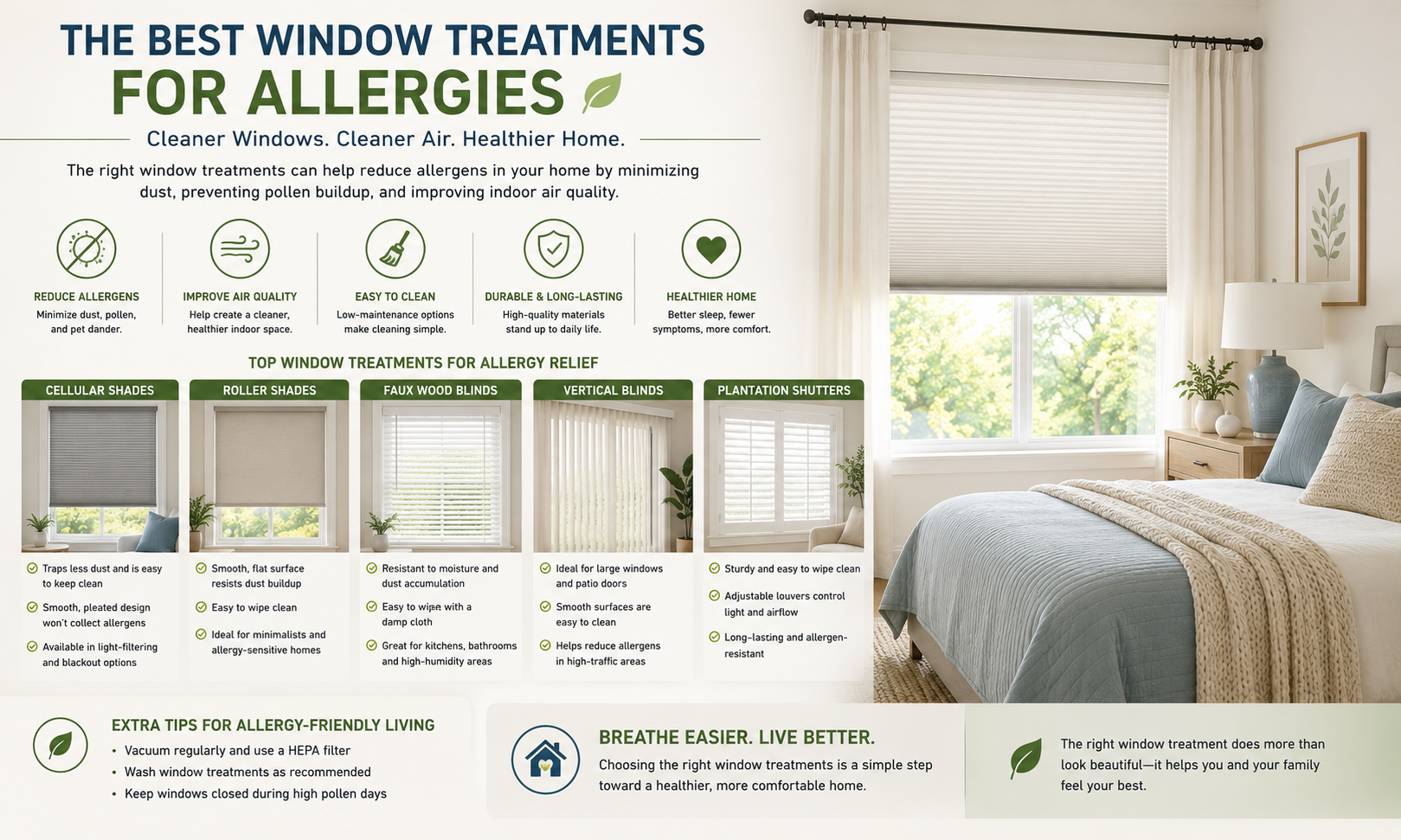
Window treatments do not cause or prevent allergies on their own, but product construction and cleaning requirements can affect how easily dust, pollen, and pet dander are removed.
Smooth products such as roller shades, shutters, and blinds may be easier to wipe or dust regularly. Textured fabrics, pleats, drapery folds, and woven materials may require vacuuming with a soft brush attachment or professional cleaning.
No product is completely dust-proof. Regular cleaning, HVAC filtration, humidity control, and broader household maintenance are more important than the window treatment alone.
Easy-to-Clean Window Treatments
Cleanability is an important healthy home consideration, especially in homes with pets, children, cooking activity, or high dust levels. Smooth materials are generally easier to wipe clean, while delicate fabrics may require gentle vacuuming or spot cleaning.
Always follow the cleaning instructions for the exact product. Water, household cleaners, steam, or aggressive scrubbing can damage fabric coatings, wood finishes, adhesives, and internal components.
Before choosing a product, consider how often it will need cleaning and whether you can perform the recommended maintenance.
Moisture-Resistant Window Treatments
Bathrooms, kitchens, laundry rooms, and humid climates require materials that tolerate moisture and can dry without warping, staining, or developing odors. Faux wood blinds, composite shutters, vinyl blinds, and selected roller fabrics are often considered for these spaces.
Fabric shades and real wood products may still work in well-ventilated rooms, but they should not be exposed to direct water or persistent condensation unless specifically approved for that environment.
Moisture-resistant does not mean waterproof or mold-proof. Ventilation, leak repair, surface drying, and humidity control remain essential.
Mold and Mildew Considerations
Mold and mildew require moisture and suitable growing conditions. Any window treatment may develop problems if it remains damp, is exposed to condensation, or is installed near an unresolved leak.
Choosing a moisture-resistant product can make cleaning and drying easier, but it cannot compensate for poor ventilation or persistent water intrusion. Address condensation, plumbing leaks, roof leaks, and excessive indoor humidity before replacing damaged window coverings.
Products with visible mold contamination may require replacement depending on the material and extent of growth. Follow appropriate cleaning and remediation guidance for the situation.
Child-Safe Window Treatments
Operating cords can create a serious hazard for young children. Cordless products are generally preferred in homes, schools, childcare spaces, and rooms where children spend time.
Cordless lift, motorization, wand controls, and secured continuous-loop systems may reduce or eliminate accessible cords depending on the product. Not every product described as cordless is identical, so review the operating system and included safety hardware before ordering.
Existing corded products should be inspected regularly and kept out of children’s reach. Safety devices must be installed and used according to the manufacturer’s instructions. Shop our window treatments that are child safe.
Pet-Friendly Window Treatments
Homes with pets may benefit from durable, easy-to-clean products with fewer accessible cords. Faux wood blinds, shutters, roller shades, and selected cellular shades are commonly considered, but no window treatment is damage-proof.
Cats may climb or push through flexible materials, while dogs may scratch products near doors and low windows. Consider the animal’s behavior, window height, product movement, and access to controls before choosing a style.
Healthy Window Treatments for Nurseries
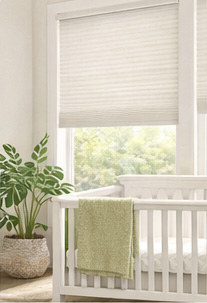
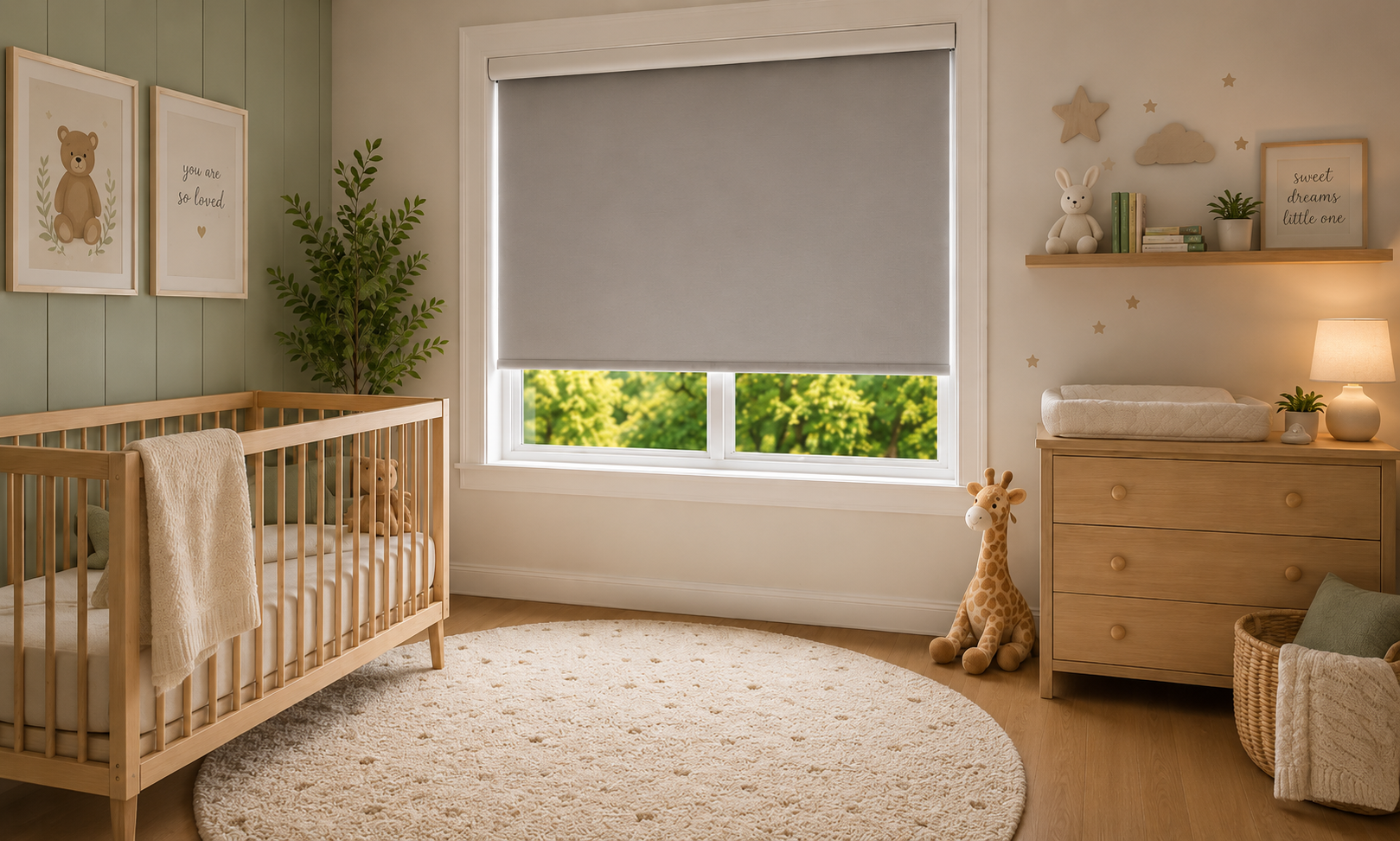
Nurseries often require a combination of cordless safety, room darkening, cleanability, insulation, and transparent material information. Cellular shades, roller shades, Roman shades, and drapery may all be appropriate depending on the product and installation.
Look for cordless or motorized operation, verify any certifications that matter to your household, and make sure cribs and furniture are positioned away from cords and window treatment hardware.
Blackout fabric can help create a darker sleep environment, but side gaps may still allow light around an inside-mounted shade.
Healthy Window Treatments for Bedrooms
Bedroom window treatments may need to balance privacy, darkness, temperature control, easy cleaning, and indoor air concerns. Cellular shades provide insulation, roller shades offer simple fabric construction, and drapery can add softness and additional coverage.
People with sensitivities may prefer products with independently verified low-emission materials. Ventilation after installation and regular dust removal may also improve comfort.
Healthy Window Treatments for Bathrooms
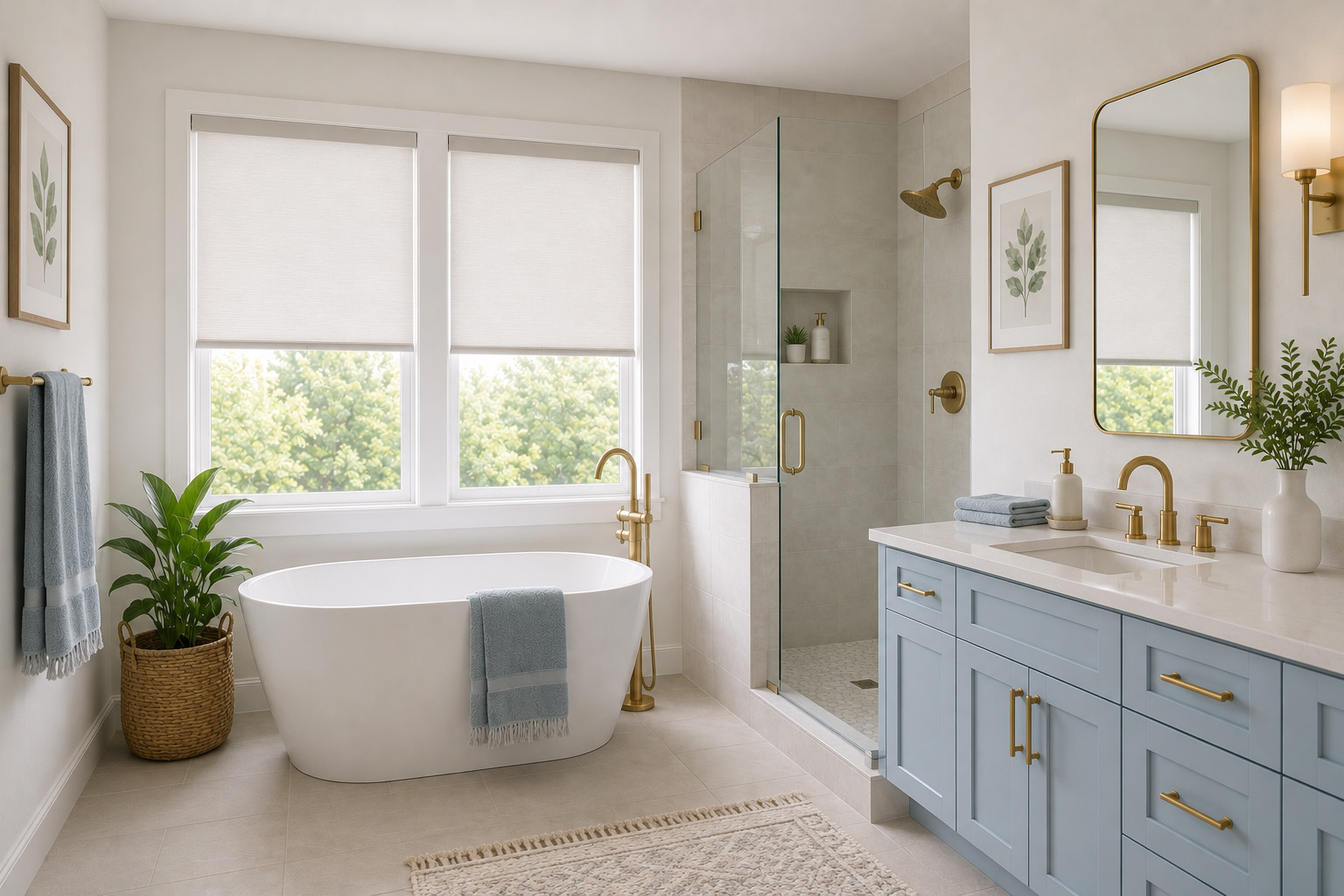
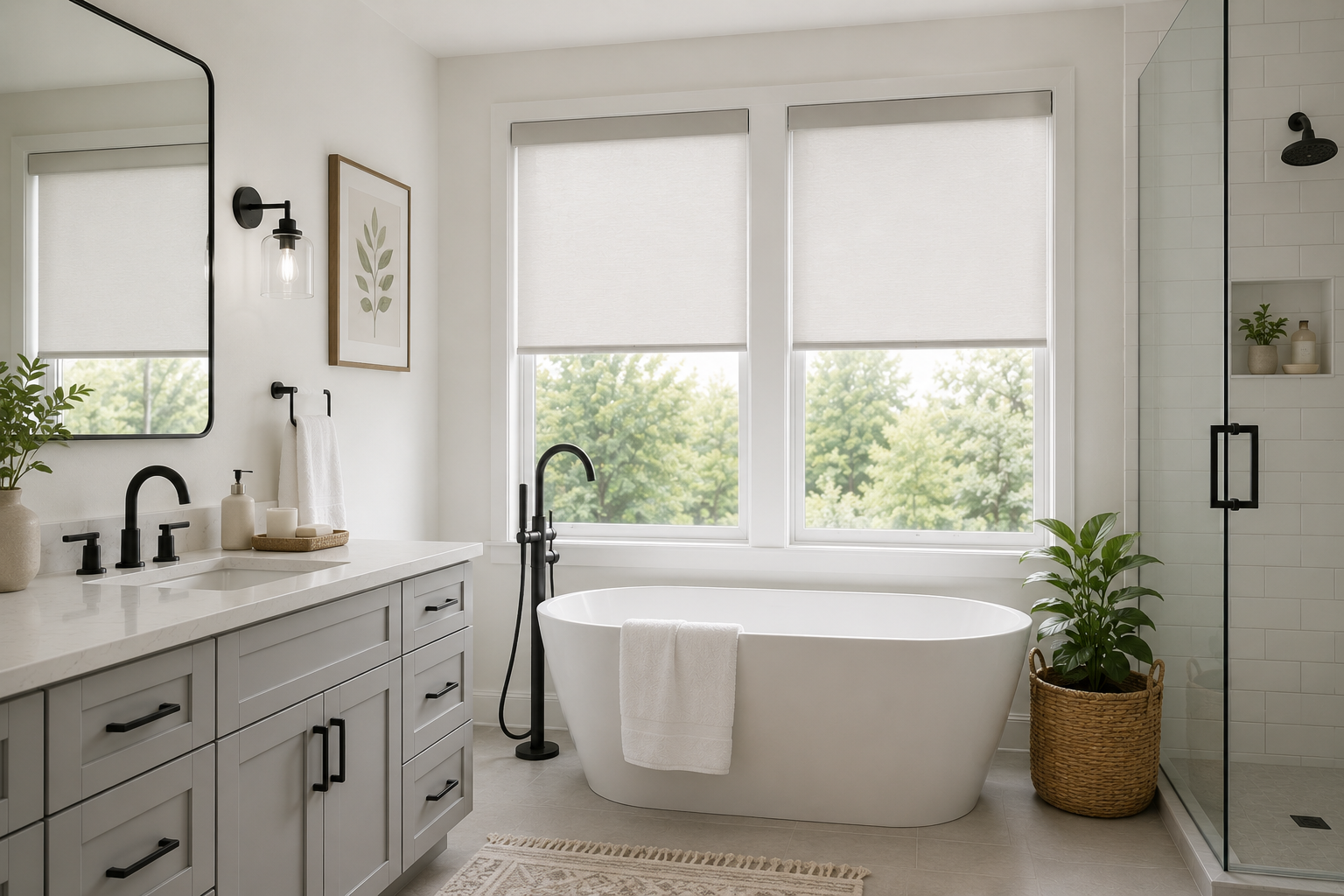
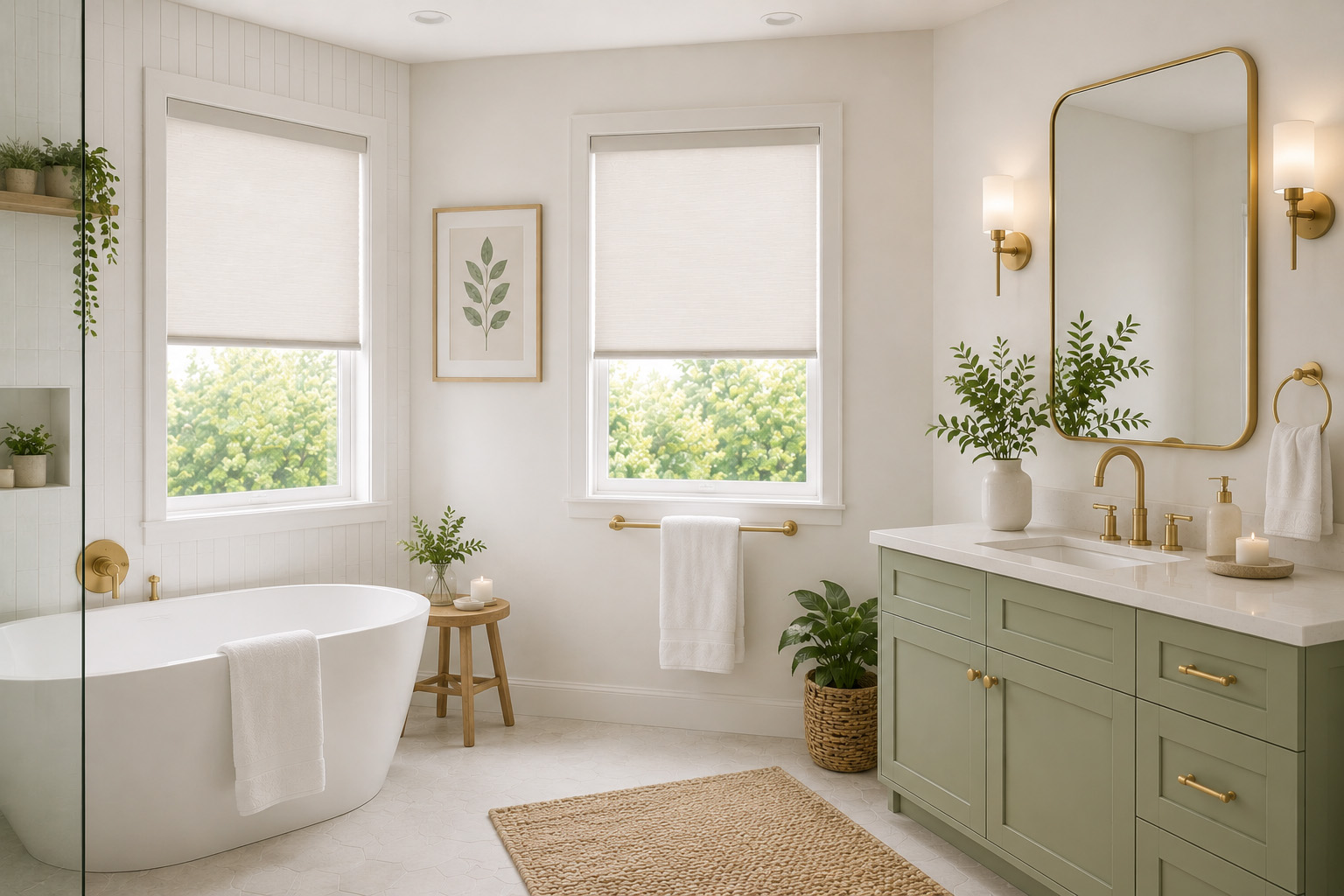
Bathroom products should provide dependable privacy while tolerating humidity and routine cleaning. Faux wood blinds, composite shutters, vinyl blinds, roller shades, and selected cellular shades may be suitable depending on the window’s proximity to water.
For windows near showers or tubs, prioritize moisture resistance and ventilation. Top Down Bottom Up operation can provide privacy at the lower part of the window while allowing light from above.
Healthy Window Treatments for Kitchens
Kitchen window treatments may be exposed to grease, food particles, humidity, and frequent temperature changes. Smooth, wipeable materials are often easier to maintain than heavily textured fabrics.
Avoid placing flammable materials near open flames or hot cooking surfaces. Products installed above sinks should be appropriate for moisture and occasional splashes.
Healthy Window Treatments for Home Offices
Home office window treatments should manage glare, daylight, privacy, and comfort without requiring constant adjustment. Solar shades, cellular shades, roller shades, blinds, and sheer shades provide different combinations of view-through and screen glare control.
Motorized or smart controls may make consistent adjustment easier, but connectivity does not make a product healthier by itself. Material selection, cleaning, and room ventilation remain important.
Energy Efficiency and a Healthy Home
A comfortable indoor temperature is one part of a healthy home environment. Insulating cellular shades, solar shades, exterior shades, shutters, and layered window treatments may help manage heat gain, heat loss, and glare.
Window treatments should be viewed as one part of a broader energy strategy that may also include air sealing, insulation, efficient windows, ventilation, and HVAC maintenance.
Visit our Energy-Efficient Window Treatment Resource Center for detailed guidance about insulation, solar heat, window orientation, and seasonal operation. Ready to shop? Look at our Energy Efficient window treatments.
Motorized Window Treatments and Accessibility
Motorized blinds and shades can make operation easier for tall windows, large shades, windows behind furniture, and users with limited reach or mobility. Depending on the system, treatments may be operated with a remote or wall switch.
Motorization does not remove the need to evaluate materials, certifications, cleaning, and moisture suitability, but it can improve accessibility and reduce the need for manual cords.
Visit our Motorized Window Treatment Resource Center for guidance about batteries, hardwiring, remotes, controls, and maintenance.
Smart Home Controls and Healthy Living
Compatible smart shades may support schedules that adjust daylight, privacy, glare, or solar heat at selected times. Automation can make it easier to operate shades consistently, particularly in rooms with many windows.
Smart technology should be evaluated for compatibility, privacy, software support, and offline operation. It does not change the material composition or certification status of the window treatment.
Explore our Smart Home Window Treatment Resource Center for information about hubs, apps, schedules, voice control, and connected platforms.
Sustainable and Environmentally Responsible Choices
Sustainability can involve material sourcing, manufacturing location, product durability, energy performance, packaging, recyclability, and expected service life. No single feature provides a complete picture.
A durable custom product that fits correctly and can be repaired may create less waste than a lower-quality product that requires frequent replacement. At the same time, recycling options for mixed-material window treatments may be limited.
When environmental impact is a priority, ask for specific information rather than relying on general terms such as “green” or “eco-friendly.”
Made in USA Window Treatments
Some homeowners prefer domestically manufactured window treatments because of supply-chain transparency, shorter transportation distances, service support, or a desire to support American manufacturing.
Made in USA claims are separate from low-emission, textile safety, or sustainability certifications. A domestically manufactured product is not automatically low VOC, and an imported product is not automatically less healthy.
Review our Made in USA Window Treatment Resource Center to learn how manufacturing claims differ from product certifications and material testing.
How to Verify Product Certifications
Certification information should be confirmed before purchase. Product lines change, certificates expire, and optional fabrics or components may not be covered by the same testing.
When verifying a claim:
- Confirm the exact product name and model
- Review the certification organization’s current database when available
- Check the expiration or validity period
- Determine whether the certification applies to the entire product or one component
- Verify whether optional fabrics, colors, motors, or upgrades are included
- Save the documentation if certification is required for a project
For commercial, educational, healthcare, or government projects, request current documentation before finalizing the order.
How to Evaluate Health and Safety Claims
Be cautious with absolute claims such as “completely safe,” “non-toxic,” “chemical-free,” “allergy-proof,” or “mold-proof.” These terms may oversimplify complex issues and may not be supported by recognized testing.
More reliable claims identify the exact certification, testing standard, material, product, or performance characteristic. Trustworthy product information should also explain limitations and identify where results may vary.
When a health concern is medically significant, consult an appropriate healthcare professional and request detailed product documentation from the manufacturer.
Measuring and Installation Considerations
Proper fit and installation affect safety, cleanability, privacy, and long-term performance. A poorly fitted product may rub against the frame, collect dust in difficult-to-reach areas, allow excessive light gaps, or interfere with window ventilation.
Measure each window individually and follow the instructions for the exact product. Install all safety devices, cord tensioners, brackets, and fasteners as directed. Hardwired motorized products should be coordinated with a qualified electrician.
Cleaning and Long-Term Maintenance
Routine care helps prevent dust buildup and allows you to identify moisture, damage, or operating problems early. Cleaning methods vary by material, so follow the product-specific instructions.
Common maintenance may include:
- Dusting smooth surfaces with a soft cloth or duster
- Vacuuming fabric shades with a low-suction brush attachment
- Spot cleaning only when approved
- Drying moisture promptly
- Inspecting cords, tensioners, brackets, and operating hardware
- Charging or replacing batteries in motorized products
- Addressing condensation and leaks before damage spreads
Avoid bleach, solvents, steam, abrasive tools, and soaking unless specifically approved by the manufacturer.
Related Healthy Home Resources
Continue exploring these resources to compare certifications, materials, safety options, energy performance, and room-specific solutions.
Healthy Home Window Treatment FAQs
What are healthy home window treatments?
Healthy home window treatments are products selected with considerations such as chemical emissions, material transparency, cleanability, moisture resistance, cordless safety, durability, and room suitability. No single product feature determines whether a window treatment is appropriate for every household.
What does GREENGUARD certification mean?
GREENGUARD certification indicates that a product has been tested for chemical emissions and meets the program’s established limits. GREENGUARD Gold applies more stringent limits. Certification should be verified for the exact product being purchased.
What does OEKO-TEX certification mean?
OEKO-TEX STANDARD 100 evaluates textile materials and components for a range of regulated and potentially harmful substances. It does not necessarily mean that the complete assembled window treatment has been tested for indoor air emissions.
What is the difference between GREENGUARD and OEKO-TEX?
GREENGUARD focuses on chemical emissions released into indoor air, while OEKO-TEX STANDARD 100 focuses on substances present in textiles and related components. The certifications address different concerns and are not interchangeable.
Are there chemical-free blinds or shades?
No manufactured product is literally chemical-free because all materials have a chemical composition. A better approach is to look for transparent material information, recognized third-party testing, and products that address your specific concerns.
Which window treatments are easiest to clean?
Roller shades, shutters, faux wood blinds, vinyl blinds, and other smooth-surface products are often easier to dust or wipe clean. Fabric folds, textured weaves, and drapery may require vacuuming, spot cleaning, or professional care.
Which window treatments are best for allergies?
Products with smooth, accessible surfaces may be easier to clean regularly. However, no window treatment is allergy-proof, and broader factors such as HVAC filtration, humidity control, pet dander, pollen, and household cleaning remain important.
Which window treatments are best for humid rooms?
Faux wood blinds, composite shutters, vinyl blinds, and selected roller shade materials are commonly used in humid rooms because they are more resistant to moisture and easier to wipe clean. Product suitability still depends on ventilation and proximity to direct water.
Can window treatments prevent mold?
No window treatment can prevent mold when persistent moisture, condensation, or leaks are present. Moisture-resistant products may be easier to clean, but ventilation and correction of the underlying moisture source are essential.
Are cordless window treatments safer for children?
Cordless and motorized products eliminate many accessible operating cords and are generally preferred in rooms used by children. Product design and installation still matter, and all safety hardware should be used according to the manufacturer’s instructions.
Are natural window treatment materials always healthier?
No. Natural materials may still include dyes, adhesives, finishes, sealants, or backing materials. Synthetic materials may offer low-emission certifications, durability, and easy cleaning. Evaluate the complete product rather than one material description.
How can I verify a window treatment certification?
Confirm the exact product name, certification program, validity period, and components covered. Review the certifying organization’s database or current manufacturer documentation when available, especially when certification is required for a commercial project.
Choose Window Treatments That Support Your Healthy Home Priorities
The right product depends on the concern you are trying to address. Low-emission certifications may be important for indoor air quality, smooth surfaces may make dust removal easier, moisture-resistant materials may perform better in bathrooms, and cordless operation may improve safety in rooms used by children.
Compare the complete product, verify certifications, review cleaning instructions, and consider how the treatment will be used in the room. Avoid relying on broad claims that are not supported by specific testing or documentation.
Shop Custom Window Shades
Shop Custom Window Blinds
Shop Plantation Shutters