





Browse our expert advice articles below to learn more about styles, features, and how they compare to other window treatments.
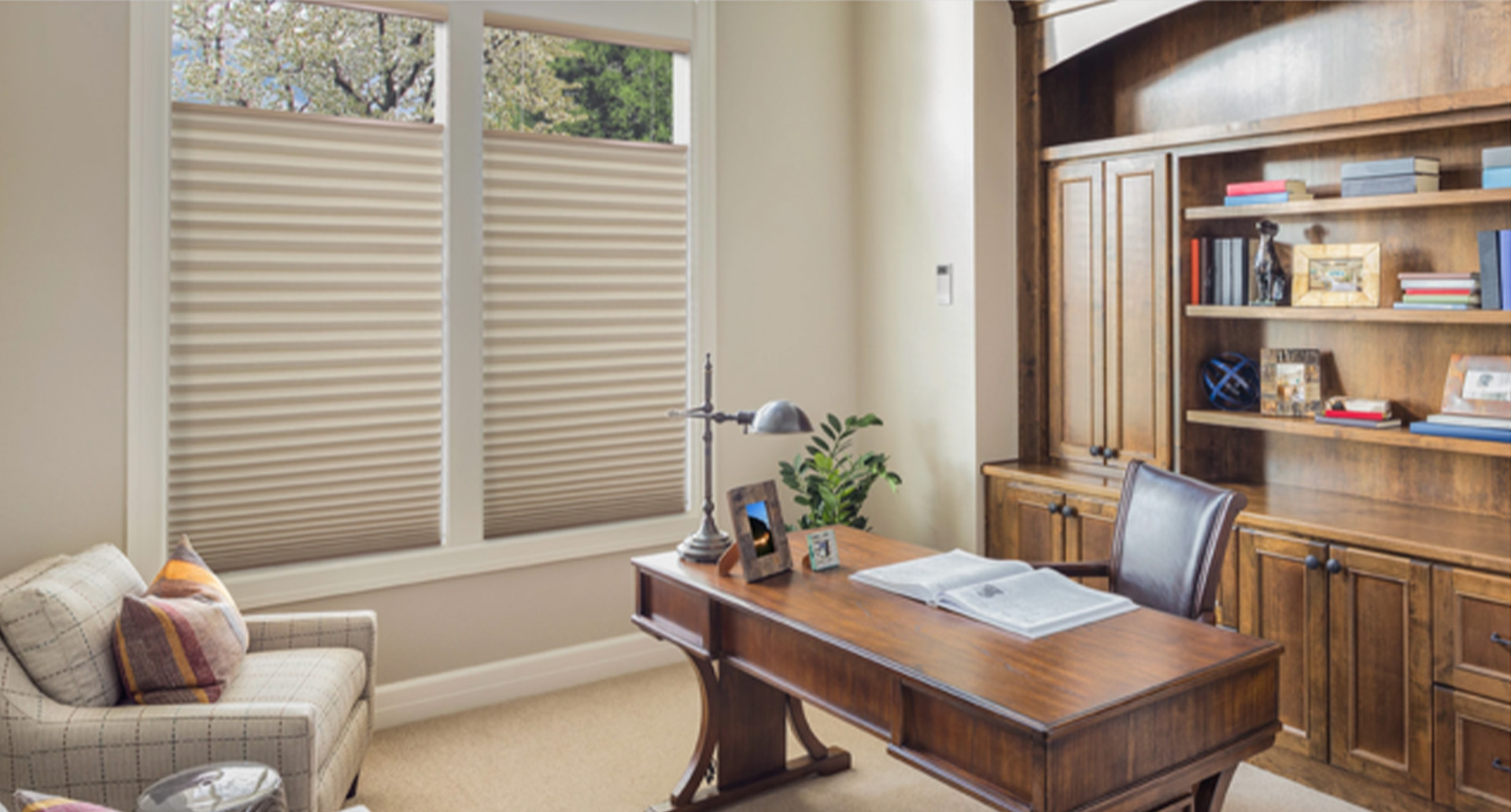
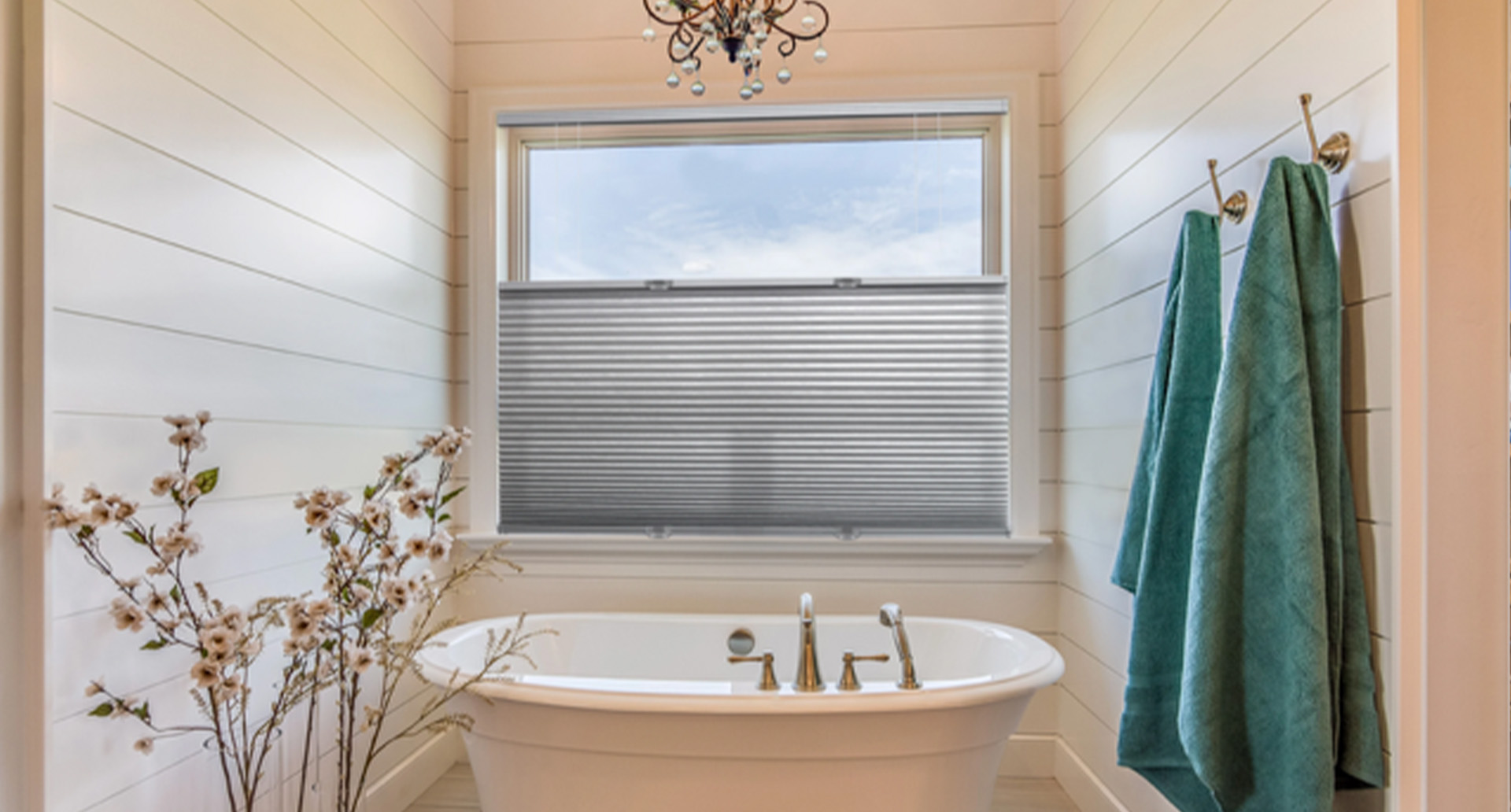
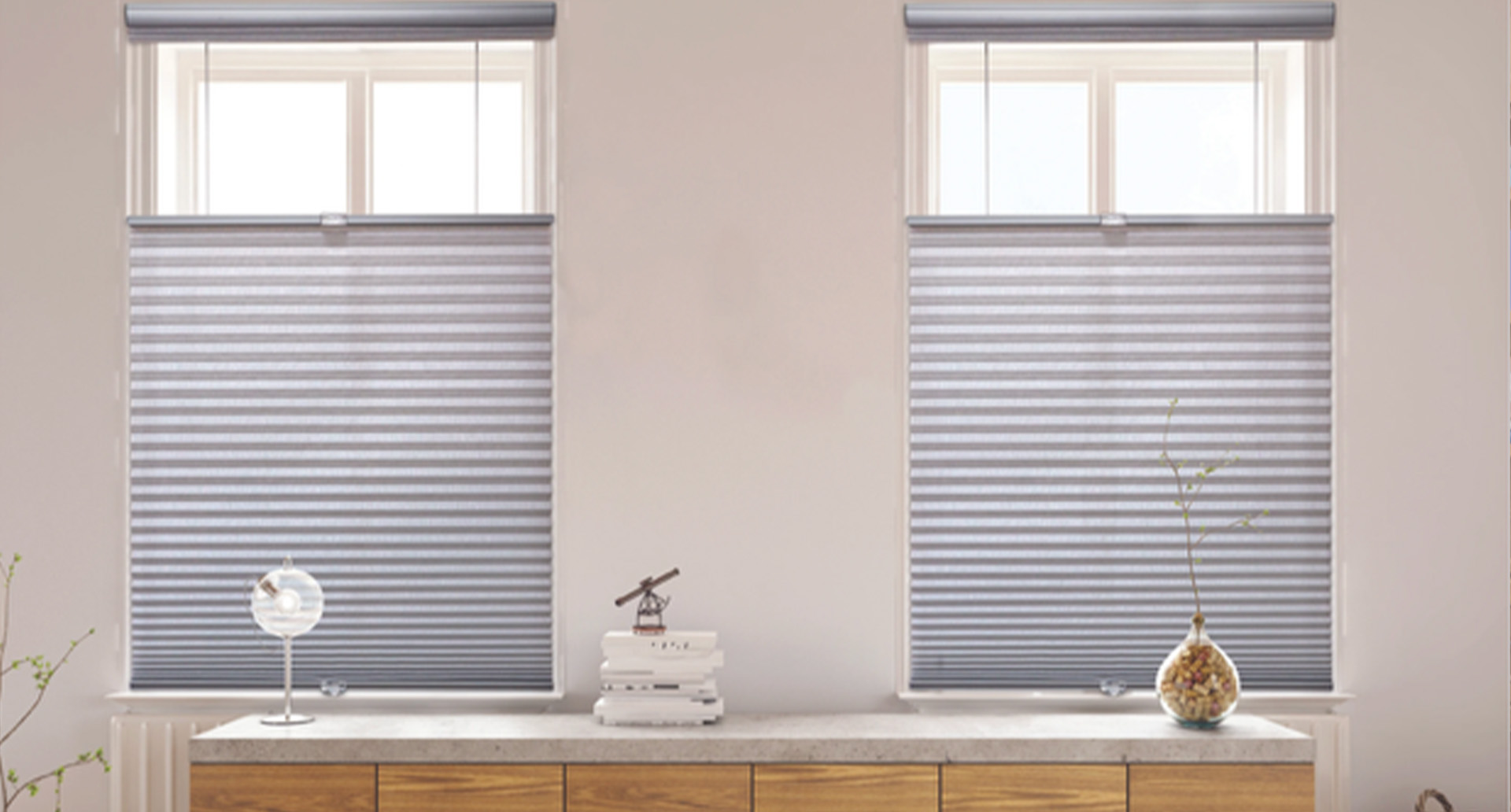
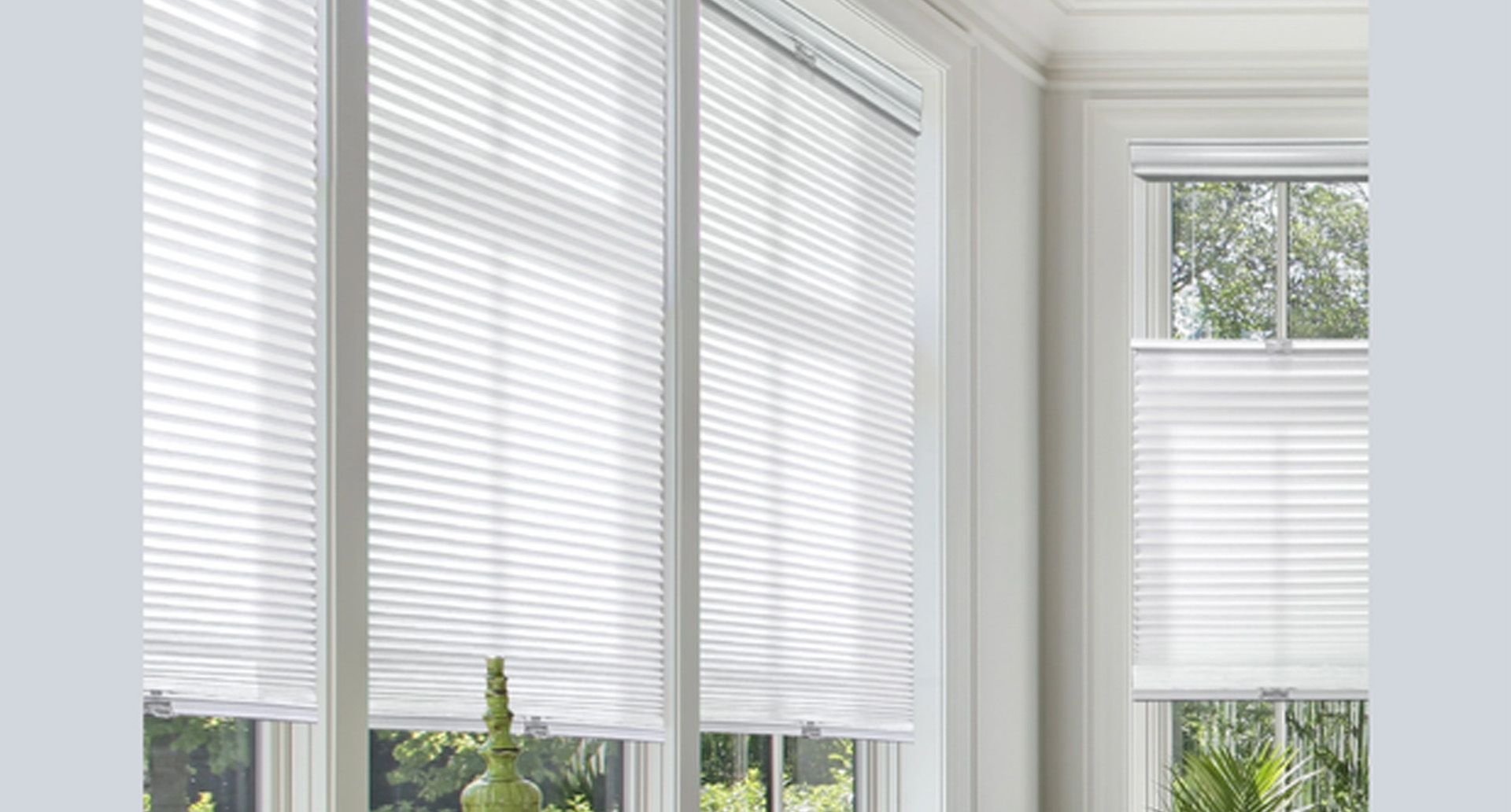
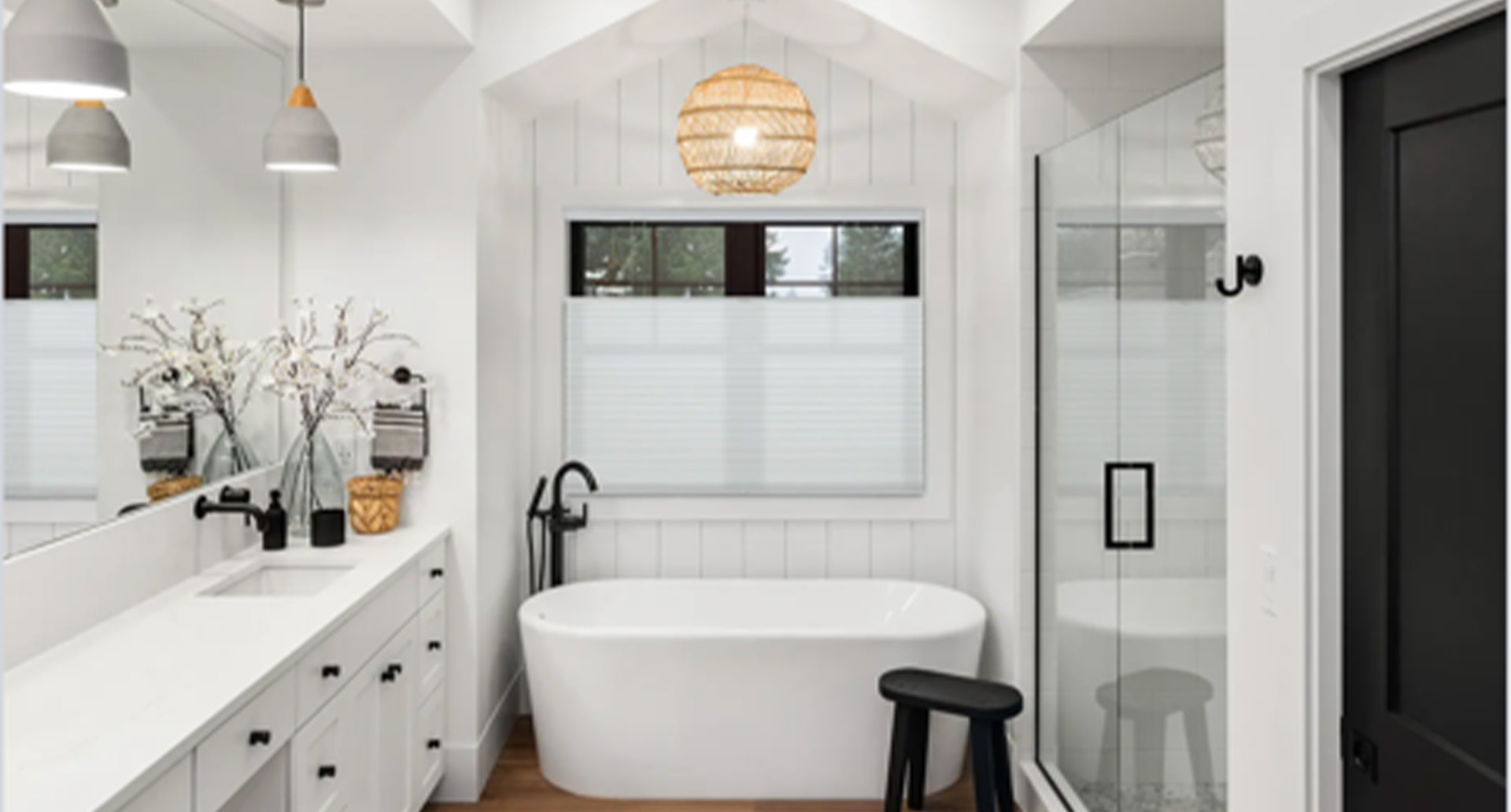
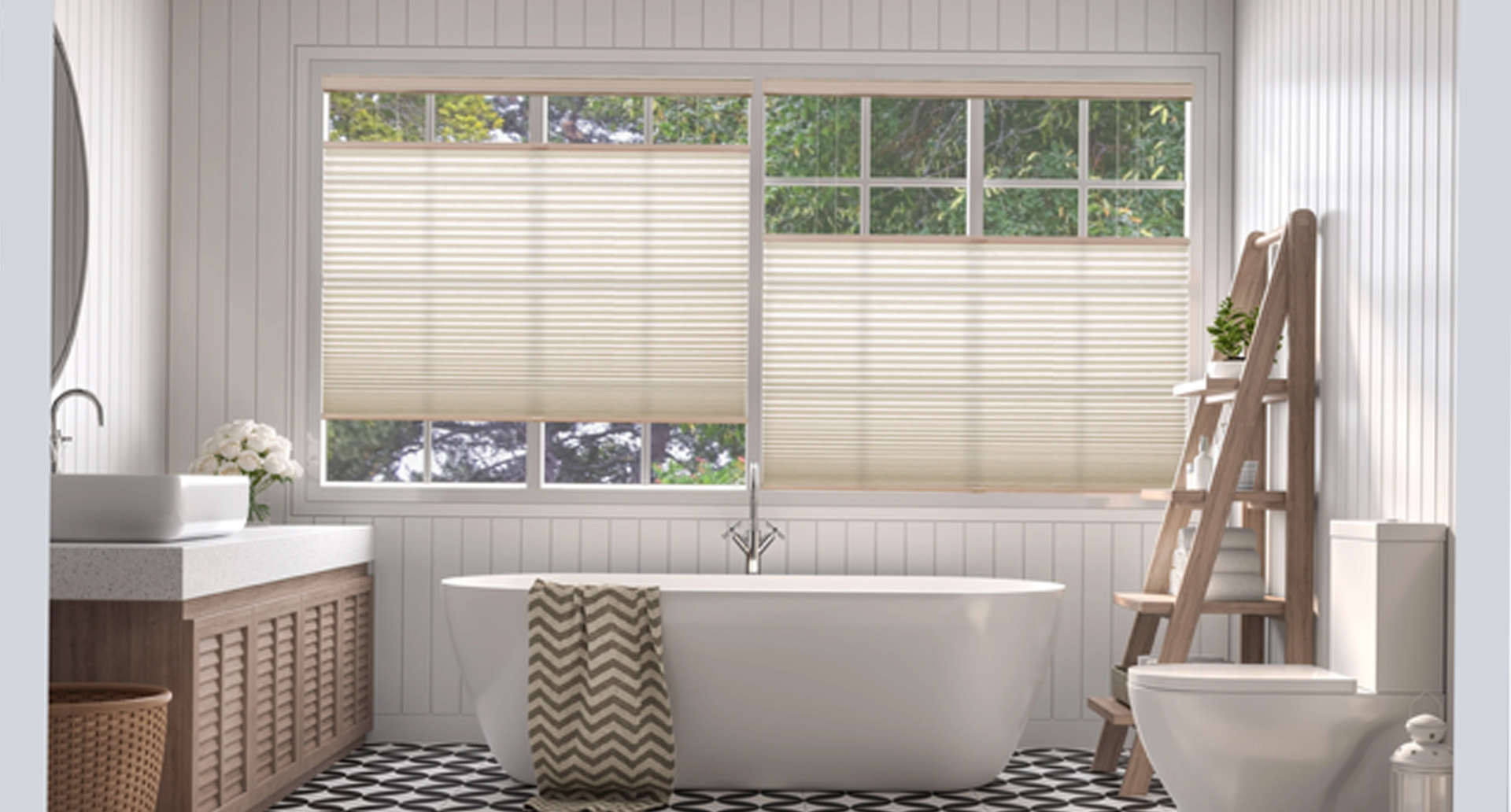
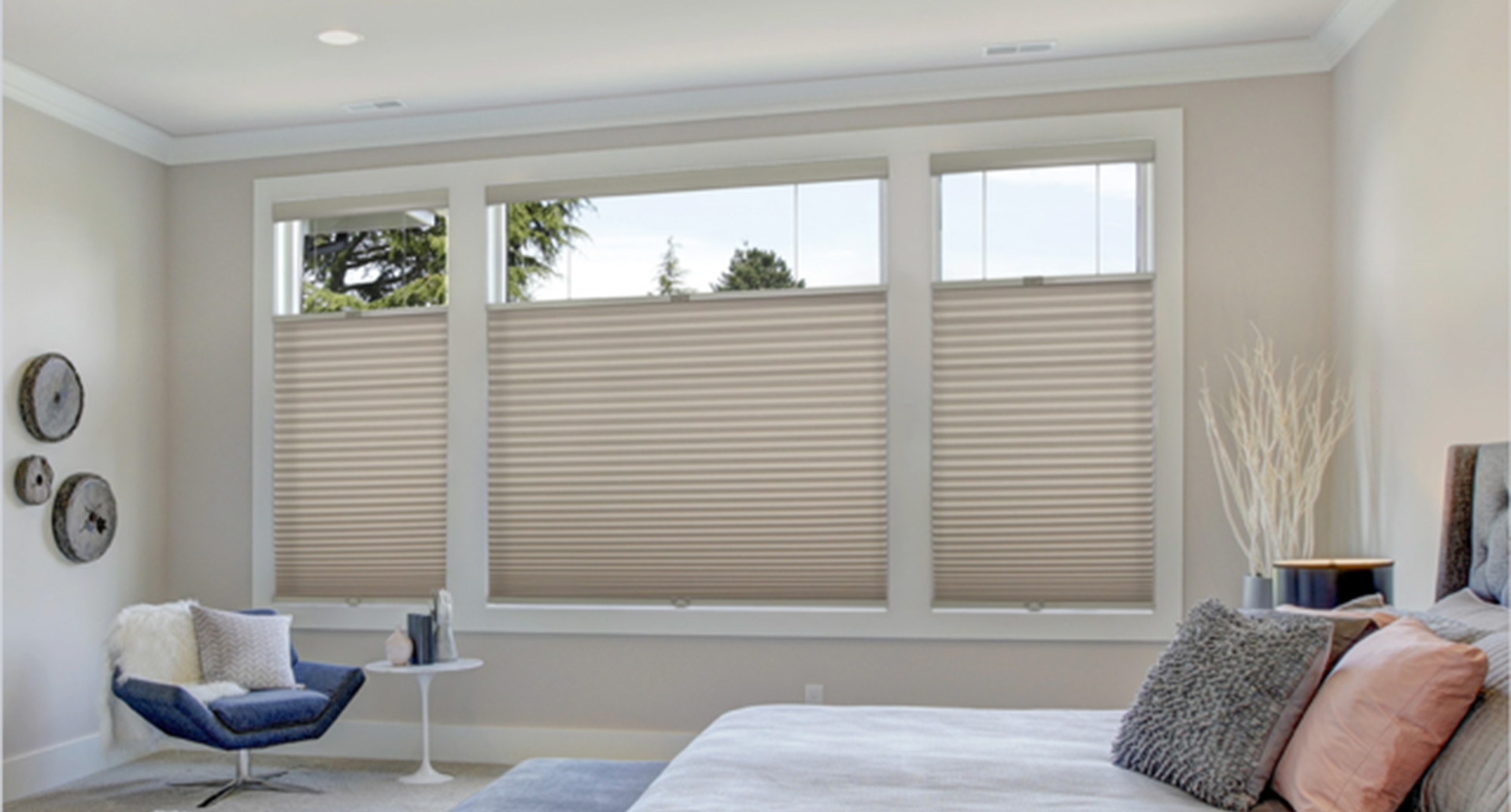
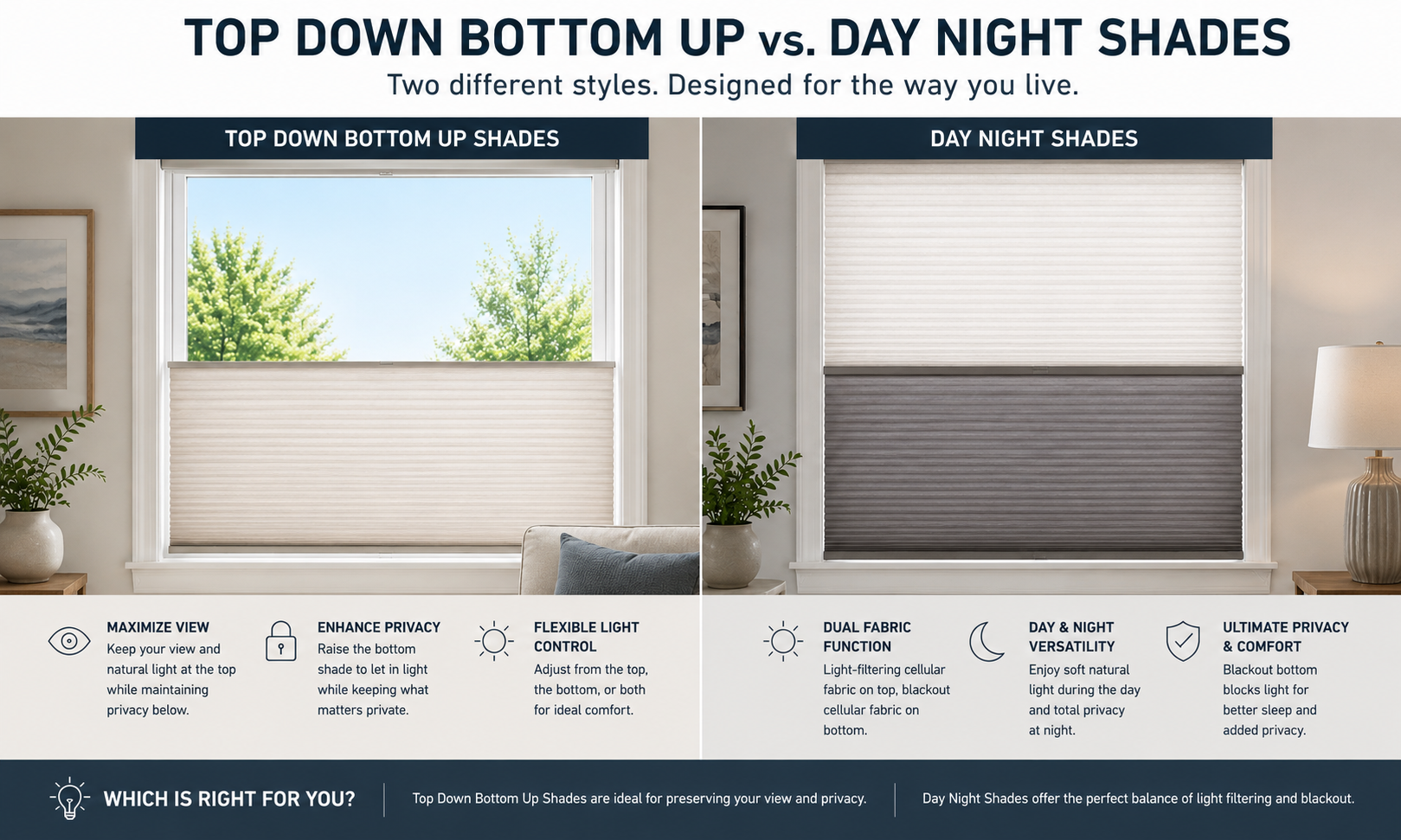
This operating style is especially useful for street-facing windows, bathrooms, bedrooms, home offices, dining rooms, and other spaces where you want privacy without blocking all available sunlight. Our Top Down Bottom Up Resource Center brings together practical buying guides, product comparisons, room recommendations, measuring advice, and expert guidance to help you decide whether this option is right for your windows.
When you are ready to compare products, explore our selection of custom window shades and look for Top Down Bottom Up availability on qualifying cellular, Roman, pleated, and other shade styles. Shop window shades with top down bottom up
What Are Top Down Bottom Up Shades?
Top Down Bottom Up shades are window coverings that can be raised from the bottom, lowered from the top, or positioned somewhere between fully open and fully closed. This gives you more control over the portion of the window that remains covered.
For example, you can lower the top of the shade to admit daylight while keeping the bottom half closed to reduce visibility from outside. You can also raise the shade from the bottom like a traditional window treatment when you want a clear outdoor view.
The exact operating method varies by product. Some shades use separate handles or rails, while others use cordless, continuous-loop, or motorized systems. Availability depends on the shade style, size, manufacturer, fabric, and selected control option.
- A Comprehensive Guide to Top Down Bottom Up Shades: Versatile Window Treatments
- Choosing the Right Style and Material for Top-Down Bottom-Up Shades: A Comprehensive Guide
Why Homeowners Choose Top Down Bottom Up Shades
The main advantage of Top Down Bottom Up shades is flexibility. They allow homeowners to adjust privacy and daylight independently rather than choosing between a fully open or fully closed window.
Common reasons for selecting this operating style include:
- Maintaining privacy at eye level while allowing light from above
- Reducing direct views from sidewalks, streets, or neighboring homes
- Brightening bathrooms and bedrooms without exposing the entire window
- Managing glare while keeping part of the room naturally illuminated
- Creating a more customized appearance for different times of day
These benefits are most noticeable when the lower part of the window requires coverage but the upper portion can remain exposed without creating a privacy concern.
Top Down Bottom Up Shades for Privacy
Top Down Bottom Up operation is especially effective for windows where privacy is needed from the lower portion of the opening. By keeping the bottom of the shade closed, you can block direct views from pedestrians, neighbors, or nearby buildings while still allowing light through the top.
Privacy depends on more than the operating style alone. Fabric opacity, nighttime lighting, window height, outside viewing angles, and how much of the window remains uncovered all affect visibility.
Light-filtering fabrics may provide daytime privacy while still allowing silhouettes to be visible at night. For stronger nighttime privacy, select an opaque or room-darkening material and close enough of the shade to prevent direct views into the room.
Visit our Privacy and Light Control Resource Center for more guidance about daytime privacy, nighttime privacy, fabric opacity, and view-through.
Natural Light Without Sacrificing Privacy
Traditional shades often force homeowners to choose between privacy and natural light. Top Down Bottom Up shades provide a middle option by exposing only the upper portion of the glass.
This can help brighten a room without opening the entire window. It may also reduce the need for artificial lighting during the day, particularly in bathrooms, hallways, home offices, and street-facing rooms.
The amount of daylight entering the room depends on how far the top rail is lowered, the window orientation, surrounding buildings, and the shade fabric. A lighter fabric generally creates a brighter appearance, while darker or room-darkening fabrics provide stronger coverage.
Which Shade Styles Offer Top Down Bottom Up Operation?
Top Down Bottom Up operation is most commonly associated with honeycomb cellular shades, but it may also be available on selected Roman shades, pleated shades, woven wood shades, and specialty products.
Availability varies considerably. A shade style may offer Top Down Bottom Up operation only within certain widths, heights, fabrics, or control systems. Some manufacturers may also restrict the option on unusually large or heavy shades.
- Honeycomb Cellular Shades are the most common choice and combine privacy flexibility with insulating air pockets.
- Roman Shades may offer Top Down Bottom Up operation with a softer, more decorative appearance.
- Pleated Shades can provide a crisp fabric look at a more value-oriented price point.
- Woven Wood Shades may be available with this option for a natural, textured appearance.
Always verify availability on the exact product page before ordering.
Top Down Bottom Up Cellular Shades
Cellular shades are one of the most popular Top Down Bottom Up products because their lightweight construction works well with adjustable operating systems. Their honeycomb-shaped cells can also add insulation at the window while offering light-filtering or blackout fabrics.
Top Down Bottom Up cellular shades are a strong choice for bedrooms, bathrooms, living rooms, offices, and street-facing windows. Cordless operation is often available, although product sizes and control options vary by manufacturer.
Explore our Honeycomb Cellular Shade Resource Center for information about cell sizes, insulation, fabrics, privacy, and operating systems.
Top Down Bottom Up Roman Shades
Roman shades provide a softer, more decorative alternative to cellular shades. When Top Down Bottom Up operation is available, they can combine tailored fabric folds with flexible privacy control.
Because Roman shades use more fabric and may be heavier than cellular shades, size limitations can be more restrictive. The way the fabric folds may also vary depending on how the shade is positioned.
Roman shades are best suited for rooms where appearance is a priority and the selected product is specifically designed for Top Down Bottom Up operation.
Top Down Bottom Up Pleated Shades
Pleated shades offer a crisp, folded appearance and are often selected as an affordable alternative to cellular shades. They may be available with Top Down Bottom Up operation in light-filtering or room-darkening fabrics.
Unlike cellular shades, pleated shades usually use a single layer of fabric and do not contain insulating air pockets. Their primary benefits are style, light control, privacy, and value rather than maximum insulation.
Best Rooms for Top Down Bottom Up Shades
Top Down Bottom Up shades can work throughout the home, but they are especially useful where privacy and natural light are both important.
The best applications include:
- Bathrooms with windows facing neighbors or walkways
- Bedrooms located near streets or adjacent homes
- Home offices where screen glare and privacy both matter
- Dining rooms that benefit from daylight without direct outside views
- Living rooms with lower sightlines from sidewalks
- Ground-floor rooms in urban or closely spaced neighborhoods
They may provide less benefit on upper-story windows, windows facing private yards, or openings where privacy is not a concern.
Top Down Bottom Up Shades for Bathrooms
Bathrooms are one of the most common applications for Top Down Bottom Up shades. Keeping the lower portion of the window covered can provide privacy while allowing light to enter from above.
Choose materials appropriate for the room’s moisture level. Cellular and fabric shades may work well in bathrooms with normal ventilation, but windows close to showers, tubs, or sinks may require more moisture-resistant products.
For dependable privacy, select an opaque fabric and consider outside sightlines at both daytime and nighttime.
Top Down Bottom Up Shades for Bedrooms
In bedrooms, Top Down Bottom Up shades can provide daytime privacy while preserving natural light. At night, the shade can be closed fully for stronger coverage.
If room darkening is important, choose a room-darkening or blackout fabric. Keep in mind that blackout material blocks light through the fabric but may still allow light around the edges of an inside-mounted shade.
Cordless or motorized operation may be especially useful in children’s rooms, primary bedrooms, and windows located behind furniture.
Top Down Bottom Up Shades for Street-Facing Windows
Street-facing windows often benefit from covering the lower part of the glass while leaving the upper section open. This helps block direct views from people walking or driving past without making the room feel closed off.
Before ordering, stand outside the home and evaluate the actual viewing angle. Sloped streets, raised sidewalks, neighboring balconies, and taller buildings may create sightlines that require more of the window to remain covered.
Top Down Bottom Up vs Standard Shades
Standard shades operate from the bottom and are generally simpler and less expensive. Top Down Bottom Up shades provide greater flexibility but may include additional rails, cords, handles, or mechanical components.
A standard shade may be sufficient when privacy is not a concern or when the window is usually kept fully open or closed. Top Down Bottom Up operation is most valuable when you regularly want privacy at the lower portion of the window while maintaining daylight from above.
Top Down Bottom Up vs Bottom Up Only
Bottom Up Only is another specialty operating option. With this configuration, the shade is mounted at the top but opens upward from the bottom in a controlled way. Top Down Bottom Up shades, by contrast, allow movement from both directions.
The correct choice depends on the product, window, and privacy goal. Top Down Bottom Up provides the greatest flexibility, while Bottom Up Only may be preferred in certain specialty applications or product designs.
Cordless Top Down Bottom Up Shades
Cordless Top Down Bottom Up shades are operated by moving the shade rails or handles by hand rather than using traditional lift cords. This creates a cleaner appearance and eliminates accessible dangling operating cords.
Cordless operation is often preferred in homes with children or pets, but users must be able to reach the moving rails. Tall windows or shades installed behind furniture may be difficult to operate manually.
Product size, weight, and manufacturer specifications determine whether cordless Top Down Bottom Up operation is available.
Motorized Top Down Bottom Up Shades
Motorized Top Down Bottom Up operation is more complex than standard motorization because the system must control more than one moving rail. Availability is therefore more limited and may vary significantly by manufacturer and product.
Some motorized products may provide only standard up-and-down movement, while others may support independent control of the top and bottom rails. Confirm the exact operating capability before ordering.
For information about motors, batteries, charging, hardwiring, remotes, and wall controls, visit our Motorized Window Treatment Resource Center.
Smart Home Integration
Selected motorized shades may support compatible apps, hubs, schedules, voice assistants, or smart home platforms. However, a motorized Top Down Bottom Up shade does not automatically include smart connectivity.
Compatibility should be confirmed for the exact shade, motor, hub, bridge, and connected platform. Some systems may allow only basic opening and closing, while others may support more precise positioning.
Visit our Smart Home Window Treatment Resource Center for guidance about apps, hubs, compatibility, automation, and voice control.
Light-Filtering vs Room-Darkening Fabrics
Fabric selection has a major effect on privacy and room brightness. Light-filtering fabrics soften daylight and create a bright appearance while limiting direct visibility. Room-darkening fabrics reduce more light and provide stronger privacy.
At night, light-filtering fabrics may reveal silhouettes when interior lights are on. For bedrooms, bathrooms, or closely spaced homes, an opaque or room-darkening fabric may be the better choice.
Blackout fabric may also be available on selected products, but Top Down Bottom Up operation will not create a dark room unless the shade is fully closed.
Inside Mount vs Outside Mount
Inside-mounted Top Down Bottom Up shades fit within the window frame and provide a clean, built-in appearance. They require adequate window depth and may have small side gaps for operating clearance.
Outside-mounted shades install over the window opening and may provide greater overlap, privacy, and light control. They can also be useful when the window lacks sufficient mounting depth.
The best mounting method depends on the window trim, available space, handle clearance, product dimensions, and desired appearance.
How to Measure for Top Down Bottom Up Shades
Accurate measuring is essential because Top Down Bottom Up shades include multiple moving rails that must remain level and operate smoothly. Measure every window individually, even when the openings appear identical.
For inside mounts, measure the width at the top, middle, and bottom of the opening and record the narrowest measurement. Measure the height in several locations and confirm that the window has enough depth for the selected product.
For outside mounts, determine how much overlap is needed on the sides, top, and bottom. Additional overlap can improve privacy and light control, but the shade must not interfere with trim, handles, or nearby walls.
Installation Considerations
Top Down Bottom Up shades must be installed level so both moving rails remain aligned. Uneven brackets or an out-of-square window can affect operation and appearance.
Follow the instructions included with the exact product. Brackets, rail designs, cord systems, and handle placement vary by manufacturer. Before completing installation, test the shade through its full range of movement and confirm that no part of the product rubs against the window frame.
Cleaning and Maintenance
Most Top Down Bottom Up shades can be maintained with regular dusting, light vacuuming, or careful spot cleaning. Cleaning recommendations depend on the fabric and construction.
Avoid forcing either rail, pulling unevenly, or operating the shade from only one side. Using the designated handles and keeping the rails level can help reduce wear on the internal components.
If the shade becomes uneven, difficult to move, or no longer stays in position, consult the manufacturer’s troubleshooting instructions before attempting repairs.
Potential Drawbacks of Top Down Bottom Up Shades
Top Down Bottom Up shades provide excellent flexibility, but they are not the best choice for every window. Possible drawbacks include a higher price than standard operation, additional moving components, more visible rails, and limited availability on some products or larger sizes.
Manual versions also require access to both operating rails. On tall or hard-to-reach windows, the top rail may be difficult to move without an extension handle or motorized system.
Understanding these limitations before ordering helps ensure that the product matches how you intend to use the window.
Are Top Down Bottom Up Shades Worth It?
Top Down Bottom Up shades are often worth the additional cost when a room needs both privacy and natural light. They provide the greatest value on street-facing, bathroom, bedroom, office, and ground-floor windows where the lower part of the opening would otherwise remain covered most of the day.
They may provide less value on windows that are rarely adjusted or already face private outdoor areas. Consider how often you will use the top-down feature, whether the rails are easy to reach, and whether the added flexibility justifies the cost for that specific window.
How to Choose Top Down Bottom Up Shades
Before ordering, evaluate the window location, privacy concern, fabric opacity, mounting space, operating height, and product availability. The best option is one that provides the needed privacy without making everyday operation inconvenient.
Use the following questions to guide your decision:
- Is privacy needed during the day, at night, or both?
- How much natural light should remain in the room?
- Can all operating rails be reached comfortably?
- Is a light-filtering, room-darkening, or blackout fabric most appropriate?
- Does the window have enough depth for an inside mount?
- Would cordless or motorized operation be easier to use?
- Is Top Down Bottom Up available within the required product size?
- Where to Buy Top-Down Bottom-Up Shades: A Guide to Finding the Best Options
- Choosing the Right Style and Material for Top-Down Bottom-Up Shades: A Comprehensive Guide
Related Top Down Bottom Up Resources
Continue exploring these resources to compare shade styles, privacy options, motorization, and room-specific solutions.
- Privacy and Light Control Resource Center
- Honeycomb Cellular Shade Resource Center
- Roman Shade Resource Center
- Pleated Shade Resource Center
- Motorized Window Treatment Resource Center
- Smart Home Window Treatment Resource Center
- Window Shade Resource Center
- Shop Custom Window Shades
Top Down Bottom Up Shade FAQs
What are Top Down Bottom Up shades?
Top Down Bottom Up shades can be lowered from the top, raised from the bottom, or positioned between fully open and fully closed. This allows natural light through one part of the window while another portion remains covered for privacy.
Do Top Down Bottom Up shades provide privacy?
Yes. They can cover the lower part of a window to block direct views while leaving the upper portion open for daylight. The actual privacy level depends on fabric opacity, viewing angles, interior lighting, and how much of the window remains covered.
Which window shades are available with Top Down Bottom Up operation?
Top Down Bottom Up operation is commonly available on cellular shades and may also be offered on selected Roman, pleated, woven wood, and specialty shades. Availability depends on the product, fabric, dimensions, manufacturer, and control system.
Are Top Down Bottom Up shades good for bathrooms?
Yes. They can cover the lower portion of a bathroom window for privacy while allowing natural light through the top. Choose a fabric with appropriate opacity and a material suitable for the room’s moisture level.
Are Top Down Bottom Up shades good for bedrooms?
Yes. They provide flexible daytime privacy and can be closed fully at night. Room-darkening or blackout fabrics may be preferred when stronger light control is needed for sleep.
Can Top Down Bottom Up shades be cordless?
Many Top Down Bottom Up shades are available with cordless operation. Product size, weight, shade style, and manufacturer determine whether the cordless option is available.
Can Top Down Bottom Up shades be motorized?
Some products offer motorized Top Down Bottom Up operation, but availability is more limited than standard motorization. Confirm whether the selected system independently controls both the top and bottom rails.
Do Top Down Bottom Up shades work on tall windows?
They may work on tall windows, but the moving rails must remain within reach for manual operation. An extension handle or compatible motorized system may be needed for hard-to-reach installations.
Do Top Down Bottom Up shades block all light?
They block light only through the portion of the window that is covered. When fully closed with blackout fabric, the material can provide strong light control, although light may still enter around the edges of the shade.
Are Top Down Bottom Up shades more expensive?
They generally cost more than standard shade operation because they include additional rails, components, and operating mechanisms. The exact price depends on the product, dimensions, fabric, and control system.
Are Top Down Bottom Up shades worth the cost?
They are often worth the added cost on windows where privacy and natural light are both important. Their value is greatest when the top-down feature will be used regularly rather than only occasionally.
How do I choose a fabric for Top Down Bottom Up shades?
Choose light-filtering fabric for softened daylight, room-darkening fabric for stronger privacy and light reduction, or blackout fabric when maximum coverage through the material is needed. Consider nighttime privacy as well as daytime appearance.
Find the Right Top Down Bottom Up Shades for Your Windows
Top Down Bottom Up shades provide a practical solution when you want privacy at eye level without covering the entire window. They are especially valuable in bathrooms, bedrooms, offices, street-facing rooms, and ground-floor spaces where standard shades may block more daylight than necessary.
Compare shade styles, fabric opacities, mounting options, product size limits, and operating systems before ordering. Confirm that the selected product offers the exact Top Down Bottom Up configuration required for your window.