




If you are looking for window treatments that support a cleaner, healthier environment, some window shade fabrics are designed and tested for resistance to fungi and microbial staining. These specialty materials can be a practical choice in spaces where moisture, humidity, and easy care are important considerations.
At Blinds Chalet, we believe healthy-home shopping should be based on clear information, not vague claims. This page explains what bacteria- and fungal-resistant window shade fabrics are, what common laboratory test standards mean, how these fabrics differ from certifications like GREENGUARD and OEKO-TEX, and where these fabrics may make sense in your home.
If you are exploring broader healthy-home options, visit our Healthy Home Window Treatments resource center for related guides on low-VOC materials, certified products, and allergy-friendly window coverings.
What Does Bacteria & Fungal Resistant Mean?
Bacteria- and fungal-resistant window shade fabrics are materials that have been tested for resistance to certain fungal growth or microbial staining under specific laboratory conditions. In practical terms, this means the fabric may be better suited for environments where moisture and humidity can contribute to odor, staining, or material breakdown over time.
It is important to understand what this feature does and does not mean. These tested fabrics are not air purifiers, they do not sterilize a room, and they should not be described as preventing illness. Instead, they are specialty materials designed to perform better in certain conditions than untreated fabrics.
This makes them especially relevant for homeowners who are also comparing other healthy-home priorities such as low VOC window shades, non-toxic window treatments, and products that may be better suited for those researching the best window treatments for allergies.
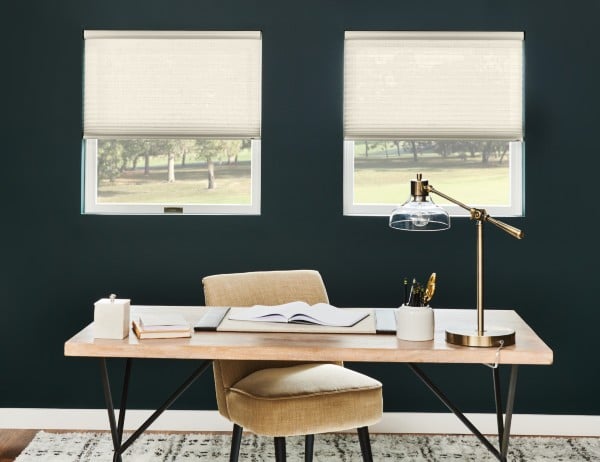
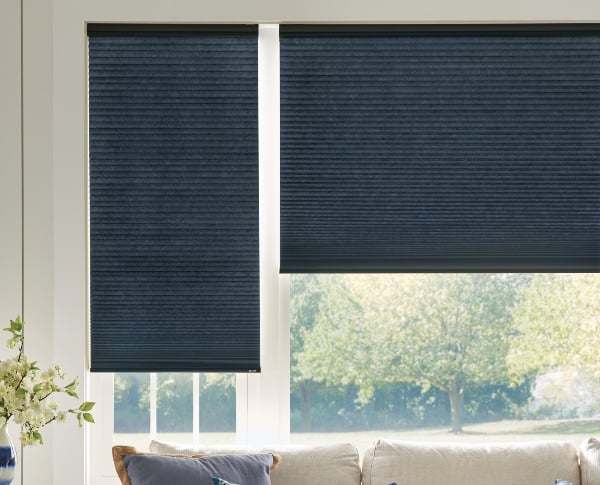
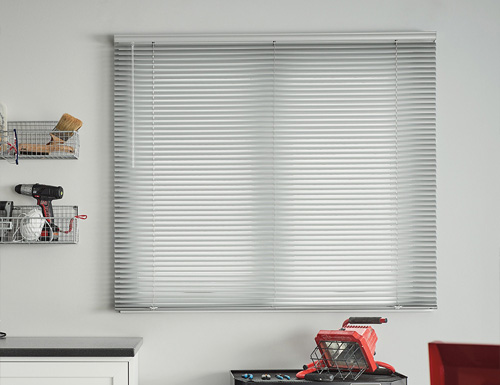
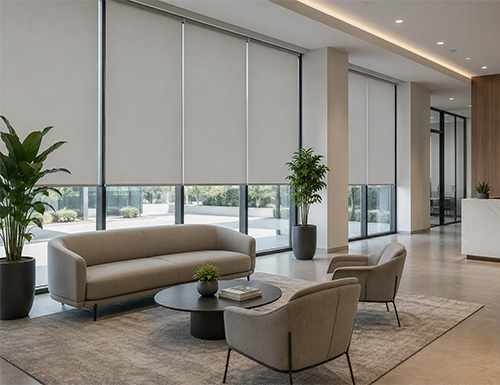
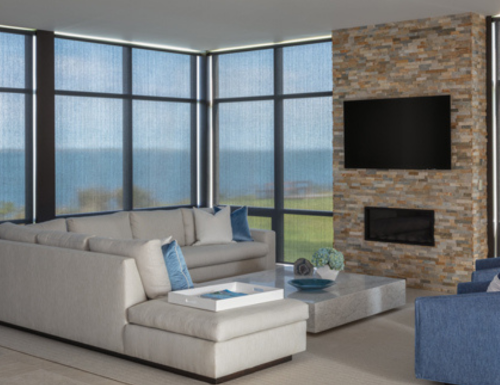
Bacteria and Fungal Resistant Window Coverings



Where Bacteria & Fungal Resistant Fabrics May Be Most Useful
Not every room requires this kind of tested fabric, but there are certain spaces where it can be especially beneficial. Areas with higher humidity or frequent temperature changes tend to place more demands on window covering materials.
Bathrooms and Powder Rooms
Bathrooms often experience steam, humidity, and regular moisture exposure. A fungal-resistant shade fabric may be a more practical option than a delicate untreated textile in these conditions.
Kitchens and Breakfast Areas
Kitchens combine moisture, food preparation, and everyday cleaning. Specialty fabrics that are easier to care for and more resistant to staining issues can be a smart fit near sinks, prep zones, and breakfast nooks.
Laundry Rooms and Utility Spaces
Laundry rooms frequently experience heat and humidity, especially in smaller or less ventilated spaces. Durable, tested shade materials can help support easier long-term maintenance. Explore more: Best Window Blinds and Shades for Humid Laundry Rooms
Sunrooms or Moisture-Prone Areas
In rooms that experience fluctuating temperatures, stronger sunlight, or changing humidity, performance fabrics may offer an added level of confidence when compared with more delicate decorative textiles.
Understanding the Testing Standards
One of the most valuable parts of this topic is helping shopp
ers understand the meaning behind the testing language. Instead of relying on broad marketing claims, it is better to explain what the actual test standards are designed to evaluate.
| Test or Standard | What It Evaluates | Why It Matters |
|---|---|---|
| ASTM G21 | Resistance of synthetic polymeric materials to fungi under controlled test conditions | Helps indicate how a material performs when exposed to conditions favorable to fungal growth |
| ATCC 6275 Aspergillus Niger | A commonly referenced fungal test organism | Used as part of evaluating resistance to fungal growth |
| ATCC 9645 Trichoderma | A commonly referenced fungal test organism | Used as part of evaluating how a material responds to fungal exposure |
| ASTM E1428-9 Pink Staining | Resistance to pink staining associated with certain microorganisms on polymeric materials | Helps evaluate susceptibility to staining that can affect appearance over time |
These tests do not all measure the same thing. Some relate more directly to fungal resistance, while others focus on staining or material appearance after microbial exposure. That is why product-level details are important. A fabric may be tested for one standard, several standards, or a broader set of performance properties.
What ASTM G21 Means for Window Shade Fabrics
ASTM G21 is commonly referenced when discussing resistance to fungi on synthetic polymeric materials. For window treatments, this helps indicate that a fabric or component has been evaluated under conditions designed to encourage fungal growth so its resistance can be observed.
For homeowners, the practical takeaway is simple: this testing helps identify materials that may be better suited for higher-humidity settings or spaces where long-term resistance to fungal growth is a useful performance feature.
That said, good ventilation, regular cleaning, and proper room maintenance still matter. A tested fabric can support a healthy-home environment, but it does not replace normal moisture control practices.
Learn more: What ASTM G21 for Window Shade Fabrics
What ASTM E1428 Pink Staining Resistance Means
ASTM E1428 is associated with resistance to pink staining on polymeric materials caused by certain microorganisms. In the context of window treatments, this kind of testing can be especially relevant where appearance and easy maintenance matter.
A fabric that performs well against pink staining may be a better fit in moisture-prone environments where discoloration would otherwise become a concern over time. This is not the same as saying a material is immune to all staining or maintenance issues, but it does provide an additional layer of performance information for shoppers who want something more durable.
How This Differs from GREENGUARD and OEKO-TEX
One of the biggest sources of confusion for customers is assuming that all healthy-home labels and test terms mean the same thing. They do not. Bacteria- and fungal-resistant testing answers a different question than emissions testing or textile substance testing.
| Topic | Main Focus | Best Answers the Question |
|---|---|---|
| Bacteria & Fungal Resistance Testing | Resistance to fungi or microbial staining under specific test conditions | How well might this fabric perform in moisture- or microbial-related conditions? |
| GREENGUARD | Indoor air quality and chemical emissions | Does this product help support lower chemical emissions indoors? |
| OEKO-TEX | Testing for harmful substances in textiles | Has this textile been tested for a wide range of harmful substances? |
If you want to understand the differences in more detail, we recommend reading our comparisons on GREENGUARD vs. GREENGUARD Gold and GREENGUARD vs. OEKO-TEX certifications for window coverings.
You can also explore our curated guides to best GREENGUARD certified shades and best GREENGUARD certified blinds if indoor air quality is one of your top priorities.
What These Performance Claims Do Not Mean
When writing about healthy-home products, clarity matters. A bacteria- or fungal-resistant fabric should not be confused with a medical claim or a guarantee of a healthier room by itself.
- It does not mean the shade kills all bacteria.
- It does not mean the shade prevents all mold or mildew in a room.
- It does not mean the window treatment eliminates allergens.
- It does not replace ventilation, cleaning, or moisture control.
- It does mean the tested fabric may offer a useful material-performance advantage in the right environment.
This is why many shoppers research multiple healthy-home factors together, including low emissions, harmful-substance testing, easy-clean surfaces, and moisture resistance.
Learn more: Difference Between Mold Resistant and Mildew Resistant Window Treatments, plus Are Antimicrobial Window Treatments Worth the Cost?
How to Shop for Healthy-Home Window Treatments
If you are trying to create a healthier home, the best choice is often not about one feature alone. It is about finding the right combination of performance characteristics for your needs.
Start with the Room Conditions
If the room is humid, moisture resistance and fungal-resistant performance may matter more. If the room is a nursery, bedroom, or frequently occupied living space, you may also want to focus heavily on emissions and textile testing.
Compare Multiple Healthy-Home Priorities
A well-informed shopper may compare fungal resistance with factors like low VOC shade options, non-toxic materials, and products recommended for allergy-conscious homes.
Review Product-Level Details
Not every product or every fabric within a product family will offer the same testing or performance claims. Always review the product details or contact us if you want help identifying qualifying options.
Shop Window Blinds for Bathrooms
Related Healthy Home Resources
If you are researching healthy-home window coverings, these additional guides can help you compare related topics and find the right fit for your space.
- Healthy Home Window Treatments
- Microban Antimicrobial Window Blinds and Shades
- GREENGUARD Window Treatments Guide
- OEKO-TEX Window Treatments Guide
- GREENGUARD vs. GREENGUARD Gold
- GREENGUARD vs. OEKO-TEX Certifications for Window Coverings
- Best GREENGUARD Certified Shades
- Best GREENGUARD Certified Blinds
- Low VOC Window Shades
- Non-Toxic Window Treatments
- Best Window Treatments for Allergies
Why Trust Blinds Chalet
Blinds Chalet has helped customers shop for custom window coverings since 2006. Our goal is to make technical information easier to understand so you can choose products that match your priorities, whether that is privacy, energy efficiency, certifications, easy maintenance, or healthier-home features.
When we build healthy-home content, we focus on using precise language and explaining how different product attributes fit together. Rather than treating every label as interchangeable, we help shoppers understand how topics like fungal resistance, low VOC materials, GREENGUARD, and OEKO-TEX serve different purposes.
Bacteria & Fungal Resistant Window Shades FAQs
What are bacteria and fungal resistant window shades?
Bacteria- and fungal-resistant window shades are products that use fabrics or materials tested for resistance to certain fungal growth or microbial staining under specific laboratory conditions. These features may make them a practical option for moisture-prone or easy-care environments.
Does fungal resistant mean mold proof?
No. Fungal resistant does not mean mold proof. It means the tested material has shown resistance to fungal growth under specific laboratory conditions. Good room ventilation and moisture control are still important.
What does ASTM G21 mean?
ASTM G21 is a test method commonly used to evaluate the resistance of synthetic polymeric materials to fungi. In window treatment fabrics, it helps indicate how a material performs when exposed to conditions favorable to fungal growth.
What does ASTM E1428 pink staining resistance mean?
ASTM E1428 relates to resistance to pink staining associated with certain microorganisms on polymeric materials. For window shades, this type of testing helps evaluate a material's resistance to visible staining issues over time.
Are bacteria and fungal resistant fabrics the same as GREENGUARD certified products?
No. Bacteria- and fungal-resistant testing focuses on how a material performs against fungal growth or microbial staining. GREENGUARD certification focuses on indoor air quality and chemical emissions. They address different product characteristics.
Are bacteria and fungal resistant fabrics the same as OEKO-TEX?
No. OEKO-TEX relates to testing textiles for harmful substances, while bacteria- and fungal-resistant testing focuses on specific material performance against fungi or microbial staining. Both may be helpful, but they answer different questions.
Where are bacteria and fungal resistant window shades most useful?
These fabrics may be especially useful in bathrooms, kitchens, laundry rooms, and other spaces where humidity, moisture, or easy care are important factors.
Do bacteria and fungal resistant shades help with a healthy home?
They can be one part of a healthy-home strategy, especially in moisture-prone areas. Many homeowners also compare other factors such as low VOC materials, harmful-substance testing, and easy-to-clean finishes when shopping for healthier-home window treatments.
Can I use these shades in bathrooms and kitchens?
Yes, bathrooms and kitchens are among the most common spaces where these tested fabrics may be useful because of humidity, moisture, and routine cleaning demands.
How do I find healthy-home window treatments at Blinds Chalet?
Start with our Healthy Home Window Treatments resource center, then compare related guides on GREENGUARD, OEKO-TEX, low VOC window shades, non-toxic window treatments, and allergy-friendly options to find the features that matter most for your home.