







Antimicrobial window shade fabrics can be a useful upgrade when you want added product protection against certain bacteria, fungi, mold, mildew, odors, or staining. But whether they are worth it depends on the room, the specific fabric, and what the manufacturer actually documents.
The term antimicrobial is broad. It does not automatically mean that a fabric resists every type of bacteria, mold, or fungus, and it does not mean the shade disinfects a room or protects people from illness. The value comes from the specific performance of the treated or tested material.
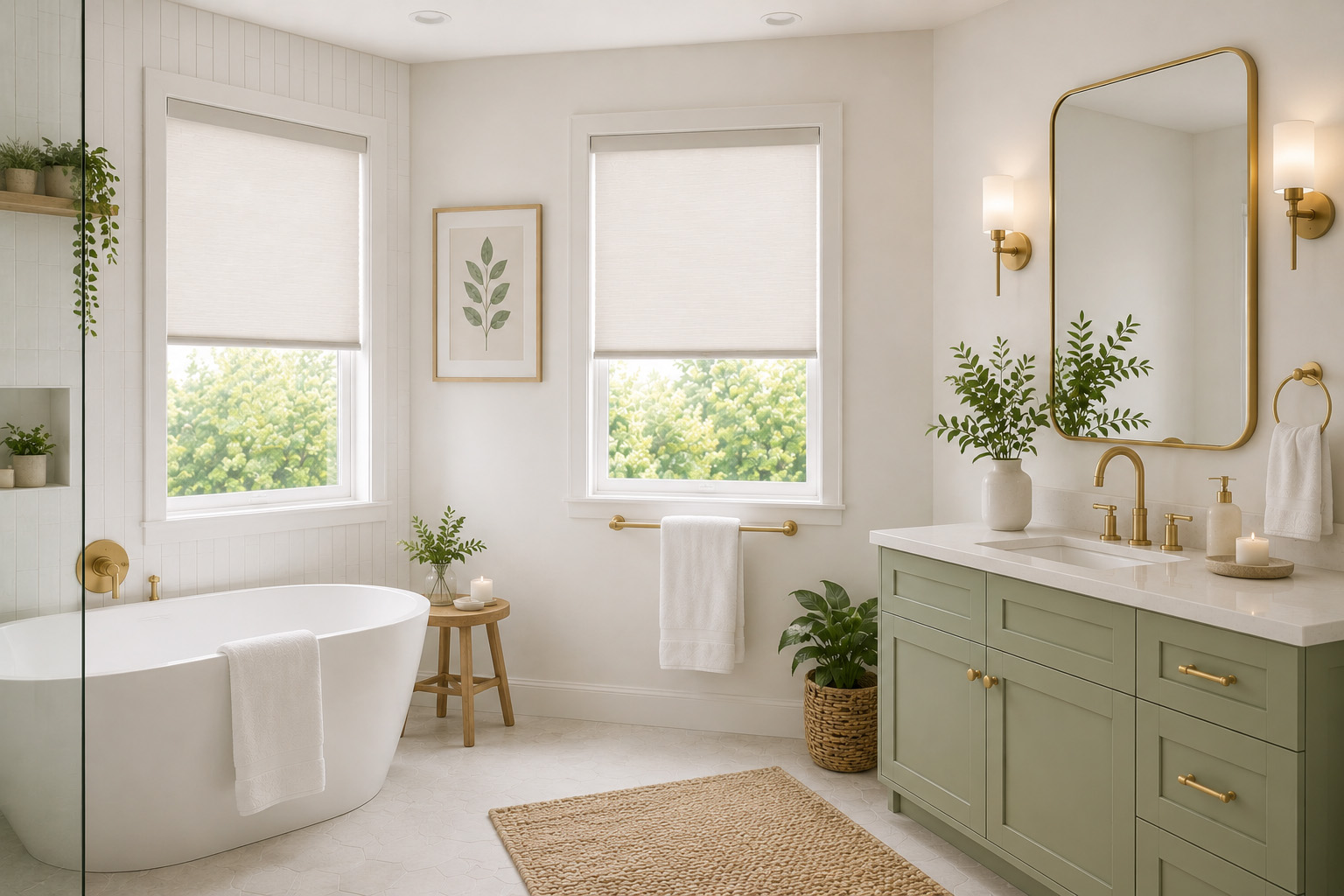
For homeowners shopping for bathrooms, kitchens, laundry rooms, or other moisture-prone spaces, antimicrobial or fungal-resistant fabrics may provide an additional layer of product protection. In a dry living room or bedroom, however, the feature may be less important than factors such as light control, privacy, energy efficiency, or fabric style.
This guide explains when antimicrobial window shades are worth considering, how technologies such as Microban® differ from fungal-resistance testing, and what to look for before paying more for a specialty performance fabric.
Are Antimicrobial Window Shades Worth the Extra Cost?
They can be. Antimicrobial window shades are most worthwhile when the treatment will be installed in a space where humidity, moisture, frequent cleaning, odors, staining, or microbial-related material degradation are realistic concerns.
They are generally less compelling when the room stays dry and the antimicrobial feature does not solve a specific problem you have.
| Situation | How Useful Is Antimicrobial Protection? | Why |
|---|---|---|
| Bathroom | Potentially very useful | Higher humidity and moisture make fungal resistance and easy-care materials more relevant |
| Kitchen | Often useful | Moisture, cooking, and frequent cleaning can place more demands on the fabric |
| Laundry Room | Often useful | Heat and humidity can make performance fabrics worth considering |
| Dry Bedroom | Usually lower priority | Privacy, light control, and fabric style may matter more |
| Living Room | Depends on conditions | May be useful for easy care, but often not a primary need |
| Commercial or High-Use Space | Potentially useful | Durability, cleanability, and product protection may be more important |
What Does Antimicrobial Mean on a Window Shade?
Antimicrobial generally describes a material or treatment designed to inhibit the growth of certain microorganisms on the treated surface. Depending on the technology or fabric, that may include certain bacteria, fungi, mold, or mildew.
The exact claim matters. A fabric described as antimicrobial may have a broader treatment than one described only as fungal resistant, but you should not assume broad protection without checking the documentation.
Look for Specific Supporting Language
Useful product documentation may identify:
- Antibacterial performance.
- Antifungal or fungal-resistant performance.
- Mold or mildew resistance.
- Microbial stain resistance.
- A branded antimicrobial technology such as Microban®.
- A laboratory test such as ASTM G21.
The strongest claims are the ones tied to the exact fabric you are ordering.
Not All Antimicrobial Window Shade Fabrics Are the Same
Antimicrobial is an umbrella term, so two fabrics carrying that description may perform differently.
One material may be primarily designed to inhibit bacterial growth. Another may focus on mold and mildew resistance. A third may combine several types of microbial product protection.
This is why Blinds Chalet recommends reviewing the product-level documentation rather than relying only on the word antimicrobial.
Three Questions to Ask
- Which microorganisms does the treatment or test actually address?
- Does the documentation apply to the exact fabric or color being ordered?
- Is the claim based on a treatment, a laboratory test, or both?
How Does Microban® Fit Into Antimicrobial Window Shades?
Microban® is branded antimicrobial product-protection technology that can be incorporated into or applied to qualifying materials. Depending on the specific technology used, it may help inhibit certain bacteria, mold, mildew, or fungi on the treated material.
Microban is not the same thing as an antimicrobial test. It is a technology intended to provide product protection.
If a window shade fabric includes Microban, the important step is confirming exactly which Microban technology is used and what performance claims apply to that specific fabric.
Learn more in our guide to Microban® Antimicrobial Window Shades.
How Does ASTM G21 Relate to Antimicrobial Window Shades?
ASTM G21 is a standardized laboratory practice used to evaluate fungal resistance of synthetic polymeric materials. It is not an antimicrobial treatment.
A fabric may be antimicrobial because it contains a treatment or technology, while ASTM G21 provides evidence about how a specific material performs when exposed to fungi under controlled test conditions.
The two can complement each other, but they should not be confused.
| Feature | Antimicrobial Treatment or Technology | ASTM G21 |
|---|---|---|
| What Is It? | Material treatment or technology intended to inhibit specified microorganisms | Laboratory test practice for fungal resistance |
| Provides Protection? | Yes, on qualifying treated materials | No. It evaluates performance |
| Tests Bacteria? | Depends on the technology | No |
| Tests Fungi? | Depends on the technology | Yes, fungal resistance is the focus |
| Certification? | Not necessarily | No |
For a deeper explanation, see What Does ASTM G21 Mean for Window Shade Fabrics?.
What About Mold- and Mildew-Resistant Shades?
Mold-resistant and mildew-resistant fabrics are related to antimicrobial performance, but the terms are more specific to fungal growth.
A shade may be described as antimicrobial while another is described specifically as mold or mildew resistant. The exact wording matters less than the supporting documentation behind the claim.
For a detailed comparison, see Mold-Resistant vs. Mildew-Resistant Window Shades: What's the Difference?.
Potential Benefits of Antimicrobial Window Shade Fabrics
When the feature is supported by the specific product documentation, antimicrobial fabrics can offer useful product-performance benefits.
Helps Resist Microbial-Related Odors
Certain microorganisms can contribute to unpleasant odors on materials. Antimicrobial product protection may help reduce microbial growth associated with those odors.
Helps Resist Staining
Some microorganisms can contribute to discoloration or staining. Qualifying performance fabrics may be more resistant to those effects.
May Help Protect the Material
Microbial growth can contribute to material degradation in some environments. Antimicrobial or fungal-resistant properties may help preserve the appearance or performance of a treated fabric.
Can Be Useful in Humid Rooms
Bathrooms, kitchens, and laundry areas are common locations where added fungal or antimicrobial resistance may be worth considering.
What Antimicrobial Window Shades Do Not Do
Antimicrobial window treatments should be evaluated as a product-performance feature, not as a medical or sanitation device.
- They do not sterilize a room.
- They do not replace routine cleaning.
- They do not eliminate the need for ventilation or humidity control.
- They are not automatically mold proof.
- They do not necessarily protect against every type of bacteria or fungus.
- They should not be described as preventing illness unless specific regulatory documentation supports such a claim.
This is especially important when comparing healthy-home features. Antimicrobial resistance is useful for the treated material, but it should not be presented as a substitute for good indoor moisture management.
Which Rooms Benefit Most From Antimicrobial Window Shades?
Bathrooms
Bathrooms are one of the strongest applications because humidity, steam, and condensation can create more challenging conditions for window treatment materials.
Kitchens
Kitchens combine moisture, cooking activity, and frequent cleaning, making durable performance fabrics particularly useful.
Laundry Rooms
Heat and humidity from washers and dryers can increase the value of moisture-resistant and microbial-resistant materials. Learn more about what the Best Window Treatments are for Humid Laundry Rooms
Utility and High-Use Spaces
Rooms that are frequently used, cleaned, or exposed to changing environmental conditions may also benefit from specialty performance fabrics.
When Antimicrobial Shades May Not Be Worth the Upgrade
You do not need to pay more for antimicrobial technology simply because it is available.
In a dry bedroom, office, or living room, other product features may provide more noticeable everyday value.
You May Want to Prioritize Instead
- Better light control.
- Improved privacy.
- Blackout performance.
- Energy efficiency.
- Motorization or cordless operation.
- Fabric appearance and color.
- GREENGUARD or other emissions-related certifications when indoor air quality is the primary concern.
The best upgrade is the one that solves a real need in the room.
Is It Worth Paying More for Antimicrobial Fabric?
If the antimicrobial option adds cost, compare that premium with the environment where the shade will be used.
| Factor | More Likely Worth It | Less Likely Worth It |
|---|---|---|
| Humidity | Room regularly experiences higher humidity | Room remains consistently dry |
| Condensation | Window frequently experiences condensation | Condensation is rare |
| Cleaning | Shade is in a high-use or easy-care environment | Shade receives little exposure to moisture or contaminants |
| Documented Performance | Exact fabric has clear antimicrobial or fungal-resistance documentation | Claim is vague or does not clearly apply to the selected fabric |
| Price Difference | Premium is reasonable for the benefit you need | Large premium for a feature unlikely to matter in the room |
How to Choose an Antimicrobial Window Shade
Confirm the Exact Fabric
Do not assume every fabric or color within a product includes the antimicrobial feature.
Read the Exact Claim
Determine whether the product documentation references bacteria, fungi, mold, mildew, microbial staining, or a broader antimicrobial technology.
Look for Supporting Tests
When fungal resistance matters, documentation such as ASTM G21 testing can provide useful additional evidence.
Consider Moisture Resistance
Antimicrobial performance does not automatically mean the complete shade is appropriate for persistent moisture exposure. Review the entire product construction.
Compare Other Healthy-Home Features
Depending on your priorities, certifications and material testing related to chemical emissions or harmful substances may also be important.
Bacteria- and Fungal-Resistant Window Shade Options
Some window treatment fabrics have specific documentation for bacteria resistance, fungal resistance, or resistance to microbial staining. These products may provide a more targeted option when microbial performance is an important part of your decision.
Learn more about qualifying materials in our Bacteria & Fungal Resistant Window Shades guide.
How Antimicrobial Shades Fit Into a Healthy Home
Antimicrobial product protection can be one useful feature in a broader healthy-home strategy, but it addresses a different question than low-emission certifications or harmful-substance testing.
A homeowner concerned primarily about humidity may place more value on fungal resistance and easy-clean materials. Someone focused on indoor air quality may care more about chemical-emission certifications.
For a broader overview, visit our Healthy Home Window Treatments resource center.
Expert Guidance from Blinds Chalet
Blinds Chalet has helped homeowners shop for custom window treatments since 2006. Antimicrobial fabrics can be valuable, but we do not recommend choosing them simply because the word antimicrobial sounds healthier.
We look at the actual room conditions and the documentation for the specific fabric. In bathrooms, kitchens, laundry rooms, and other moisture-prone spaces, fungal or antimicrobial product protection may provide a meaningful material-performance advantage.
In a dry room, the same upgrade may provide less practical value than better privacy, light control, energy efficiency, or another feature you will notice every day.
We also distinguish between treatments and tests. Technologies such as Microban® may provide antimicrobial product protection, while standards such as ASTM G21 evaluate fungal resistance. The presence of one should not automatically be used as proof of the other.
If antimicrobial performance is important to you, contact us before ordering. We can help identify qualifying products and fabrics and explain which claims are supported for the exact material you are considering.
Related Healthy Home Window Treatment Guides
- Healthy Home Window Treatments
- Bacteria & Fungal Resistant Window Shades
- Microban® Antimicrobial Window Shades
- What Does ASTM G21 Mean for Window Shade Fabrics?
- Mold-Resistant vs. Mildew-Resistant Window Shades: What's the Difference?
- GREENGUARD Window Treatments
- OEKO-TEX® Window Treatments
- Low VOC Window Shades
- Non-Toxic Window Treatments
- Best Window Treatments for Allergies
Antimicrobial Window Shades FAQs
Are antimicrobial window shades worth it?
They can be worth it in bathrooms, kitchens, laundry rooms, and other spaces where humidity, moisture, odors, staining, or microbial-related material degradation are concerns. In dry rooms, other features such as privacy, light control, or energy efficiency may provide more noticeable value.
What does antimicrobial mean on a window shade?
Antimicrobial generally means a qualifying material or treatment is designed to inhibit certain microorganisms on the treated surface. The exact performance may involve bacteria, fungi, mold, mildew, or other microorganisms depending on the specific technology and documentation.
Do antimicrobial window shades kill bacteria?
Some antimicrobial technologies are designed to inhibit certain bacterial growth on treated materials. The exact claim depends on the specific product. Antimicrobial window shades should not be treated as disinfectants or as substitutes for normal cleaning.
Do antimicrobial window shades prevent mold?
Some antimicrobial fabrics may provide fungal, mold, or mildew resistance, but resistant does not mean mold proof. Persistent moisture, condensation, poor ventilation, and other conditions can still contribute to fungal growth.
Is Microban an antimicrobial treatment?
Microban® is branded antimicrobial product-protection technology that can be incorporated into or applied to qualifying materials. The exact bacteria, mold, mildew, or fungal performance depends on the specific Microban technology used.
Is ASTM G21 an antimicrobial treatment?
No. ASTM G21 is a standardized laboratory practice used to evaluate fungal resistance of synthetic polymeric materials. It measures performance but does not itself provide antimicrobial protection.
What is the difference between Microban and ASTM G21?
Microban is antimicrobial product-protection technology, while ASTM G21 is a laboratory test practice used to evaluate fungal resistance. A fabric may potentially have both, but one should not be assumed based on the other.
Are antimicrobial shades good for bathrooms?
They can be a useful option for bathrooms when the exact fabric has documented antimicrobial or fungal-resistance performance and the complete window treatment is suitable for humid conditions. Proper ventilation and moisture control are still important.
Are antimicrobial window shades healthier?
Antimicrobial product protection can be a useful material feature, but it should not be treated as proof that a window shade makes a room healthier by itself. Healthy-home decisions may also include moisture control, chemical emissions, material testing, cleanability, and ventilation.
Do antimicrobial shades still need to be cleaned?
Yes. Antimicrobial product protection does not replace regular cleaning. Follow the manufacturer's care instructions and keep the surrounding window area dry and properly ventilated.
Do all antimicrobial fabrics resist both bacteria and fungi?
No. Antimicrobial is a broad term, and the exact organisms addressed depend on the material, treatment, and supporting test documentation. Confirm whether the specific fabric has antibacterial, antifungal, mold, mildew, or broader antimicrobial claims.
How do I choose an antimicrobial window shade?
Confirm that the antimicrobial claim applies to the exact fabric you are ordering, review which microorganisms the documentation addresses, look for supporting tests where applicable, and make sure the complete shade is suitable for the room's moisture and cleaning conditions.
Can Blinds Chalet help me find antimicrobial window shades?
Yes. Blinds Chalet can help identify qualifying products and fabrics with documented antimicrobial, bacterial, fungal, mold, or mildew resistance and explain the available testing or product-protection information before you order.