




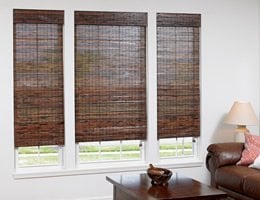
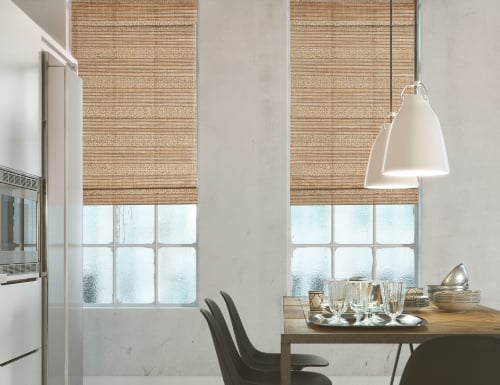
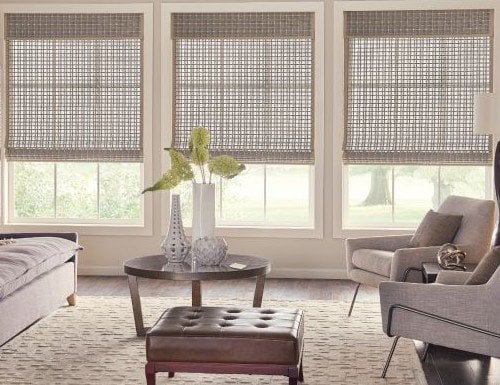
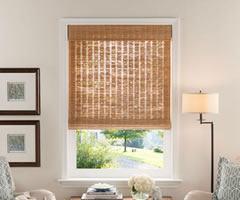
Jute window shades bring the texture and warmth of natural fibers to a window while maintaining the clean, functional shape of a custom shade. Depending on the weave, jute can create anything from a soft, refined natural look to a more rustic, highly textured appearance.
Jute is commonly used alongside bamboo, grasses, reeds, straw and other natural materials in the broader category of woven wood shades. That is why you may see these treatments described as jute shades, jute bamboo shades, natural woven shades or woven wood shades.
For homeowners who want a window treatment with more texture and natural variation than a solid fabric shade, jute can be an excellent choice. It is especially well suited to relaxed, organic and layered interiors where the material itself becomes part of the design.
Explore our complete selection of bamboo and woven wood shades, or see our Kukui Soft Jute Woven Shades for a custom jute-forward option.
Soft Jute Window Shades


What Are Jute Window Shades?
Jute window shades are woven window treatments that incorporate natural jute fiber into the shade material. The fibers are woven into a decorative panel and mounted to a headrail so the shade can be raised and lowered much like other custom woven shades.
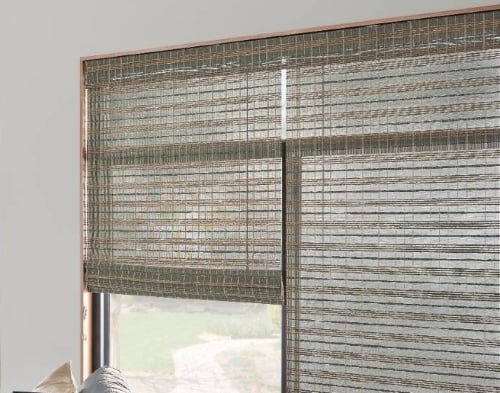
Unlike a smooth roller shade or tightly woven Roman shade fabric, jute emphasizes visible texture. Variations in fiber thickness, color, spacing and weave are part of the natural appearance.
Some jute shades use jute as the dominant material, while others combine it with bamboo, grasses, straw, wood-inspired fibers or other natural materials to achieve different colors and textures.
Are Jute Shades the Same as Bamboo Shades?
Not exactly, although the terms are often used together.
Bamboo and jute are different natural materials. Bamboo is a rigid grass that can be split or processed into slats and narrow strips, while jute is a softer plant fiber that can be woven much more like a textile.
Both materials are commonly used within the larger category of bamboo and woven wood shades, along with reeds, grasses and other natural fibers.
| Feature | Jute Shades | Bamboo Shades |
|---|---|---|
| Material | Soft natural plant fiber | Natural bamboo strips or fibers |
| Typical Texture | Softer, woven and textile-like | Can be structured, slatted or heavily textured |
| Appearance | Relaxed, organic and warm | Ranges from refined to rustic |
| Natural Variation | Expected | Expected |
| Privacy Without a Liner | Depends heavily on weave openness | Depends heavily on weave openness |
| Available Within Woven Wood Category | Yes | Yes |
The better choice is usually determined by the specific weave rather than the material name alone. Always look at actual samples because two jute or bamboo materials can have very different levels of openness, texture and color.
What Do Jute Shades Look Like?
The appeal of jute comes largely from its texture. Individual fibers remain visible within the weave, creating depth that is difficult to reproduce with a printed or solid-color fabric.
Depending on the selected material, jute woven shades can look:
- Soft and understated.
- Rustic and highly textured.
- Light and coastal.
- Warm and earthy.
- Refined enough for contemporary interiors.
- Layered and casual when paired with curtains or drapery.
Natural materials also interact with changing daylight. The weave may appear lighter when sunlight passes through it and more dimensional in the evening when viewed primarily from the room side.
Natural Variation Is Part of a Jute Shade
Jute and other woven natural materials should not be expected to have the uniform appearance of a synthetic roller shade fabric.
Variation can occur in fiber diameter, texture, coloration, spacing and weave. Knots, darker fibers, lighter fibers and subtle irregularities may also be visible.
These differences are part of the character of a natural woven shade rather than an indication that every shade will look exactly like a printed fabric sample.
Order Samples Before Choosing a Color
We strongly recommend ordering samples before selecting a jute woven shade, particularly when color or texture needs to coordinate with cabinetry, flooring, furniture or other natural materials.
A computer or phone screen cannot fully reproduce the depth and variation of a real woven material.
Kukui Soft Jute Woven Shades
Our Kukui Soft Jute Woven Shades are a good example of how jute can be incorporated into a custom natural shade. The collection uses natural jute along with materials such as straw, bamboo and wood-inspired fibers to create a range of woven textures.
The material has a softer appearance than many heavily structured bamboo weaves while still providing the dimension and organic character people look for in natural woven shades.
The Kukui collection also includes a coordinating valance to help finish the top of the shade. Depending on your selected configuration, additional options can be used to change privacy, light control and operation.
Because the woven materials are natural, variations in tone, fiber shape, texture and spacing should be expected from one shade to another.
Shop Kukui Soft Jute Woven Shades.
Do Jute Shades Provide Privacy?
Privacy depends primarily on how tightly the selected material is woven.
Some jute materials have a relatively tight weave and provide considerable daytime privacy on their own. Other decorative open weaves can allow silhouettes, shapes or direct views through the material, particularly when the room is illuminated at night.
Do not assume a natural shade is private simply because it looks relatively opaque during the daytime.
Nighttime Privacy Is Different
At night, interior lighting can make an open natural weave substantially more transparent when viewed from outside.
If privacy is important for a bedroom, bathroom or street-facing window, consider adding a privacy or blackout liner rather than relying only on the woven material.
Should You Add a Liner to Jute Shades?
A liner can significantly change how a jute window shade performs.
| Configuration | Light Control | Privacy | Appearance |
|---|---|---|---|
| No Liner | Allows the most natural light through the weave | Depends on weave openness | Shows the natural material most clearly |
| Privacy Liner | Filters additional light | Improves privacy | Reduces some visibility through the weave |
| Blackout Liner | Blocks light through the lined portion | High privacy | Natural texture remains visible from the room side but less light passes through it |
We often recommend a liner when privacy or stronger light control is important. Without one, the beauty of an open weave is more visible, but so are the spaces between the fibers.
How Much Light Do Jute Window Shades Block?
There is no single answer because jute shades can be woven very tightly or very openly.
An open weave can soften direct sunlight while maintaining a brighter room and allowing portions of the window or outdoor view to remain visible. A denser weave provides more coverage.
A liner changes the result even more dramatically. A privacy liner reduces incoming light and visibility, while a blackout liner is intended to block light through the lined material.
If light control is important, evaluate both the selected weave and liner rather than shopping by material name alone.
Can Jute Shades Be Blackout?
The woven jute material itself is generally selected for texture and natural appearance rather than complete light blockage.
When available, adding a blackout liner can turn a decorative woven shade into a much more effective room-darkening treatment.
Keep in mind that blackout material does not automatically eliminate light around the edges of the shade. Inside-mounted shades can still have perimeter light gaps. An outside mount with appropriate overlap may provide better coverage when maximum darkness is a priority.
Where Do Jute Shades Work Best?
Jute shades can work in many rooms, but they are especially effective in spaces where texture and natural materials contribute to the overall design.
Living Rooms
Jute woven shades can add visual warmth without the heavier appearance of some traditional window treatments. They also layer particularly well with curtains when additional softness or privacy is desired.
Dining Rooms
The natural texture can complement wood tables, woven seating, natural stone and other organic finishes commonly used in dining spaces.
Bedrooms
For bedrooms, we generally recommend considering a privacy or blackout liner. An unlined open weave may not provide enough nighttime privacy or room darkening.
Home Offices
Jute can soften a workspace visually while allowing you to control natural light. If computer glare is a concern, select a denser weave or appropriate liner.
Are Jute Shades Good for Bathrooms?
We would be more selective about using natural jute in a high-humidity environment.
Jute, bamboo and other natural woven materials can react to moisture and humidity differently than synthetic materials. A well-ventilated powder room may be very different from a frequently used bathroom with a shower or tub.
If the window regularly experiences condensation or high humidity, a more moisture-resistant material may be a better choice.
Are Jute Shades Good for Kitchens?
Jute shades can work beautifully in a kitchen when the window is away from heavy moisture, grease and food splatter.
We would be more cautious directly above a sink, near a cooktop or in another location where the material may need frequent wet cleaning.
Natural woven materials are best suited to areas where routine dusting is sufficient rather than locations that require repeated scrubbing.
What Decorating Styles Work With Jute Window Shades?
One of the advantages of jute is that it is not limited to a single decorating style.
The exact weave and color determine whether the treatment feels rustic or refined.
| Design Style | Why Jute Works |
|---|---|
| Organic Modern | Adds natural texture without requiring a heavily patterned fabric |
| Coastal | Light natural fibers complement relaxed coastal materials |
| Bohemian | Layered texture works naturally with handcrafted and global-inspired decor |
| Farmhouse | Natural materials complement wood and casual finishes |
| Transitional | Provides texture while maintaining a simple shade silhouette |
| Contemporary | A refined weave can soften clean architectural lines |
Layering Jute Shades With Curtains
Jute shades are particularly well suited to layered window treatments because they provide texture at the window while curtains add softness, color and additional coverage.
A common arrangement is an inside-mounted jute woven shade with curtain panels mounted outside the window opening.
This combination lets the woven shade provide everyday light control while the curtains can add privacy, room darkening or decorative framing.
For a lighter look, pair a neutral natural weave with simple solid-color curtains. For greater contrast, use the jute texture as a neutral backdrop for patterned or darker drapery.
Inside Mount vs. Outside Mount Jute Shades
| Feature | Inside Mount | Outside Mount |
|---|---|---|
| Appearance | Clean, recessed look | More prominent treatment |
| Window Trim | Keeps trim visible | Can partially or completely cover trim |
| Light Coverage | Normal perimeter gaps may remain | Additional overlap can improve coverage |
| Mounting Depth | Requires sufficient window depth | Useful when inside depth is limited |
| Visual Window Size | Fits within existing opening | Can make the window appear taller or wider |
Always follow the measuring instructions for the exact product before ordering.
What Is Edge Binding on a Jute Woven Shade?
Edge binding is a fabric border added along the sides of certain woven wood shades.
It can provide a more tailored appearance while also helping protect the edges of a natural weave from fraying.
Binding can also create a design accent. Choosing a coordinating color keeps the shade understated, while a contrasting binding emphasizes the outline of the treatment.
Availability, width and color options vary by product.
Shop decorative fabric window shades
Lift and Operating Options for Jute Shades
The natural material determines the appearance of the shade, while the lift system determines how you use it.
Depending on the selected product and dimensions, woven shades may be available with options such as cordless operation, continuous-loop controls, top-down/bottom-up operation or motorization.
Not every lift is available for every size or material, so check the options for the exact shade you are considering.
Our Kukui Soft Jute Woven Shades, for example, offer multiple lift configurations so the natural woven appearance can be combined with different operating preferences.
Can Jute Shades Be Motorized?
Select jute and woven wood shades can be ordered with motorization.
Motorized operation can be especially useful for large, high or frequently operated windows, and it eliminates the need to manually raise and lower the shade.
Because natural woven materials can be heavier than lightweight synthetic fabrics, motorization availability may depend on the exact width, height and material selected.
How Do You Clean Jute Window Shades?
Natural jute shades should generally be cleaned gently.
For routine maintenance, use a feather duster, microfiber duster or low-suction vacuum with a soft brush attachment.
Avoid saturating the natural fibers with water or spraying household cleaners directly onto the shade unless the manufacturer's care instructions specifically permit that method.
If a shade becomes heavily stained, check the care instructions for the exact material before attempting aggressive cleaning.
Advantages and Disadvantages of Jute Window Shades
| Advantages | Things to Consider |
|---|---|
| Natural texture and visual depth | Natural variations in color and weave should be expected |
| Works with many decorating styles | Open weaves may provide limited privacy without a liner |
| Can soften sunlight while maintaining an organic appearance | Natural materials are not ideal for every high-moisture location |
| Available with privacy or blackout liners on select products | A liner changes how much light passes through the natural weave |
| Pairs especially well with curtains | Natural fibers generally require gentler cleaning than some synthetic shades |
| Each shade has natural character | Exact finished coloration and texture can vary from a small sample |
How to Choose a Jute Window Shade
- Start with the weave. Decide whether you want an open, airy appearance or a tighter weave with more coverage.
- Order samples. Natural texture and color are difficult to judge accurately from a screen.
- Think about nighttime privacy. Add a liner when an open weave does not provide enough privacy.
- Determine your light-control needs. Choose between an unlined shade, privacy liner or blackout liner where available.
- Consider the room. Avoid placing delicate natural fibers where they will regularly encounter moisture, grease or splashing.
- Choose inside or outside mount. Your mounting method affects appearance, overlap and light coverage.
- Select an operating system. Cordless, top-down/bottom-up or motorized operation may be available depending on the product.
- Expect natural variation. The differences among fibers are part of what makes a natural woven shade distinctive.
Jute Shades vs. Fabric Shades
A traditional fabric shade usually provides more consistency in color and texture. Jute is chosen specifically because it does not look perfectly uniform.
If your priority is a smooth, highly consistent surface, a fabric Roman shade may be more appropriate. If you want visible natural fibers, variation and texture, a jute woven shade offers a distinctly different look.
Neither approach is inherently better. The decision comes down to the appearance, light control, privacy and maintenance characteristics you want for the room.
Shop Jute and Natural Woven Wood Shades
Blinds Chalet offers custom woven shades made with a variety of natural materials, including jute, bamboo, grasses, straw and other fibers.
For a jute-forward natural look, explore our Kukui Soft Jute Woven Shades.
To compare additional materials, colors, textures and styles, browse our full collection of bamboo and woven wood shades.
Expert Guidance from Blinds Chalet
Blinds Chalet has helped homeowners select custom natural woven shades since 2006. With jute and other natural materials, we recommend choosing based on the actual weave rather than the material name alone.
Two shades described as jute or bamboo can look and perform very differently depending on how tightly the fibers are woven, which materials are combined and whether a liner is added.
We also strongly recommend ordering samples. Natural fiber shades have more variation than solid synthetic fabrics, and seeing the actual material in your home's lighting is the best way to evaluate its color, texture and openness.
If privacy is important, pay particular attention to the weave when backlit. An open natural weave that looks relatively private during the day can become much more transparent at night when lights are on inside the room.
Related Guides
- Bamboo & Woven Wood Shades
- Kukui Soft Jute Woven Shades
- Roman Shades
- Bamboo Shades Expert Advice
- Woven Wood Shades vs Bamboo Shades Explained
- What are Bamboo Shades Explained
- Types of Bamboo Shades
- How to Measure for Blinds and Shades
Jute Window Shade FAQs
What are jute window shades?
Jute window shades are woven shades that incorporate natural jute fibers into the shade material. They are generally grouped with bamboo and woven wood shades because these treatments often combine jute with bamboo, grasses, straw and other natural materials.
Are jute shades the same as bamboo shades?
No. Jute and bamboo are different natural materials. Jute is a softer plant fiber, while bamboo is a rigid grass that can be split and woven into window shade materials. Both are commonly included within the broader category of natural woven wood shades.
Do jute shades provide privacy at night?
It depends on the weave. Open jute weaves may allow silhouettes or views through the shade when interior lights are on at night. A privacy or blackout liner is recommended when nighttime privacy is important.
Can jute window shades be blackout?
Select jute woven shades can be ordered with a blackout liner. The liner blocks light through the lined portion of the shade, although normal edge gaps can still allow some light around the treatment.
Should I add a liner to jute shades?
A liner is a good choice when you need greater privacy or light control. Leaving the shade unlined allows more light to pass through the natural weave and emphasizes its texture, while privacy and blackout liners provide greater coverage.
Are jute shades good for bedrooms?
Yes, but consider a privacy or blackout liner. Many natural jute weaves are intentionally open, so an unlined shade may not provide the nighttime privacy or room-darkening performance desired in a bedroom.
Are jute shades good for bathrooms?
Use caution in bathrooms with frequent high humidity, condensation or splashing. Natural jute and other woven fibers are generally better suited to relatively dry locations. A well-ventilated powder room may be more appropriate than a high-moisture bath.
Can jute shades be motorized?
Select jute and natural woven shades can be ordered with motorized operation. Availability depends on the specific product, material and shade dimensions.
How do you clean jute window shades?
Routine care generally consists of gentle dusting or low-suction vacuuming with a soft brush attachment. Avoid saturating natural jute fibers with water or using harsh household cleaners unless the product's care instructions specifically allow that method.
Do jute window shades vary in color and texture?
Yes. Natural variation in color, fiber size, texture and weave is expected with jute and other natural materials. Ordering samples before purchasing is recommended, but even a finished shade may have natural variations from the sample.
Where can I buy custom jute window shades?
Blinds Chalet offers custom natural woven shades including the Kukui Soft Jute Woven Shades, as well as a broader collection of bamboo and woven wood shades in a variety of natural materials, colors and textures.
Common Questions for "Jute"
Read Answer »
Read Answer »
Read Answer »
Read Answer »
Read Answer »
Read Answer »
Read Answer »
Read Answer »
Read Answer »