









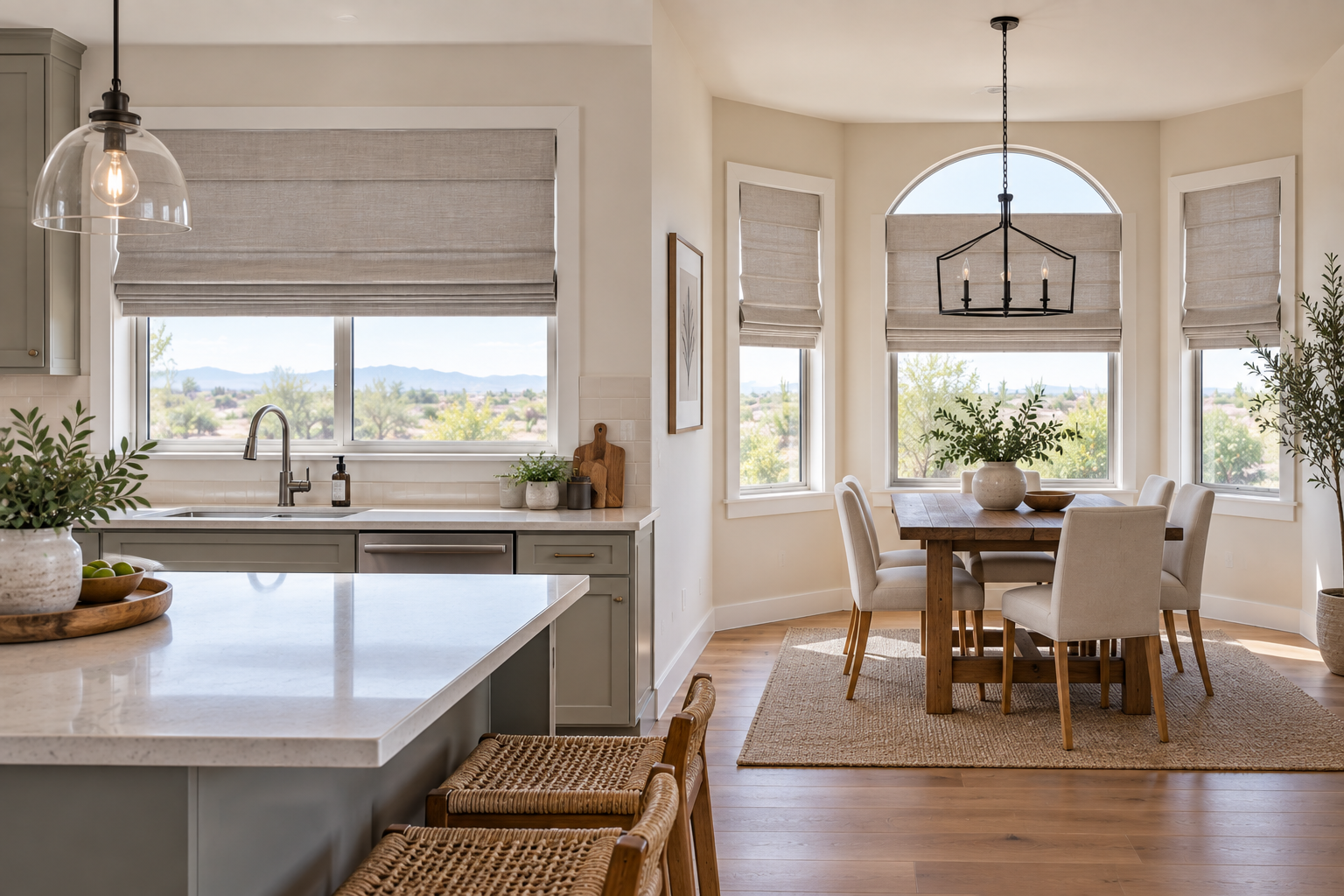
Matching vs. Coordinating: What's the Real Goal
Matching means using the exact same product, color, and style everywhere. Coordinating means choosing treatments that clearly belong to the same overall palette and material language, even if the specific product varies by room. For most homes, coordinating gets you a better result than strict matching, since it lets each room solve its own light, privacy, and function needs while still reading as part of one cohesive home.
When Matching Matters Most
Open Floor Plans and Connected Rooms
When you can see two or three rooms from one vantage point, such as a kitchen open to a living room, mismatched window treatments are much more noticeable than they'd be in separate, closed-off rooms. In open layouts, closely matching color and style across the visible rooms usually looks more intentional.
Windows Within the Same Room
Multiple windows in a single room are the one place where we'd recommend matching exactly rather than just coordinating. Different products or colors on windows that share a wall or a sightline tends to look like an unfinished project rather than a deliberate design choice.
Front-Facing Windows Visible From the Street
If your front-facing windows are visible together from the curb, matching or closely coordinating them affects your home's exterior appearance, not just the interior, so it's worth treating them as a set even if interior rooms elsewhere in the house vary more.
When Variety Works Better
Rooms With Different Functional Needs
A bedroom that needs blackout for sleep, a kitchen that needs an easy-to-clean material, and a home office that needs glare control for a screen all have different practical requirements. Forcing the same product into all three usually means at least one room compromises on function to preserve a match that most guests will never see side by side anyway.
Rooms That Are Never Seen Together
A guest bedroom on a different floor from your main living space doesn't need to match those rooms directly. As long as it fits the broader palette of the home, it can have its own character without disrupting the overall look.
Distinct Design Moments
Formal dining rooms, studies, and other rooms meant to feel a bit more elevated than the rest of the house are a reasonable place to introduce a different treatment style, such as layered drapery over a simpler shade, without breaking the coordination of the rest of the home.
How to Coordinate Without Matching Everything
Pick One or Two Anchor Finishes
Choose a wood tone, a metal finish, or a fabric color family that shows up in most rooms, even if the exact product differs. This is what reads as intentional from room to room, more than using the identical item everywhere. Our window blinds and shades by color page is a useful starting point for narrowing in on a palette before you shop by room.
Vary Opacity and Style Within the Same Color Family
You can use a lighter, sheerer version of a color in a living room and a blackout version of the same general tone in a bedroom, and the rooms will still feel related. This lets each room meet its functional needs without abandoning the overall look.
Let Hardware and Headrail Color Do Some of the Work
If you're mixing blinds and shades throughout the house, matching the headrail or hardware finish — white, black, or a wood tone — can tie the rooms together even when the fabric or slat style itself changes room to room.
Use Wood Tones to Match Existing Trim
If your home has consistent wood trim or flooring tones, matching a wood or faux wood blind to that existing tone is a reliable way to create a coordinated look throughout the house without needing every room to use the same exact product.
Matching vs. Coordinating at a Glance
| Situation | Recommended approach |
|---|---|
| Multiple windows in the same room | Match exactly |
| Open floor plan, connected rooms | Match closely or coordinate tightly |
| Front-facing windows visible from the street | Match or coordinate as a visible set |
| Rooms with different light or privacy needs | Coordinate color or finish, vary the product |
| Rooms rarely seen together (different floors, guest rooms) | Coordinate loosely with the home's general palette |
| Formal or distinct rooms (dining room, study) | Can depart from the rest of the house intentionally |
Common Mistakes
Over-Matching the Whole House
Using the identical product, color, and style in every single room can make a home feel more like a model unit than a lived-in space, and it often forces at least one room to sacrifice function it actually needs.
Under-Matching With No Common Thread
Choosing a completely different color and style for every room with nothing tying them together tends to read as unplanned rather than eclectic. Even a loose coordination, like a shared hardware finish, helps avoid this.
Prioritizing the Match Over the Room's Function
A bedroom without adequate blackout because the rest of the house uses a lighter fabric, or a kitchen window with a hard-to-clean material because it matched the dining room, are both cases where the match cost more than it was worth. Function should generally win when it conflicts with matching.
Forgetting to Plan for Rooms You'll Add Later
If you're outfitting a home in phases, choose an anchor color or finish early so that rooms you complete later still coordinate with what's already installed, rather than picking each room's treatment in isolation.
When This Doesn't Apply
- In a rental property, matching across units usually matters more for cost and repair simplicity than for a curated look; our guide on window treatments for rental units covers that different set of priorities.
- In a home with genuinely distinct architectural eras or additions, forcing one look throughout can fight the character of the space rather than complement it.
- If budget only allows for a few rooms at a time, it's reasonable to prioritize the most visible or highest-use rooms first and coordinate the rest as you go, rather than waiting to do the whole house at once.
Our Take on Whole-Home Coordination
Blinds Chalet has been helping homeowners choose and coordinate window treatments since 2006, and the houses that feel most put-together are almost never the ones where every room matches exactly. They're the ones with a clear, consistent thread — a color family, a wood tone, a hardware finish — running through rooms that are each otherwise free to solve their own light and privacy needs. If you're planning treatments for multiple rooms at once, our design consultants can help you pick that anchor point before you start ordering room by room.
Related Guides
- Shop Window Blinds and Shades by Color
- Tips for Choosing the Best Window Treatment Color for Your Home
- A Complete Guide to Types of Window Blinds and Styles
- Best Window Treatments for Transom Windows
- The Best Types of Window Shades: A Comprehensive Guide
Frequently Asked Questions
Do all the blinds in my house need to be the same color?
No. It's generally better to coordinate around a shared color family, wood tone, or hardware finish than to use the exact same color everywhere, which lets each room meet its own light and privacy needs while still feeling connected to the rest of the home.
Should windows in the same room match each other?
Yes, this is the one case where we'd recommend matching exactly. Different products or colors on windows sharing the same room or wall tend to look unfinished rather than intentional.
Can I mix blinds and shades throughout my home?
Yes, mixing product types room to room is common and works well as long as there's a shared element tying them together, such as a consistent color palette or matching hardware and headrail finish.
What if a room needs a different treatment for practical reasons?
Function should generally take priority over an exact match. A bedroom that needs blackout or a kitchen that needs an easy-to-clean material is a reasonable place to depart from the rest of the house, as long as the color or finish still loosely coordinates.
How do I choose a starting point if I'm outfitting my whole house at once?
Pick one or two anchor finishes first, such as a wood tone that matches your trim or a neutral color family, before choosing individual products room by room. That anchor makes it easier to keep later rooms coordinated with the ones you've already completed.