









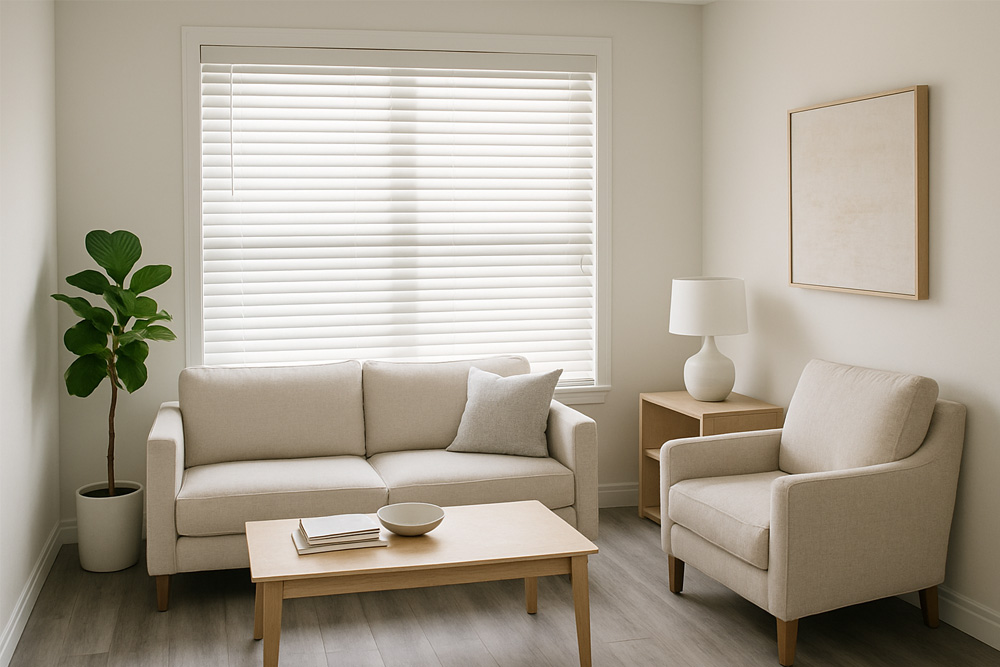
Complete Guide to Window Blind Styles
Choosing the right custom window blinds can transform both the functionality and aesthetics of your home. With countless options available, understanding the different types of blinds windows can accommodate helps you make informed decisions that enhance privacy, light control, and energy efficiency while complementing your interior design. Window blinds are hard window coverings featuring adjustable slats or panels that tilt, raise, and lower to manage light penetration and privacy levels. Unlike window shades, which use continuous fabric panels, blinds offer precise directional control through individual slats that can be angled to your exact preferences. This comprehensive guide explores every major blind type, from classic wood blinds to modern motorized systems, helping you select the perfect window treatment for each room in your home.
Window blinds offer the perfect combination of light control, privacy, and style for any home. With numerous materials, designs, and operating mechanisms available, selecting the right blinds can transform both the functionality and appearance of your living space. Understanding the different types of blinds windows can accommodate helps you make informed decisions that enhance your daily comfort while complementing your interior design. From traditional wood blinds that provide timeless elegance to modern motorized systems that offer convenience, today's window treatments cater to diverse needs and preferences. Whether you're dealing with sliding glass doors, smaller windows, or bigger windows that demand special attention, there's a blind type designed to meet your specific requirements. Learn more about what window blinds are and how they work.
Overview of Window Blind Types
Window blinds operate through a system of horizontal or vertical slats connected by cords or tapes, housed within a headrail mechanism. The adjustable slats rotate to control light direction while the entire blind raises and lowers to expose or cover your window frame completely. The two primary categories are horizontal blinds and vertical blinds. Horizontal blinds feature slats that run parallel to the window sill, offering traditional styling and precise light control. Vertical blinds use slats that hang perpendicular to the window sill, making them ideal for sliding glass doors and wide windows. Material choices significantly impact both appearance and functionality. Wood blinds provide natural beauty and timeless elegance, while faux wood blinds offer similar aesthetics with enhanced moisture resistance. Aluminum blinds deliver modern styling with excellent durability, and vinyl options provide budget-friendly solutions for high traffic areas. The slat size affects both visual impact and light control capabilities. Wider slats create bold horizontal lines with less visual interruption, while smaller slats produce a more refined appearance with increased privacy when closed. Understanding how these elements work together helps you select blinds that perfectly balance form and function.

Wood Blinds
Real wood blinds showcase natural grain patterns that bring warmth and organic beauty to any space. Constructed from hardwoods like basswood, oak, or cherry, these blinds offer exceptional aesthetic value with numerous stain and paint options available for custom coordination with your existing decor. Wood blinds provide moderate insulation properties, helping regulate room temperature more effectively than bare glass. The natural material creates a classic, sophisticated appearance that works beautifully in living rooms, dining rooms, bedrooms, and home offices. Many homeowners appreciate how wood blinds complement architectural details like crown molding and built-in cabinetry. However, real wood requires careful placement consideration. These blinds are not suitable for high humidity environments like bathrooms and laundry rooms, where moisture can cause warping, cracking, or fading. The natural material also requires more maintenance than synthetic alternatives, needing periodic dusting and occasional refinishing to maintain their appearance. Despite these limitations, wood blinds remain a top choice for homeowners seeking timeless elegance and natural beauty. Their relatively lightweight construction makes them easier to operate than heavier alternatives, while their insulating properties provide energy efficiency benefits throughout the year.
Faux Wood Blinds
Faux wood blinds combine the attractive appearance of real wood with enhanced durability and moisture resistance. Manufactured from composite materials, vinyl, or PVC, these blinds successfully mimic wood grain patterns while offering superior performance in challenging environments. The primary advantage of quality faux wood blinds lies in their ability to resist moisture, making them perfect for kitchens, bathrooms, and humid climates where real wood blinds would deteriorate. They won't warp, crack, or fade when exposed to steam, temperature fluctuations, or direct sunlight, ensuring consistent appearance and operation over time. Maintenance becomes significantly easier with faux wood blinds. The synthetic surfaces wipe clean with a damp cloth, eliminating the need for special cleaning products or refinishing treatments. This durability makes them ideal for family rooms and high traffic areas where frequent cleaning is necessary. While faux wood blinds typically weigh more than real wood alternatives, they cost considerably less while providing similar aesthetic appeal. Modern manufacturing techniques create convincing wood grain textures and colors that satisfy most homeowners' style preferences without the natural material's maintenance requirements.
Aluminum Mini Blinds
Aluminum blinds, particularly affordable mini blinds with slats measuring 0.5 to 1 inch, offer sleek modern styling with exceptional durability and affordability. The lightweight metal construction resists rust and corrosion while providing easy operation even on large windows. These blinds excel in contemporary spaces, offices, and rental properties where cost-effectiveness meets functional requirements. The wide color selection includes metallic finishes, matte textures, and bold accent colors that coordinate with modern interior design schemes. Their slim profile creates clean lines that don't overwhelm smaller windows or rooms with lower ceilings. Maintenance requirements stay minimal with aluminum blinds. The smooth metal surfaces resist dust accumulation and clean easily with standard household cleaners. Their moisture resistance makes them suitable for any room, including bathrooms and kitchens where humidity levels fluctuate. The primary limitation involves thermal conductivity, as metal slats don't provide significant insulation benefits. However, their light control capabilities remain excellent, with precise slat adjustment allowing for optimal glare reduction while maintaining outward visibility.
Vinyl Blinds
Vinyl blinds deliver budget-friendly window coverage with surprising durability and versatility. Made from durable plastic materials, these blinds resist moisture, fading, and everyday wear while remaining easy to clean and maintain. The manufacturing process allows for extensive color and texture options, from solid colors to wood grain patterns. Modern vinyl blinds avoid the cheap appearance of older versions, offering attractive styling that works well in children's rooms, rec rooms, and high traffic areas where replacement costs matter. Vinyl blinds work particularly well in environments where moisture exposure is common. Unlike wood options, vinyl won't absorb humidity or develop mold, making these blinds suitable for basements, pool areas, and coastal homes where salt air affects other materials. While vinyl may lack the premium appearance of wood or the sleek styling of aluminum, it provides excellent value for homeowners prioritizing practicality and affordability. The easy-care surfaces simply need occasional wiping to maintain their appearance, and replacement becomes affordable when styles change or damage occurs.
Vertical Blinds
Vertical window blinds feature slats that hang perpendicular to the floor, rotating around a vertical axis to control light direction and privacy levels. This design makes them the preferred choice for sliding glass doors, patio doors, and exceptionally wide windows where horizontal blinds would be impractical. The vertical orientation allows slats to traverse along a track system, stacking to one side or splitting in the center to provide full access through doors. This functionality proves invaluable for sliding doors where you need frequent passage without raising the entire blind.
Main Categories: Horizontal vs Vertical
Design The primary distinction among types of blinds lies in slat orientation. Horizontal blinds feature slats that run parallel to the window frame, while vertical blinds contain slats that hang perpendicular to the window. This fundamental difference affects both functionality and aesthetic appeal. Horizontal blinds excel at directional light control, allowing you to angle slats to block harsh sunlight while maintaining outward views. This design works particularly well for standard rectangular windows and creates clean horizontal lines that complement most architectural styles. Vertical blinds shine when covering wide windows and sliding doors. Their design allows easy access through doorways while providing effective light filtering across large glass expanses. The vertical orientation also creates an illusion of height, making rooms feel more spacious.
Materials Overview
Horizontal blinds represent the most popular window treatment category, offering versatile light control through adjustable slats that tilt up to 180 degrees. The slat size dramatically affects appearance and functionality, with options ranging from narrow mini blinds to wide plantation-style slats measuring 0.5 to 2.5 inches. Material selection determines durability, maintenance requirements, and suitability for different environments. Each material offers distinct advantages, making certain types ideal for specific rooms and climates. Understanding these differences ensures your blinds work effectively while lasting for years.
Modern blind construction incorporates various materials, each offering distinct advantages:
- Natural Materials: Real wood provides warmth and natural beauty, while bamboo and other woven materials add organic texture and contemporary feel.
- Synthetic Materials: Faux wood blinds resist moisture and offer durability, vinyl provides budget-friendly functionality, and aluminum delivers lightweight strength.
- Fabric Options: From sheer fabric that creates soft light to room darkening materials for full privacy, fabric blinds bridge the gap between hard blinds and traditional window shades.
Impact on Light Control and Room Aesthetics
Different blind types affect light penetration in unique ways. Wider slats allow more light when open but provide better coverage when closed, while smaller slats create more precise light control with varying degrees of filtration. The material choice also influences how light interacts with your space—wood blinds cast warm shadows, while aluminum creates crisp lines.
Horizontal Window Blinds by Material
Horizontal blinds represent the most common window treatment category, offering excellent versatility across different room types and design preferences. The slat size significantly affects both appearance and functionality—wider slats create bold horizontal lines and stack more compactly when raised, while smaller slats provide more precise light control and a busier visual texture. Understanding how different materials perform helps you match blind selection to your specific needs, from high humidity environments to high traffic areas where durability matters most.
Wood Blinds
Real wood blinds combine natural beauty with functional performance, making them a premium choice for many homeowners. Constructed from hardwoods like basswood, oak, or cherry, these blinds feature genuine wood grain patterns that add warmth and character to any room.
- Construction and Design: Most wood blinds feature 2-inch slats as the standard width, though 2.5-inch slats are available for a more plantation-style appearance. The slats connect via ladder tapes or cords, with tilt and lift mechanisms housed in a headrail. This construction allows both tilting for light control and raising for full window exposure.
- Natural Beauty Benefits: Real wood offers timeless elegance that complements traditional, farmhouse, transitional, and even some contemporary interiors. The natural grain patterns are unique to each blind, and wood can be stained in numerous colors or custom color-matched for specific design schemes.
- Performance Characteristics: Wood provides moderate insulation benefits and achieves near room-darkening when slats are fully closed, though small gaps between slats prevent complete blackout. The lightweight nature of real wood makes large blinds easier to operate compared to heavier alternatives.
- Limitations: Wood blinds are not suitable for high humidity environments like bathrooms, laundry rooms, or kitchens with significant moisture exposure. The material can warp, crack, or fade when subjected to temperature swings and humidity changes.
- Ideal Room Applications: Wood blinds work best in living rooms, bedrooms, dining room, and home offices where their aesthetic appeal enhances the space. They particularly complement bay windows, bow windows, and corner installations where the wood's richness articulates architectural features.
Faux Wood Blinds
Faux wood blinds provide the aesthetic appeal of real wood while offering superior durability and moisture resistance. Made from composite materials, PVC, or vinyl, these blinds resist moisture and are designed not to warp, crack, yellow, or bow under challenging conditions.
- Material Advantages: The composite construction makes faux wood blinds ideal for bathrooms, kitchens, laundry rooms, and humid climates where real wood would deteriorate. They also perform well on south or west facing windows with high solar exposure.
- Weight Considerations: Faux wood blinds are typically heavier than real wood equivalents. This weight difference matters for very wide windows, where large faux wood blinds may require motorization or split blind configurations for manageable operation.
- Durability and Maintenance: These blinds are highly durable and easy to clean with simple wiping. They resist chipping, peeling, and micro-scratches better than painted wood surfaces. The integrated color throughout the material provides better UV stability and reduces visible fading.
- Aesthetic Quality: Modern faux wood blinds offer convincing wood-grain embossing and extensive color ranges. While some design-conscious consumers still prefer authentic wood, high-quality faux wood blinds provide excellent visual appeal at a more accessible price point.
- Cost Benefits: Faux wood blinds typically cost less than real wood blinds while delivering similar aesthetic results, making them popular for mid-range residential applications and rental properties.
Aluminum Mini Blinds
Aluminum blinds, particularly mini blinds with narrow slats, offer lightweight durability and extensive customization options. These blinds typically feature slat widths ranging from 1/2 inch to 2 inches, with mini blinds specifically referring to the narrower options.
- Construction Benefits: Aluminum's lightweight properties make these blinds easy to operate while providing excellent moisture resistance. The material won't rust or corrode, making aluminum blinds suitable for humid environments and high-traffic areas.
- Design Versatility: Modern aluminum blinds are available in numerous colors, finishes, and textures, including matte, gloss, metallic, and perforated options. Despite associations with basic apartment aesthetics, premium aluminum blinds can look sleek and modern, particularly in loft, industrial, or minimalist interiors.
- Functional Performance: Metal slats provide good privacy and effective glare control when tilted closed. Some perforated options reduce glare while preserving outward views. However, metal's thermal conductivity means energy performance doesn't match cellular shades. Durability Considerations: While aluminum slats can bend if mishandled, they often can be gently straightened. Premium-gauge slats reduce denting and provide longer-lasting performance.
- Cost and Prevalence: Aluminum blinds rank among the most affordable blind options, frequently serving as builder-grade solutions. This accessibility makes them popular for offices, apartments, dorms, and budget-conscious residential projects.
Vinyl Blinds
Vinyl blinds represent the most budget-friendly option while still providing reliable functionality and moisture resistance. Available in both horizontal and vertical configurations, vinyl blinds use extruded PVC or similar vinyl materials for construction.
- Moisture Resistance: Vinyl's water-resistant properties make these blinds practical for bathrooms and kitchens where easy cleaning is essential. The non-corroding material performs well in high humidity environments.
- Durability Factors: Vinyl horizontal blinds tend to be slightly thicker than aluminum mini blinds, offering better resistance to bending while maintaining affordability. However, lower-quality vinyl may yellow over time with UV exposure if not properly stabilized.
- Design Options: Vinyl blinds are available in various colors and textures, though the aesthetic range is typically more limited than premium materials. Vertical vinyl blinds often feature embossed textures or printed patterns for enhanced visual appeal.
- Performance Trade-offs: While vinyl provides adequate privacy and light control, the budget positioning often means fewer premium features and potentially shorter lifespan compared to higher-end materials.
- Best Applications: Vinyl blinds work well for rental properties, children's rooms, utility spaces, and any application where cost-effectiveness and easy maintenance take priority over aesthetic refinement.
Vertical Blinds
Vertical blinds feature slats (called vanes) that hang vertically from a headrail and rotate around a vertical axis. This unique design makes them particularly well-suited for sliding glass doors and large window installations where traditional horizontal blinds would be impractical.
Design and Functionality
Vertical blind systems use carriers in the headrail to support each vane while allowing both rotation and traversing movement. Vanes can stack to one side or split from the center, providing flexible access options for patio doors and wide openings. Control is typically via wand or cord/chain combinations, with motorized options available for large installations.
- Material Options: Vanes are commonly made from fabric, vinyl/PVC, faux wood, or aluminum, with typical widths around 3.5 inches. Fabric vanes may hang freely or be inserted into protective vinyl sheaths for enhanced durability.
Ideal Applications
Vertical blinds excel for sliding glass doors, wide windows, and room dividers. Their design provides several key advantages:
- Easy Access: Users can walk through openings without fully raising the covering
- Large Span Coverage: The vertical orientation handles expansive glass areas without sagging
- Directional Light Control: Rotating vanes directs light while traversing controls view exposure
Style Evolution
While historically associated with 1980s-1990s decor, contemporary vertical blinds incorporate textured fabrics, sophisticated patterns, and even curved or S-shaped vanes for improved closure and enhanced aesthetics. Wood and faux wood vertical options provide more current styling for traditional interiors.
Performance Characteristics
Vertical blinds provide good privacy when vanes overlap, though small gaps remain between individual slats. Fabric vanes offer sound absorption and softer appearance, while vinyl and aluminum options prioritize durability and easy maintenance. For energy efficiency, they help reduce solar gain on large glass areas but don't match cellular shades for insulation performance.

Specialty Blind Types
Modern window treatment technology has expanded beyond traditional slatted blinds to include innovative options that combine convenience, safety, and enhanced functionality. These specialty types often incorporate advanced materials and operating mechanisms to meet specific lifestyle needs.
Panel Track Blinds
Panel track blinds consist of large vertical fabric panels that slide along multi-channel tracks, offering a contemporary alternative to traditional vertical blinds. Each panel attaches to carriers that glide smoothly along their designated tracks, typically operated via wand or cord controls. These systems work particularly well for sliding doors and room dividers, providing minimal stackback when opened and allowing more glass exposure than conventional blinds. Fabrics can match roller shade materials for whole-room consistency, and the wide panels showcase pattern repeats and textures effectively.
Motorized Blinds
Motorized operation blinds is now available across most blind categories, from roller and Roman styles to wood, faux wood, and cellular systems. Motors may be battery-powered, low-voltage wired, or line voltage, with controls ranging from handheld remotes to smartphone apps via bluetooth and voice control integration.
- Benefits: Motorization provides enhanced convenience and accessibility, particularly valuable for seniors, mobility-impaired users, or hard-to-reach windows. The technology also improves child safety by eliminating dangling cords entirely.
- Smart Integration: Advanced systems integrate with smart home systems, offering scheduling based on circadian rhythms or occupancy patterns, solar sensor automation, and group control for multiple blinds.
- Considerations: Higher upfront costs and ongoing maintenance requirements (battery replacement or wiring) must be balanced against convenience and safety benefits.
Cordless Blinds
Cordless operation blinds has become standard for many residential blind types, driven by child safety initiatives and consumer preferences. These systems use spring-assisted mechanisms, tensioned cords, or continuous loop chains to eliminate dangling lift cords.
- Safety Advantages: Cordless systems prevent strangulation hazards, making them essential for homes with children and pets. Many jurisdictions now require cordless operation as standard for residential installations.
- Operation Methods: Common cordless mechanisms include gentle tug systems for raising/lowering and separate wand controls for tilting slats. The operation feels natural after brief adjustment periods.
Custom Blinds
Custom blind solutions address unusual window shapes, oversized openings, and specific functional requirements. Specialty shapes include arches, angles, circles, and bay window configurations that standard blinds cannot accommodate.
- Manufacturing Capabilities: Major manufacturers offer custom wood, faux wood, and cellular blinds with specially shaped headrails and modified slat configurations. Lead times are typically longer, but the precise fit enhances both appearance and performance.
- Sizing Benefits: Custom cutting ensures proper fit within window frames, maximizing coverage and minimizing light gaps. This precision matters most for inside mount installations where exact dimensions are critical.
Choosing Blinds by Room Type
Selecting appropriate window treatments requires matching blind characteristics to room-specific needs. Different spaces prioritize various factors, from moisture resistance in bathrooms to light control in bedrooms, making material and style selection crucial for optimal performance. Learn more about whether you should match window blinds and shades throughout your home.
Bedroom Blinds
Bedroom environments demand effective light control for quality sleep while maintaining privacy throughout the day and night. The ideal bedroom window treatment balances these functional requirements with aesthetic preferences that enhance the room's relaxing atmosphere.
- Room Darkening Options: For better sleep quality, consider blinds that provide significant light blocking capabilities. While true blackout typically requires cellular shades or roman shades with blackout lining, wood and faux wood blinds with wider slats offer substantial room darkening when fully closed.
- Material Preferences: Real wood blinds create warmth and timeless elegance in master bedrooms and guest rooms, while faux wood provides similar aesthetics with enhanced durability. Larger slats (2" or 2.5") provide cleaner sight lines and more dramatic light control than mini blinds.
- Safety Considerations: Cordless operation eliminates strangulation hazards in children's bedrooms and creates a cleaner appearance overall. Motorized options add convenience for frequently adjusted windows.
- Privacy Features: Bedroom windows often require privacy during evening hours when interior lights are on. Blinds with overlapping slats or supplemental window treatments ensure complete visual privacy.
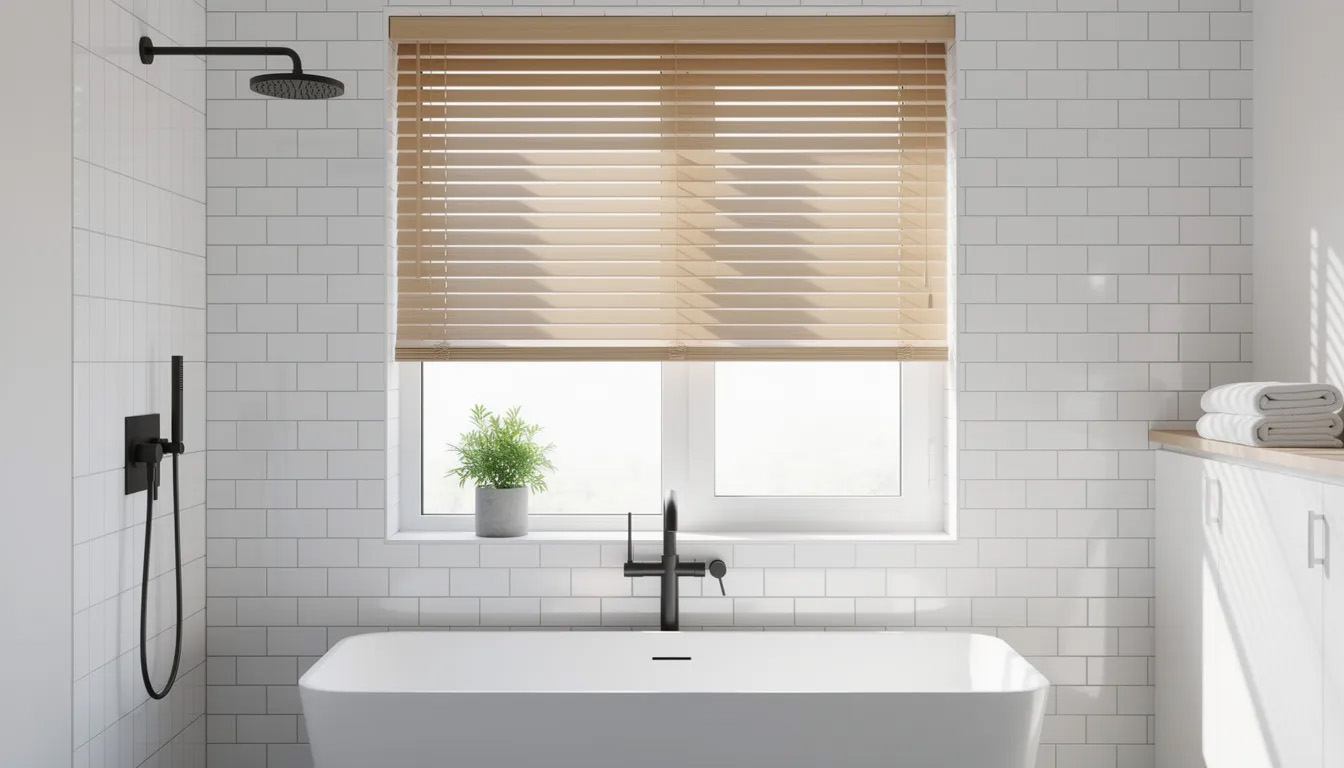
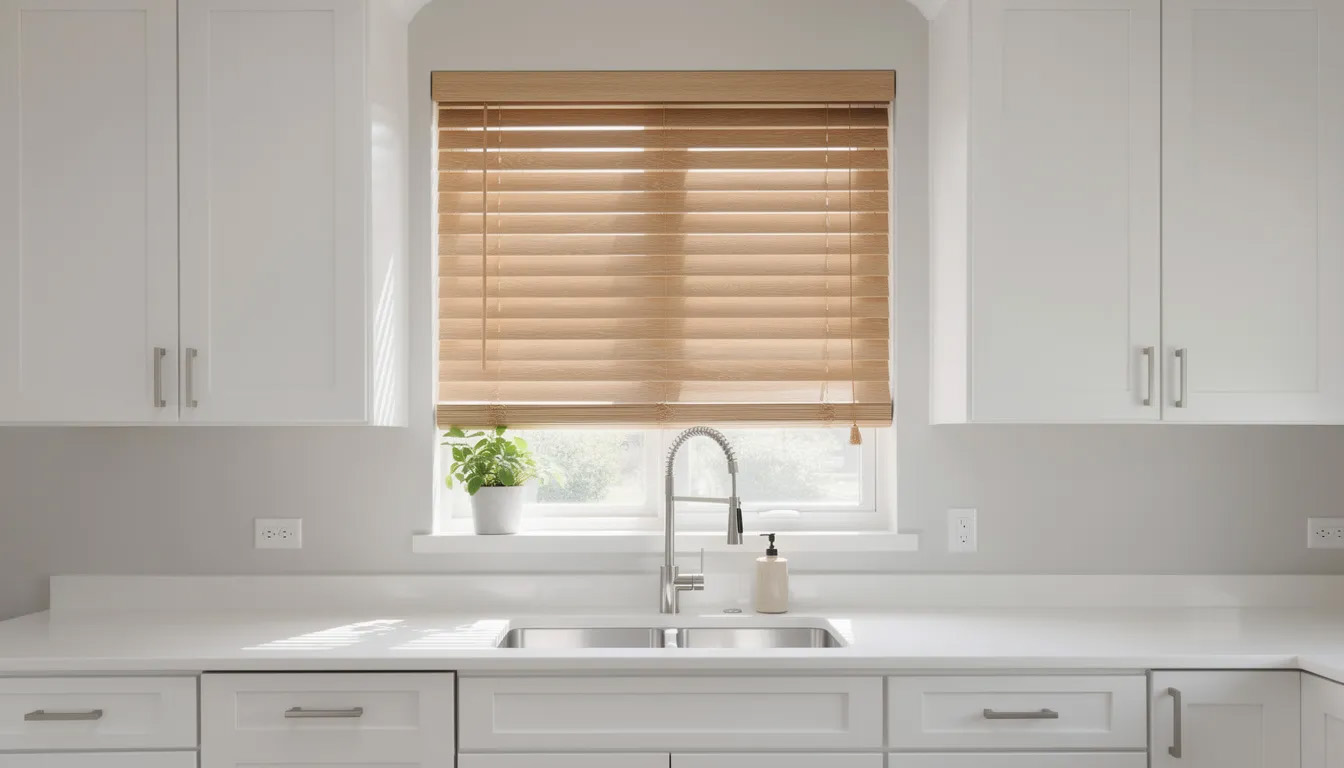
Bathroom and Kitchen Blinds
High humidity environments require moisture-resistant materials that won't warp, crack, or develop mold issues. Easy cleaning capabilities also matter significantly in these spaces where hygiene and maintenance are priorities.
- Recommended Materials: Faux wood blinds, vinyl blinds, and aluminum blinds all resist moisture effectively. These materials won't absorb humidity or suffer damage from temperature fluctuations common in bathrooms and kitchens.
- Cleaning Advantages: Smooth, non-porous surfaces allow easy wiping with damp cloths, making maintenance simple. Avoid real wood in these environments, as natural materials can deteriorate rapidly when exposed to steam and humidity.
- Size Considerations: Smaller windows common in bathrooms benefit from horizontal blinds that don't overwhelm the space. Larger kitchen windows may accommodate wider slats or even vertical solutions if positioned near sliding doors.
- Hygiene Factors: Materials that don't harbor bacteria or absorb odors perform better long-term in these environments. Synthetic materials generally outperform natural options in cleanliness and durability.
Living Room Blinds
Living spaces emphasize aesthetics and ambiance while requiring flexible light control for various activities throughout the day. The window treatment often serves as a significant design element that coordinates with broader interior themes.
- Style-Focused Options: Real wood blinds offer sophistication and natural beauty that complements furniture and architectural details. The wood grain patterns add texture and warmth that enhances both traditional and contemporary decor schemes.
- Light Management: Living rooms benefit from adjustable light control that accommodates different activities—bright light for reading, dim ambiance for television viewing, and glare control during peak sun hours. Horizontal blinds with tiltable slats provide this flexibility.
- Multiple Window Coordination: Large living spaces often feature multiple windows that benefit from motorized control systems. This technology allows synchronized operation and consistent light levels across the entire space.
- Layering Opportunities: Many living rooms combine blinds with curtains or draperies for enhanced style and light control. Choose streamlined blind profiles that don't interfere with decorative treatments.
Light Control and Privacy Features
Understanding how different blind types manage light penetration helps optimize comfort and energy efficiency throughout your home. The relationship between slat angle, material properties, and overall design determines both privacy levels and lighting quality.
Slat Angle Adjustment
Horizontal blinds offer precise directional light control through slat tilting mechanisms. Completely closed slats provide maximum privacy and room darkening, while various open positions allow filtered light entry while maintaining privacy.
- Optimal Angles: Tilting slats upward reflects light toward the ceiling, creating indirect illumination that reduces glare on computer screens and television displays. Downward angles direct light toward floors and reduce heat gain during summer months.
- Gradual Control: Quality blinds provide smooth adjustment through multiple intermediate positions, allowing fine-tuning of light levels throughout the day without fully opening or closing the treatment.
Light Filtering vs Blackout Capabilities
Different materials and construction methods provide varying degrees of light control, from gentle filtering to near-complete blackout blinds.
- Light Filtering: Most slatted blinds allow some light penetration between slats and around ladder tapes, creating ambient lighting even when closed. This characteristic works well for daytime privacy while maintaining natural illumination.
- Room Darkening: Wider slats with tighter construction provide better light blocking, though gaps typically remain around perimeter edges. For true blackout conditions, cellular shades or layered treatments often work better than traditional slatted blinds.
- Material Impact: Opaque materials block more light than semi-transparent options, while dark colors absorb more light than light-colored treatments. Consider these factors when selecting materials for specific light control needs.
Privacy Throughout Day and Night
Privacy requirements change based on lighting conditions both inside and outside your home. Effective blind selection accounts for these variations to ensure comfort at all hours.
- Daytime Privacy: When exterior light levels exceed interior lighting, most blind types provide adequate privacy for normal activities. Even partially open blinds can obscure detailed views while allowing natural light entry.
- Evening Privacy: When interior lights are on and exterior areas are dark, privacy becomes more challenging. Fully closed blinds or supplemental treatments may be necessary to prevent silhouette visibility from outside.
- Directional Considerations: Consider neighboring buildings, street lighting, and typical pedestrian traffic when evaluating privacy needs. Rooms facing busy streets may require different solutions than those overlooking private yards.
Installation and Sizing Considerations
Proper measurement and installation determine both the appearance and functionality of your window blinds. Understanding the difference between mounting options and accurate sizing ensures optimal coverage and operation.
Inside Mount vs Outside Mount Installation
The mounting method affects both the visual appearance and functional performance of window treatments. Each approach offers distinct advantages depending on window construction and aesthetic preferences.
- Inside Mount Benefits: Installing blinds within the window frame creates a clean, built-in appearance that showcases window trim and architectural details. This method works best when window frames have adequate depth and square construction.
- Outside Mount Advantages: Mounting blinds on the wall or window frame exterior allows coverage of the entire window opening, maximizing light control and privacy. This approach works better for shallow frames or when complete coverage is essential.
- Measurement Requirements: Inside mount requires precise measurements of width, height, and depth to ensure proper fit. Outside mount allows more flexibility but requires careful consideration of surrounding wall space and obstacles.
Professional vs DIY
Installation The complexity of blind installation varies significantly based on window type, blind style, and mounting requirements. Consider your skill level and available tools when deciding between professional and self-installation.
- DIY Considerations: Standard horizontal blinds with basic mounting hardware typically accommodate self-installation. Ensure you have appropriate tools, including level, drill, and measuring devices for accurate placement.
- Professional Benefits: Complex installations involving motorization, multiple windows, or specialty mounting situations benefit from professional expertise. Warranty coverage may also depend on proper installation techniques.
- Safety Factors: Large or heavy blinds present safety risks during installation. Professional installers have experience and equipment to handle challenging situations safely and efficiently.
Maintenance and Durability
Regular maintenance extends blind life and preserves appearance, while understanding durability expectations helps guide material selection for different applications.
Cleaning Requirements by Material
Different blind materials require specific cleaning approaches to maintain appearance and functionality without causing damage.
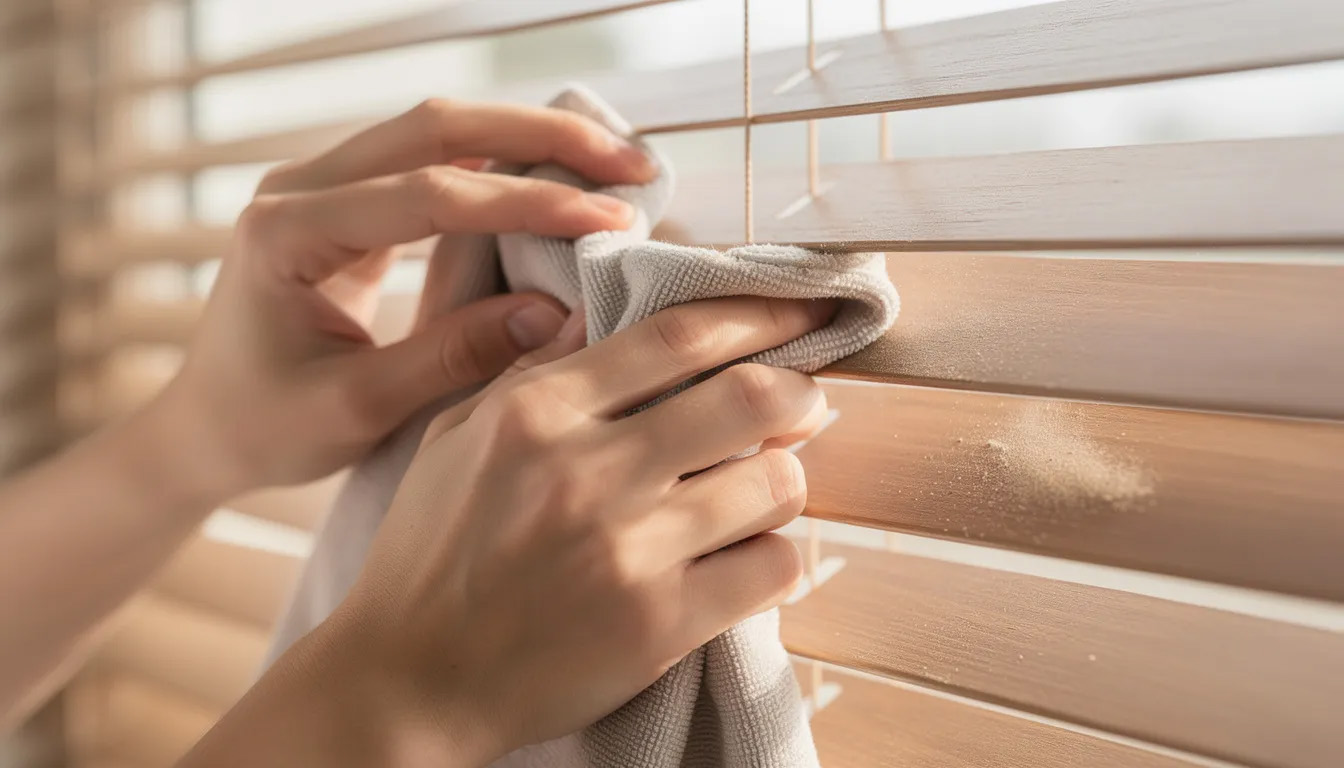
- Wood Blind Care: Dust regularly with microfiber cloths or vacuum with soft brush attachments. Avoid water-based cleaners that can damage wood finishes. Address spills immediately to prevent staining or warping.
- Faux Wood Maintenance: Wipe down with damp cloths for routine cleaning. These materials resist moisture and can handle more aggressive cleaning when necessary. Most household cleaners are safe for faux wood surfaces.
- Metal Blind Cleaning: Aluminum and vinyl blinds accept various cleaning methods, including gentle scrubbing for stubborn dirt. Remove blinds periodically for thorough washing if needed.
- Fabric Treatment: Vacuum fabric blinds regularly with upholstery attachments. Professional cleaning may be necessary for deep cleaning or stain removal, depending on fabric type and construction.
Longevity Expectations
Understanding typical blind lifespans helps evaluate cost-effectiveness and plan for eventual replacement.
- Premium Materials: High-quality wood and faux wood blinds can last 10-20 years with proper care, making them cost-effective despite higher initial prices.
- Budget Options: Basic vinyl and aluminum blinds typically provide 5-10 years of service, appropriate for their lower cost positioning.
- Operating Mechanisms: Cordless and motorized systems may require component replacement or servicing before blind materials wear out, particularly in high-use installations.
Warranty Considerations
Manufacturer warranties vary significantly based on material quality and price point. Understand coverage limitations and requirements for warranty validation.
- Coverage Scope: Premium blinds often include warranties on both materials and operating mechanisms, while budget options may only cover manufacturing defects.
- Installation Requirements: Some warranties require professional installation for validity. Consider these requirements when comparing total project costs.
Energy Efficiency Benefits
Window treatments significantly impact home energy consumption by affecting heat transfer through windows. Selecting appropriate blinds can reduce heating and cooling costs while improving comfort throughout the year.
Insulation Properties by Material
Different blind materials provide varying levels of thermal resistance, affecting both comfort and energy costs.
- Cellular Advantage: While not traditional slatted blinds, honeycomb shades offer superior insulation through trapped air cells. These treatments significantly reduce heat transfer and rank among the most energy-efficient window covering options.
- Wood Performance: Real wood provides moderate insulation benefits through its natural cellular structure. While not matching cellular shades, wood blinds offer better thermal resistance than bare glass.
- Metal Limitations: Aluminum blinds conduct heat readily, providing minimal insulation benefits. However, their reflective properties can reduce solar heat gain when properly positioned.
- Air Gap Benefits: Any blind system creates an air space between the window and room interior, providing some insulation value regardless of material choice.
Seasonal Adjustment Strategies
Optimizing blind positions throughout the year maximizes energy efficiency and comfort while reducing utility costs.
- Summer Cooling: Close blinds during peak sun hours to reduce solar heat gain. Light-colored materials reflect more heat than dark options. Consider upward slat angles to reflect heat while allowing some natural light.
- Winter Heating: Open blinds during sunny periods to capture solar heat gain, then close them during evening hours to retain interior warmth. Darker materials absorb more solar energy for passive heating benefits.
- Transitional Seasons: Adjust blinds throughout the day to balance natural light with temperature control. Spring and fall often provide opportunities for natural ventilation combined with selective solar gain.
- Automated Solutions: Motorized blinds with sensors can automatically adjust for optimal energy efficiency without requiring manual intervention throughout the day. The choice of window blinds significantly impacts both the functionality and aesthetic appeal of your living space.
From moisture-resistant faux wood blinds perfect for bathrooms and kitchens to elegant real wood blinds that provide natural beauty in living rooms and bedrooms, each material and style serves specific needs. Consider your room's requirements carefully: high humidity environments benefit from synthetic materials, while formal spaces may warrant the timeless elegance of wood blinds. Factor in light control needs, privacy requirements, and maintenance preferences when making your selection. Modern innovations like cordless operation and motorized systems enhance both safety and convenience, making these features worth considering for homes with children or hard-to-reach windows. Remember that proper installation and regular maintenance extend blind life and preserve their appearance for years to come. Take time to evaluate your specific needs, measure accurately, and don't hesitate to consult with professionals for complex installations or when coordinating multiple windows throughout your home.
Shop our complete line of custom window blinds.
Related Articles:
What are Window Shades?
16 Types of Blinds to Know Before Buying
Two Separate Blinds Compared to 2 on 1 Headrail?
How Much Do Custom-made Blinds Cost?