









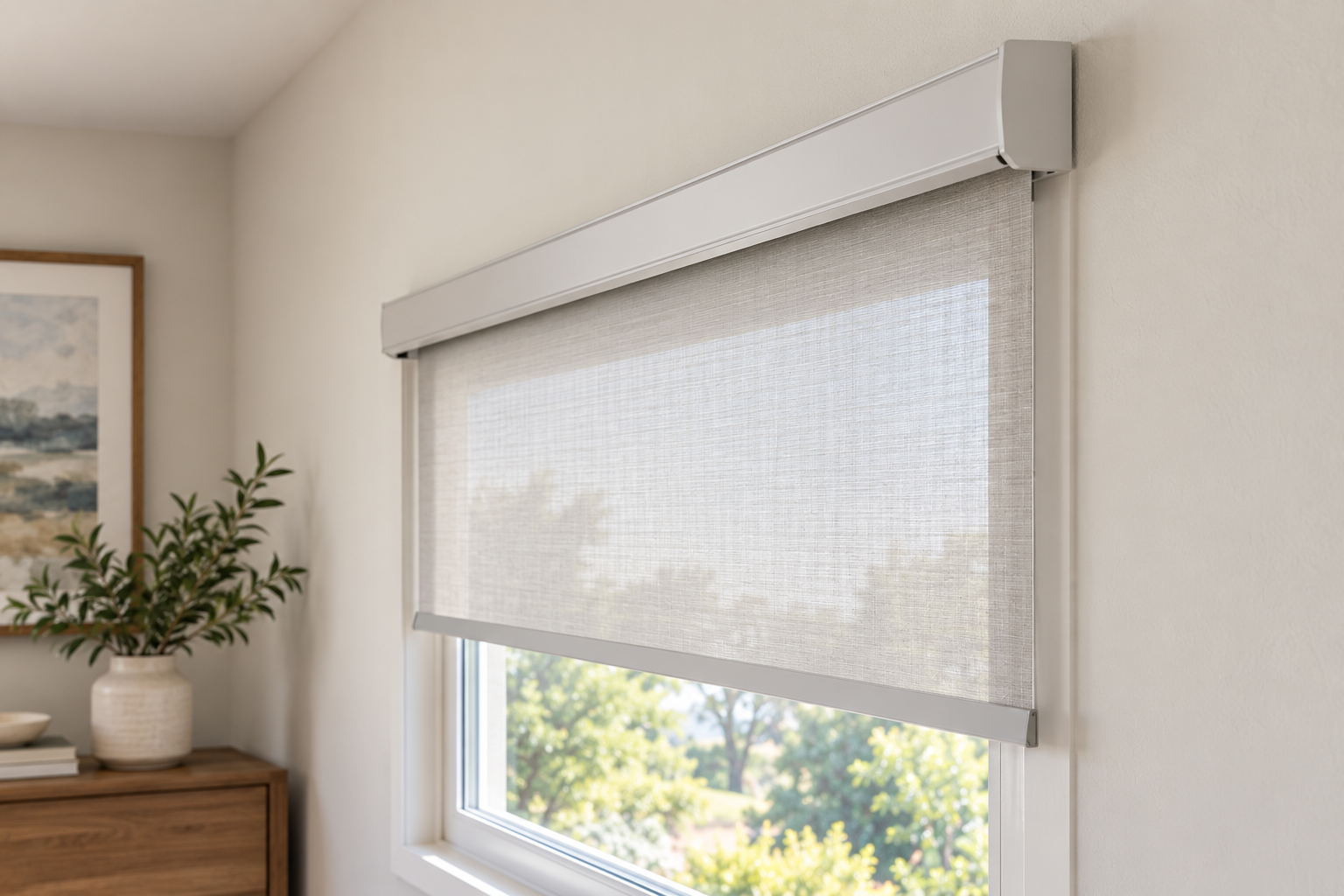
"Inside mount" doesn't automatically mean the headrail sits flush with your trim, and on a shallow window it often doesn't.
Most people assume inside mount blinds or shades always finish flush with the window frame, but that's only true when the window is deep enough to fully recess the headrail or cassette. When the frame is too shallow, an inside-mounted treatment still fits and functions, but part of the headrail sticks out past the trim instead of sitting flush. This guide covers the three outcomes you can actually get, flush inside mount, protruding inside mount, and outside mount, and walks through how to decide which one is right when your window doesn't have the depth for a clean flush finish.
Three Ways a Window Treatment Can Sit on Your Window
When people talk about "inside mount," they're usually picturing one specific outcome, but there are really three distinct results depending on your window's depth and the product you choose.
1. Flush Inside Mount
A flush inside mount is what most people picture when they hear "inside mount": the headrail, brackets, and any cassette or valance sit entirely within the window opening, finished even with the front of the trim. This requires enough mounting depth for the specific product and any upgrades you've chosen, such as a cordless headrail or a wand tilt mechanism, which can add depth compared to a basic corded version.
2. Protruding Inside Mount
A protruding inside mount is still technically an inside mount, the blind or shade is installed within the window opening using inside mount brackets, but the window frame doesn't have enough depth to fully recess the headrail. The result is a headrail or cassette that sticks out past the front of the trim by some amount, rather than sitting flush. The blind still operates normally and still covers the glass, but the finished look is different from what most people expect from "inside mount."
3. Outside Mount
An outside mount installs the brackets on the trim or the wall above and around the window opening, rather than inside it. The headrail sits entirely outside the frame by design, so there's no flush-vs-protruding question at all — the treatment is meant to sit on top of the wall or trim from the start. Outside mount also tends to block more light around the edges and can make a window look larger, since the treatment covers the trim itself.
What Happens When an Inside-Mounted Shade Protrudes from a Shallow Window?
If your window frame is shallower than the minimum mounting depth listed for a product, ordering it as an inside mount doesn't cause the order to fail — it usually just means the headrail will project forward past the trim instead of sitting flush. How much it sticks out depends on the gap between your available depth and the product's minimum depth requirement, and it can range from barely noticeable to a visually obvious ledge, especially on wood and faux wood blinds with thicker headrails.
This isn't automatically a problem. In a lot of homes, a protruding headrail of a quarter to half an inch is barely noticeable once the blind is installed, particularly on windows viewed from a normal standing distance. Where it becomes worth addressing is when the protrusion is large enough to interfere with window hardware, catch on curtains or furniture, or simply look unfinished to you.
Should You Still Use Inside Mount, or Switch to Outside Mount?
There's no single right answer — it depends on what you're optimizing for:
- If you want the trim to stay visible and you're comfortable with a small protrusion, inside mount is usually still the better looking choice, since most of the treatment is still recessed into the opening.
- If the available depth is only slightly short of the requirement, a lower-profile product (a roller shade or a thin-cassette cellular shade instead of a 2-inch wood blind) may get you back to a flush or near-flush result without changing the mount type.
- If the protrusion would be significant, more than an inch or so, or the headrail would interfere with a window crank, handle, or opening mechanism, outside mount is usually the more practical choice, since it's designed to sit outside the opening from the start and won't create a mismatched, half-recessed look.
- If you want to cover trim you don't love, or you want the window to look larger, outside mount is worth considering even on windows that could technically support a flush inside mount.
When you're not sure which way to go, our design consultants can review your measurements and the product's mounting depth requirements with you before you order.
Shallow Inside Mount vs. Outside Mount: Which Is Better?
Once you know your window is shallow, this is the real comparison that matters. The table below lays out how a protruding inside mount compares to switching to outside mount on the same window.
| Factor | Protruding inside mount | Outside mount |
|---|---|---|
| Appearance | Recessed look with a visible ledge where the headrail sticks past the trim | Clean, intentional look; headrail sits fully outside the opening by design |
| How much headrail sticks out | Depends on the shortfall between window depth and product depth requirement | Not applicable; the headrail is meant to sit outside the frame |
| Whether trim remains visible | Yes, most of the trim stays visible around the protruding headrail | No, the headrail and treatment typically cover some or all of the trim |
| Projection into the room | Headrail projects forward from the window opening by the shortfall amount | Projection is intentional and consistent, typically a few inches from the wall |
| Light gaps | Can have light gaps at the sides depending on window depth and bracket type | Generally fewer light gaps, since the treatment overlaps the frame |
| Privacy | Good, but edge gaps can be more noticeable on a shallow inside mount | Typically better edge coverage and privacy |
| Clearance for handles/cranks | Protruding headrail can interfere with window hardware in tight spaces | No interference, since the treatment doesn't sit inside the opening |
| Valance/cassette appearance | May look mismatched or unfinished if the shortfall is large | Valance or cassette is sized and positioned for a clean finish |
| Mounting depth required | Limited by the actual window frame depth | Not limited by frame depth; only needs adequate wall or trim space |
| Cleaner result on a shallow window | Only when the shortfall is minor | Usually yes, especially when the shortfall is more than about an inch |
Exact minimum mounting depth varies by product, slat or fabric type, and lift or tilt option, so always check the individual product specifications for the treatment you're considering before deciding between a shallow inside mount and outside mount.
Products That Tend to Handle Shallow Windows Better
If you'd prefer to keep an inside mount but your depth is limited, some product categories have lower profile headrails than others and may still achieve a flush or near-flush result where a bulkier product wouldn't. Roller shades and cellular shades generally require less mounting depth than horizontal wood or faux wood blinds, so it's worth comparing options in the roller shades category or the cellular shades category if a flush look matters more than a specific slat style. If you already have your heart set on a slatted look, the faux wood blinds category lists mounting depth by product so you can compare before ordering.
Common Mistakes to Avoid
Not Checking Mounting Depth Before Ordering
Width and height get most of the attention when measuring, but mounting depth determines whether you'll get a flush result at all. Measure your window's actual depth and compare it to the product's minimum mounting depth before you order, not after.
Assuming Every Inside Mount Product Has the Same Depth Requirement
Depth requirements vary significantly by product line and by upgrade. A cordless lift or a wand tilt mechanism can add depth compared to a standard corded version, so the version with the features you want is what you should check, not the base product.
Forcing an Inside Mount on a Window That's Clearly Too Shallow
A small protrusion is often fine, but ordering inside mount anyway on a window that's dramatically short on depth usually produces a result nobody's happy with, and it's a difficult fix after the fact. If your depth shortfall is significant, it's worth switching to outside mount at the ordering stage rather than living with an awkward flush attempt.
When This Comparison Doesn't Apply
- Windows with essentially no usable frame depth, such as some sliding glass doors or certain metal-frame windows, may only support outside mount regardless of product choice.
- If you're layering treatments, such as inside-mounted blinds with outside-mounted drapery, the flush question only applies to the inside-mounted piece.
- Some products, like certain shutters, have their own frame systems and mounting rules that don't follow the general inside/outside logic covered here.
Our Take on Mounting Depth Questions
Blinds Chalet has been measuring and fitting custom window blinds and shades for homeowners since 2006, and shallow mounting depth is one of the most common surprises we help customers work through before they order. Our general advice: a small protrusion on an inside mount is rarely worth switching your whole plan over, but once the shortfall gets past roughly an inch, or starts interfering with hardware, outside mount usually gives a cleaner, more intentional result than a forced inside mount. If you're ever unsure whether your measurements will produce a flush finish, send us your depth measurement before you order and we can tell you what to expect.
Related Guides
- Inside Mount vs. Outside Mount Blinds and Shades
- How to Measure for Shallow Mount Window Blinds and Shades
- Blinds for Shallow Windows
- A Complete Guide to Types of Window Blinds and Styles
- The Best Types of Window Shades: A Comprehensive Guide
Frequently Asked Questions
Does inside mount always sit flush with the window trim?
No. Inside mount only sits flush when the window frame is deep enough to fully recess the headrail or cassette for the specific product and features you've chosen. On shallow windows, an inside-mounted treatment will still install and function, but the headrail can protrude past the trim.
How much can a headrail protrude before it's a problem?
A small protrusion, roughly a quarter to half an inch, is often barely noticeable and rarely a functional issue. Once the protrusion approaches an inch or more, or it interferes with window hardware, it's usually worth reconsidering the mount type.
Should I switch to outside mount if my window is too shallow?
It depends on how significant the shortfall is. Minor protrusion is often fine with inside mount, but if the gap is large or interferes with hardware, outside mount typically gives a cleaner, more intentional finished look on a shallow window.
Which window treatments need the least mounting depth?
Roller shades and cellular shades generally have lower profile headrails and need less mounting depth than horizontal wood or faux wood blinds. Exact requirements vary by product and feature, so check the specifications for the specific item you're considering.
Do upgrades like cordless lift change the mounting depth needed?
Yes. Features like cordless lift systems or wand tilt controls can add depth to a headrail compared to a basic corded version, so check the mounting depth for the exact configuration you plan to order, not just the base product.