









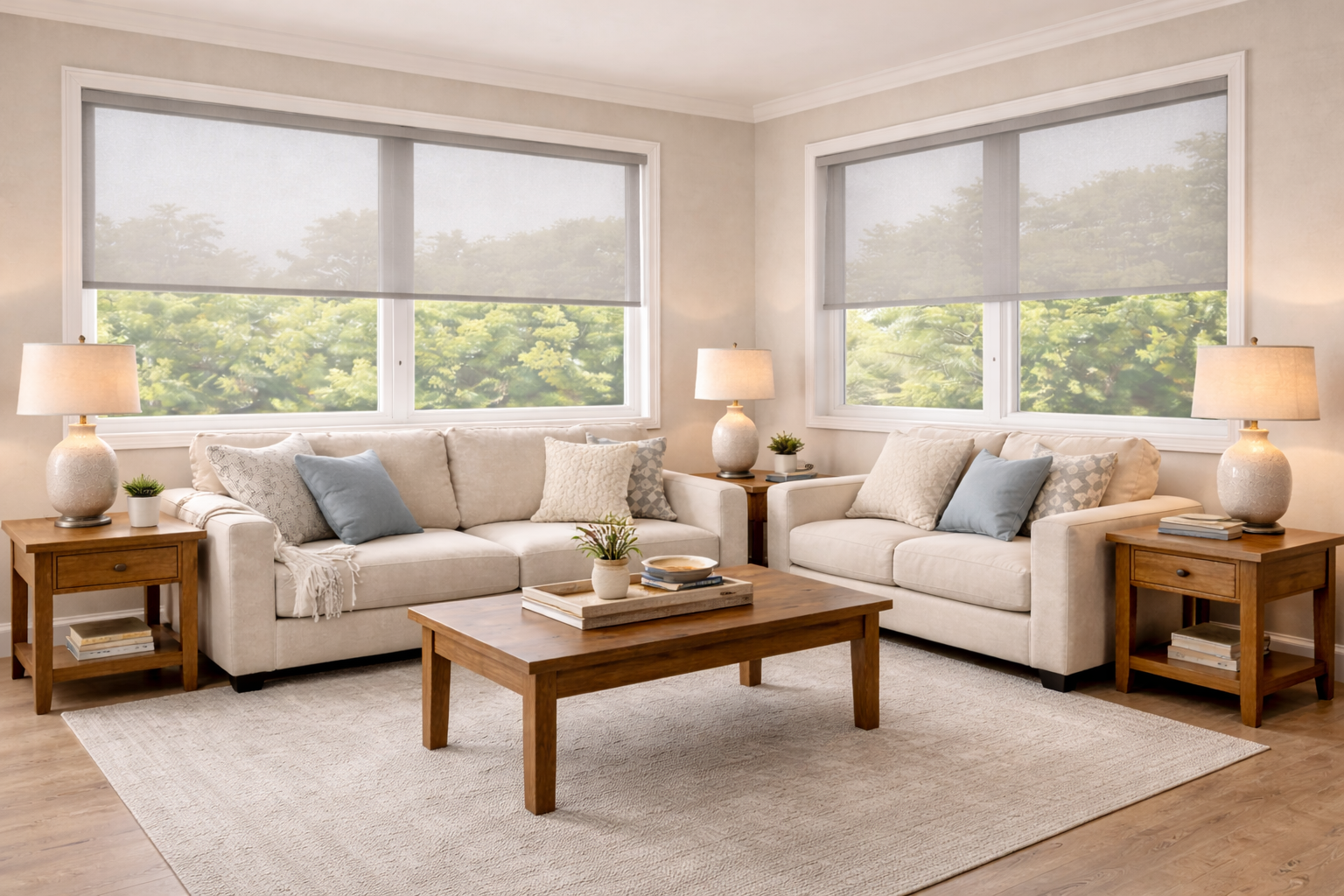
Solar screen shades are a smart solution for reducing glare, filtering harsh sunlight, and helping protect your interiors from UV exposure while still maintaining an outside view. If you are trying to decide which solar shades are right for your home, it helps to understand openness factor, privacy, room use, shade color, and sun exposure.
In this guide, we will explain how to choose solar screen shades based on your needs so you can find the right balance of light control, daytime privacy, energy efficiency, and style. solar screen roller shades
Browse a variety of made-to-measure shades to suit any room in your home.
What Are Solar Screen Shades?
Solar screen shades are window shades made from specially woven fabrics designed to filter sunlight instead of blocking it completely. They help reduce glare and UV rays while preserving some outward visibility, making them a popular choice for living rooms, offices, sunrooms, and other spaces with bright windows.
Unlike blackout shades, solar screen shades are designed for rooms where you want to soften direct sunlight without making the room feel dark or closed off. Learn more about what solar screen roller shades are.
Start With Your Main Goal
The first step in choosing solar screen shades is deciding what matters most in the room. Some homeowners want better glare control for TVs and computer screens, while others care more about daytime privacy, heat reduction, or maintaining the outdoor view.
If glare reduction is your top priority, a lower openness factor is often the better choice. If you want to keep the room brighter and preserve as much of the view as possible, a higher openness factor may be a better fit.
How to Choose Solar Shades at a Glance
| Your Priority | What to Look For | Good Starting Point |
|---|---|---|
| Reduce glare | Lower openness fabric | 1% to 5% openness |
| Preserve the outside view | Higher openness fabric | 5% to 10% openness |
| Increase daytime privacy | Tighter weave and lower openness | 1% to 3% openness |
| Reduce afternoon heat | Lower openness and strong solar-control fabric | 1% to 5% openness |
| Keep the room bright | More open fabric | 5% to 10% openness |
| Large or hard-to-reach windows | Motorized operation | Consider remote or smart controls |
Quick rule: Lower openness generally gives you more glare control and daytime privacy, while higher openness preserves more natural light and a clearer outside view.
Understand Solar Shade Openness Factor
Openness factor refers to how tightly the shade fabric is woven and how much light can pass through it. This is one of the most important features to consider when choosing solar screen shades.
| Openness Factor | Light Control | Privacy (Daytime) | View Outside | Heat/UV Reduction | Best Use Cases |
|---|---|---|---|---|---|
| 1% | Very low light (darkest) | Very high privacy | Minimal view | Excellent (max UV block) | Bedrooms, west-facing windows, high heat areas |
| 3% | Low light | High privacy | Limited but usable view | Excellent | Living rooms with strong sun, media rooms |
| 5% | Moderate light | Moderate privacy | Good view | Very good | Most common choice for living areas |
| 7% | More natural light | Lower privacy | Clearer view | Good | Rooms where view is important |
| 10% | Brightest | Lowest privacy | Very clear view | Moderate | Spaces prioritizing visibility over heat control |
Still unsure? Read out complete guide to solar screeen openness and what it means.
How to Choose Solar Shades by Room
Different rooms often need different levels of light control. In living rooms, many homeowners want a balance between glare reduction and maintaining the view. In home offices, reducing screen glare may be more important. In sunrooms and rooms with strong afternoon sun, greater sun control may be the top priority.
Think about how the room is used throughout the day and how much direct sunlight it gets. This will help narrow down the best fabric openness and color.
Living Rooms
For living rooms, many homeowners want a balance between glare reduction, natural light and a clear outside view. A mid-range openness factor is often a good starting point, but the best choice depends on how much direct sunlight the windows receive and how important daytime privacy is.
Home Offices
Glare control is usually the top priority in a home office. A lower openness fabric can help reduce bright reflections on computer monitors while still allowing natural light into the room.
Sunrooms
Sunrooms and rooms with large areas of glass often benefit from stronger solar control. Consider lower openness fabrics when heat and glare are significant problems, particularly on windows that receive direct afternoon sun.
Bedrooms
Solar shades are usually not the first choice when full nighttime privacy or room darkening is required. If you want solar protection during the day, consider pairing solar shades with drapery or another privacy treatment.
Media Rooms
If the room is used for television or projection screens, glare reduction is important. Lower openness solar shades can help control reflected light, but blackout shades may be a better choice when complete darkness is required.
Kitchens and Dining Areas
Solar shades can work well in bright kitchens and dining rooms where you want to reduce harsh sunlight without losing the open feeling created by natural light.
Consider Window Direction and Sun Exposure
Windows that face west or south often receive the strongest sunlight and may need more glare and heat control. East-facing windows usually get morning sun, while north-facing windows tend to receive softer indirect light.
| Window Direction | Typical Sun Exposure | What to Prioritize |
|---|---|---|
| East Facing | Strong morning sun | Glare control without making the room too dark later in the day |
| West Facing | Strong afternoon sun and heat | Lower openness and stronger solar control |
| South Facing | Extended sun exposure depending on season | Balance heat reduction, glare control and daylight |
| North Facing | Softer indirect light | Higher openness if preserving natural light and the view is more important |
If your windows get harsh afternoon sun, lower openness solar shades are often the better choice. If your room receives softer light and your main goal is preserving the view, a higher openness factor may work well.
How Solar Shade Color Affects View and Appearance
Solar shade color affects more than the look of the window treatment. It can also influence how clearly you see through the fabric and how bright the room feels.
Darker solar fabrics: Darker colors typically provide better outward visibility because the eye sees through the darker weave more easily. They can also provide excellent glare control and create a more dramatic, contemporary appearance.
Lighter solar fabrics: White, beige and other light-colored fabrics tend to create a brighter interior appearance and blend more softly with many rooms. Depending on the fabric construction, they may also reflect more solar energy toward the window.
If preserving the outside view is especially important, compare actual fabric samples in the room before ordering. Lighting conditions can noticeably affect how a solar fabric looks and performs. Read more about how to choose a screen roller shade.
Think About Privacy
Solar screen shades are known for providing daytime privacy while still allowing you to see out, but they do not usually provide full privacy at night. When interior lights are on after dark, visibility from outside can increase.
If nighttime privacy is important, consider layering solar shades with drapery or another window treatment for added coverage.
Need more privacy? Learn the difference between solar screen shades and roller shades. Also, learn more about whether solar screen shades provide privacy as well as compare window tint to screen roller shades.
Consider UV Protection and Interior Comfort
Solar screen shades can help reduce UV exposure that contributes to fading on flooring, furniture, and other interior surfaces. They can also improve comfort in bright rooms by softening intense sunlight and helping reduce heat buildup near windows.
This makes them a strong option for rooms with large windows, patio doors, and areas that get a lot of direct sun throughout the day.
Read more about how solar screen shades work.
Operating Options to Consider
In addition to fabric and openness, think about how you want the shades to operate. Cordless lift systems offer a clean appearance and are a popular choice for many homes. Motorized solar shades are also worth considering for convenience, large windows, or hard-to-reach areas.
Inside Mount vs Outside Mount for Solar Shades
Inside mount solar shades provide a clean, recessed appearance but normally have small gaps along the sides because the fabric is narrower than the complete roller and bracket system.
Outside mount solar shades can extend beyond the window opening to provide additional coverage. This can help reduce sunlight and glare entering around the edges.
If appearance is the main priority and the window has sufficient depth, an inside mount is often attractive. If greater window coverage is more important, consider an outside mount.
For a detailed comparison, see our inside mount vs outside mount guide.
When Solar Shades May Not Be the Best Choice
Solar shades are excellent for glare, UV protection and preserving an outside view, but they are not the best window treatment for every room.
- You need full nighttime privacy: Solar screen fabrics can become easier to see through from outside when interior lights are on.
- You need blackout: Solar shades filter light rather than completely blocking it.
- Insulation is your highest priority: Cellular shades generally provide more insulation because their honeycomb construction traps air.
- You want a soft decorative fabric treatment: Roman or woven wood shades may provide more texture and visual detail.
If these priorities are more important than glare control and preserving the view, another type of window shade may be a better choice.
Solar Shade Buying Checklist
Before ordering solar shades, ask yourself:
- How much direct sunlight does this window receive?
- Is glare reduction or preserving the outside view more important?
- How much daytime privacy do I need?
- Do I also need nighttime privacy?
- Is reducing heat an important goal?
- What openness factor best matches those priorities?
- Do I prefer a darker fabric for clearer outward visibility or a lighter fabric for a brighter appearance?
- Will the shade be easy to reach and operate?
- Would motorization make sense for this window?
- Do I want an inside or outside mount?
Final Thoughts
The best solar screen shades depend on your room, your sunlight exposure, and your priorities. If you want stronger glare control and more daytime privacy, lower openness factors are usually the better choice. If you want a brighter room and a more open view outside, higher openness factors may be the better fit.
By comparing openness factor, room use, sun exposure, privacy needs, and shade color, you can choose solar screen shades that improve comfort and complement your home’s style.
Browse our selection of solar screen shades to find options that fit your windows, your design preferences, and your light-control needs.
Related Articles
Frequently Asked Questions
What openness factor is best for solar screen shades?
The best openness factor depends on your goals. Lower openness factors such as 1% provide more glare reduction and daytime privacy, while higher openness factors such as 5% or 10% allow more natural light and a clearer outside view.
Are darker or lighter solar screen shades better?
Darker solar screen shades usually provide a clearer outward view and stronger glare reduction during the day, while lighter fabrics create a brighter and softer interior appearance. The right choice depends on your design preferences and performance goals.
Which rooms are best for solar screen shades?
Solar screen shades work especially well in living rooms, sunrooms, offices, and media spaces where glare reduction and filtered light are important. They are also a strong choice for large windows and sliding glass doors.
What percentage solar shade should I choose?
The best percentage depends on your priorities. Lower openness factors generally provide stronger glare control and daytime privacy, while higher openness factors allow more natural light and a clearer view outside.
What solar shade openness is best for west-facing windows?
West-facing windows often receive strong afternoon sunlight and heat, so a lower openness factor is frequently a good starting point when glare and solar heat are concerns.
What solar shades are best if I want to keep my view?
A higher openness fabric generally provides a clearer outward view. Darker solar fabrics can also make the view through the weave appear more defined during the day.
What solar shades are best for privacy?
Lower openness fabrics generally provide more daytime privacy because the weave is tighter. However, solar shades typically do not provide complete nighttime privacy when interior lights are on.
Should solar shades be inside or outside mounted?
Inside mounting provides a cleaner recessed appearance, while outside mounting can provide greater coverage around the window opening. The best choice depends on your window depth, appearance preferences, and desired glare control.
Should I order samples before choosing solar shades?
Yes. Solar fabric appearance and visibility can change depending on the room, window direction, and lighting conditions. Comparing samples in the actual window is one of the best ways to evaluate color, openness, and view-through before ordering.
Bring in natural light while minimizing glare with our collection of selection of solar screen shades available in a variety of openness levels and colors.
To learn more about selecting the right shade, explore our solar shades buying guides for expert tips and detailed explanations.