







 (
(

 (
(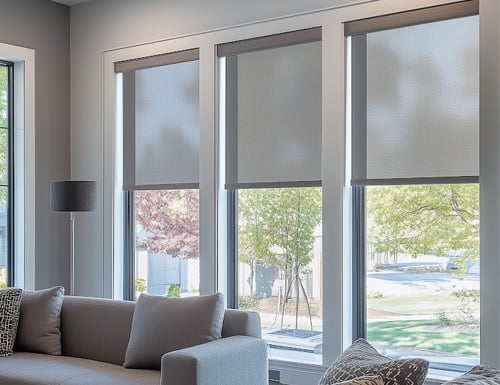
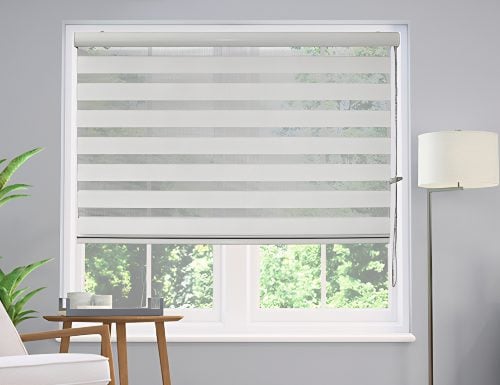
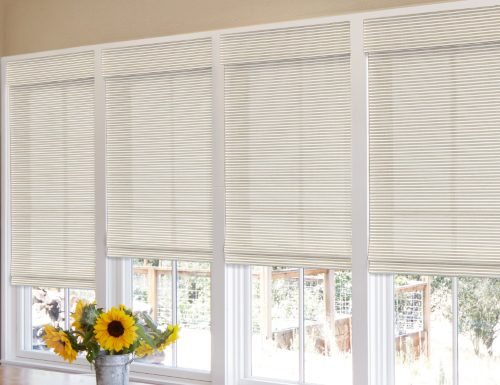
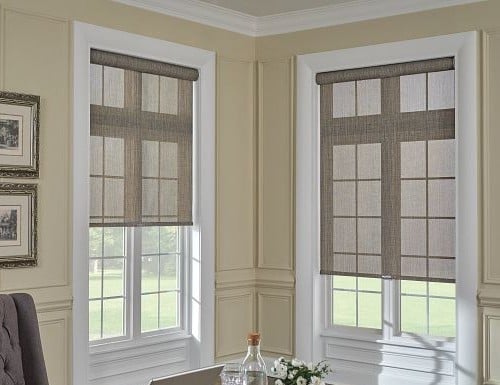
The smaller the openness percentage, the tighter the weave, blocking more light, reducing heat, and providing greater protection from UV rays, while still letting you enjoy a view outside.
Why Choose Custom Solar Screen Shades?
- Glare control – Minimize eye-straining glare on TVs, computers, and reflective surfaces.
- Maintain your view – Filter sunlight without feeling closed in.
- Energy efficiency – Improve temperature control by reducing solar heat gain in the summer and minimizing drafts in cooler months.
- UV protection – Help protect floors, furniture, and artwork from fading.
- Stylish and functional – Available in a variety of colors and textures to match your space.
Learn More: What are Solar Screen Shades? | What are the Benefits of Solar Screen Roller Shades?
Things to Know About Solar Shades
- Not for privacy – These shades allow light and visibility, so they’re not designed for full privacy. For complete light control, consider our roller shades with blackout fabrics.
- Openness factor matters – Higher openness (5–10%) allows more light and a clearer view, while lower openness (1–3%) blocks more glare and heat but slightly reduces visibility.
- Day vs. night performance – Solar shades work best during the day when it’s brighter outside than inside. At night, interior lights may make it easier for people outside to see in.
Available Upgrades
- Motorization – Raise or lower your shades with the touch of a button using a remote or wall switch. Battery-powered and hardwired options available.
- Cassette Headrail – Conceal the roller and brackets for a clean, modern look.
- Reverse Roll Option – Roll fabric off the front for a softer look that hides the roller.
Solar Shades vs Roller Shades
Solar shades and roller shades share the same basic operating system, but they are designed for different purposes. Solar shades use specialized screen fabrics that reduce glare, UV rays, and heat while preserving your view to the outdoors. Traditional roller shades are available in light-filtering, room-darkening, and blackout fabrics that provide greater privacy and light control.
Choose Solar Shades If:
- You want to reduce glare on TVs and computer screens.
- You want to maintain your daytime view.
- You need UV protection for furniture and flooring.
- You have large windows with significant sun exposure.
Choose Roller Shades If:
- You need nighttime privacy.
- You want room-darkening or blackout performance.
- You prefer decorative fabric options.
- You need maximum light control.
Learn More: Compare Solar Screen vs Standard Roller Shades
Choosing the Best Solar Shade Openness Factor
The openness factor of a solar shade refers to the percentage of open space within the fabric weave. This percentage determines how much light, heat, glare, UV exposure, and outside visibility the shade will allow. Choosing the right openness factor is one of the most important decisions when selecting solar screen shades.
In general, lower openness percentages provide greater glare reduction, privacy, and UV protection, while higher openness percentages preserve more of your view and allow additional natural light into the room.
1% Openness Solar Shades
1% openness fabrics feature a very tight weave that blocks a significant amount of sunlight, glare, and UV rays while still maintaining a limited view to the outside. These fabrics are commonly used in rooms with intense sun exposure or where glare control is a primary concern.
- Maximum glare reduction
- Excellent UV protection
- Strong daytime privacy
- Best for west-facing windows
- Popular for media rooms and offices
3% Openness Solar Shades
3% openness is one of the most popular solar shade options because it provides an excellent balance between visibility and solar protection. Many homeowners choose 3% fabrics because they significantly reduce glare while still allowing a comfortable view outside.
- Balanced glare reduction and visibility
- Excellent UV protection
- Strong daytime privacy
- Popular for living rooms and family rooms
- Works well in most climates
5% Openness Solar Shades
5% openness fabrics allow more natural light into the room while maintaining good glare reduction and UV protection. This openness factor is often selected by homeowners who want a brighter interior and a clearer connection to the outdoors.
- Improved outward visibility
- Good glare control
- Natural daylighting
- Popular for kitchens and common areas
- One of the most versatile openness options
10% Openness Solar Shades
10% openness fabrics offer the clearest view to the outdoors and allow the most natural light to enter the room. While they still reduce some glare and UV exposure, they provide less solar control than lower openness percentages.
- Maximum visibility
- Brightest interior appearance
- Least glare reduction
- Ideal when preserving the view is the highest priority
- Often used in rooms with moderate sun exposure
Which Openness Factor Is Right for Your Home?
For most homeowners, 3% and 5% openness fabrics offer the best balance of view preservation, glare reduction, and UV protection. If your windows receive intense afternoon sun, a 1% openness fabric may provide better comfort. If maintaining an unobstructed view is your primary goal, a 10% openness fabric may be the better choice.
Homes in sunny climates such as Arizona often benefit from lower openness fabrics on west-facing windows where heat and glare are most intense.
Learn More: Openness Guide for Solar Screen Roller Shade Fabrics
Perfect for Any Room
Solar screen shades are ideal for living rooms, offices, sunrooms, and any space where you want to cut glare but keep your connection to the outdoors. They’re easy to operate, simple to clean, and custom-made to your measurements for a perfect fit every time.
Browse our full line of affordable window shades for every room in your home.
Where Do Solar Shades Work Best?
Solar screen shades are ideal for rooms where glare reduction, UV protection, and preserving the view are important. Unlike blackout shades that completely block the view, solar shades allow natural light into the room while helping reduce heat and eye-straining glare.
Living Rooms
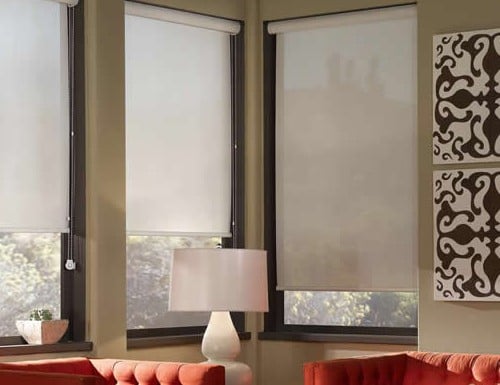
Living rooms often feature large windows that bring in natural light and outdoor views. Solar shades help reduce glare on televisions and reflective surfaces while maintaining a bright, open feel. They are especially popular in homes with scenic views where homeowners want to enjoy the outdoors without excessive sunlight.
Home Offices
Solar shades are one of the best window treatments for home offices because they help reduce glare on computer monitors while still allowing natural daylight into the room. This creates a more comfortable work environment without completely darkening the space.
Sunrooms and Arizona Rooms
Sunrooms are designed to maximize natural light, but excessive sun exposure can create uncomfortable temperatures and fading of furniture and flooring. Solar shades help manage heat and UV exposure while preserving the bright atmosphere that makes these rooms enjoyable.
West-Facing Windows
West-facing windows often receive intense afternoon sun that creates glare and heat buildup. Solar shades are a popular solution because they help reduce solar heat gain while maintaining outside visibility.
Related Guide: Best Window Treatments for West-Facing Windows
Patio Doors and Large Windows
Roll-up solar shades are well suited for wide windows and sliding glass doors because they provide a clean appearance and can be manufactured in larger sizes. They help reduce glare and UV exposure while maintaining a view of outdoor living spaces.
Commercial Offices
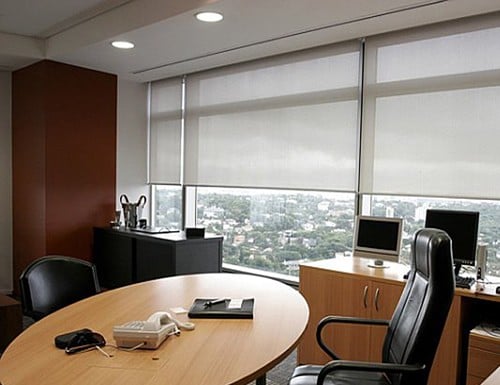
Many office buildings use solar shades because they allow employees to enjoy natural light while reducing glare on monitors and protecting interiors from excessive UV exposure. Their clean appearance also complements contemporary office designs. Explore more commercial window shades solutions.
Related Resources: Best Window Treatments for Arizona Heat | Best Window Treatments for Glare Reduction
Do Solar Shades Provide Privacy?
One of the most common questions homeowners ask is whether solar shades provide privacy. The answer depends on the time of day, the openness factor of the fabric, and the lighting conditions inside and outside the home.
Daytime Privacy
During the day, solar shades provide excellent privacy because the outside environment is typically brighter than the interior of your home. This difference in lighting makes it difficult for people outside to see through the fabric while still allowing you to enjoy the view outdoors.
Lower openness fabrics such as 1% and 3% generally provide greater daytime privacy than more open fabrics like 5% or 10%.
Nighttime Privacy
At night, the privacy benefits of solar shades change. When interior lights are turned on and it is dark outside, people outside may be able to see silhouettes, movement, and portions of the room through the fabric.
For this reason, solar shades should not be considered a blackout or full-privacy window treatment after dark.
How Fabric Color Affects Privacy
Darker solar screen fabrics generally provide better outward visibility and view-through during the day. Lighter fabrics reflect more light and can create a brighter interior appearance. Privacy performance is influenced by both fabric color and openness factor.
Solutions for Additional Privacy
Homeowners who want both daytime view preservation and nighttime privacy often choose one of the following options:
- Layer solar shades with decorative drapery panels.
- Install dual roller shades with both solar screen and blackout fabrics.
- Choose roller shades with room-darkening or blackout fabrics.
- Use lower openness solar fabrics to increase daytime privacy.
Learn More: Do Screen Roller Shades Provide Privacy?
If nighttime privacy is your primary goal, consider our Blackout Shades or Standard Roller Shades for additional privacy options.
Related Resources: Privacy & Light Control Guides | Light Filtering vs Room Darkening vs Blackout Window Treatments
Solar Shade Buying Guides & Resources
- View All Solar Shade Guides
- Best Window Treatments for West Facing Windows
- Best Window Treatments for Arizona Heat
- Best Window Treatments for Glare Reduction
- Privacy & Light Control Guides
- Shop Roller Shades
Solar Screen Shades - FAQs
What are solar screen roller shades and why choose them?
What does openness (1%, 3%, 5%, 10%) mean on solar fabrics?
How do I choose a solar shade openness (1%, 3%, 5%, 10%)?
Do solar screens provide privacy at night?
How well do solar shades block UV and reduce glare?
Will solar screens keep my room cooler?
Should I choose a light or dark solar fabric color?
Inside or outside mount—which controls light gaps better?
What top treatments can finish the look of solar shades?
What lift options are available—cordless, loop, or motorized smart control?
Can solar screen shades cover wide windows or patio doors?
How do I clean solar screen fabrics safely?
Are solar shades suitable for bathrooms or kitchens with humidity?
What if my solar shade curls at the edges or tracks to one side?
Are solar screen shades appropriate for offices or commercial spaces?
How do I measure for solar screen roller shades and what depth do I need?
* Production lead times are only an estimate and does not apply to any colors that are out of stock. Production begins the following business day after ordering. Please allow additional time for shipping.