









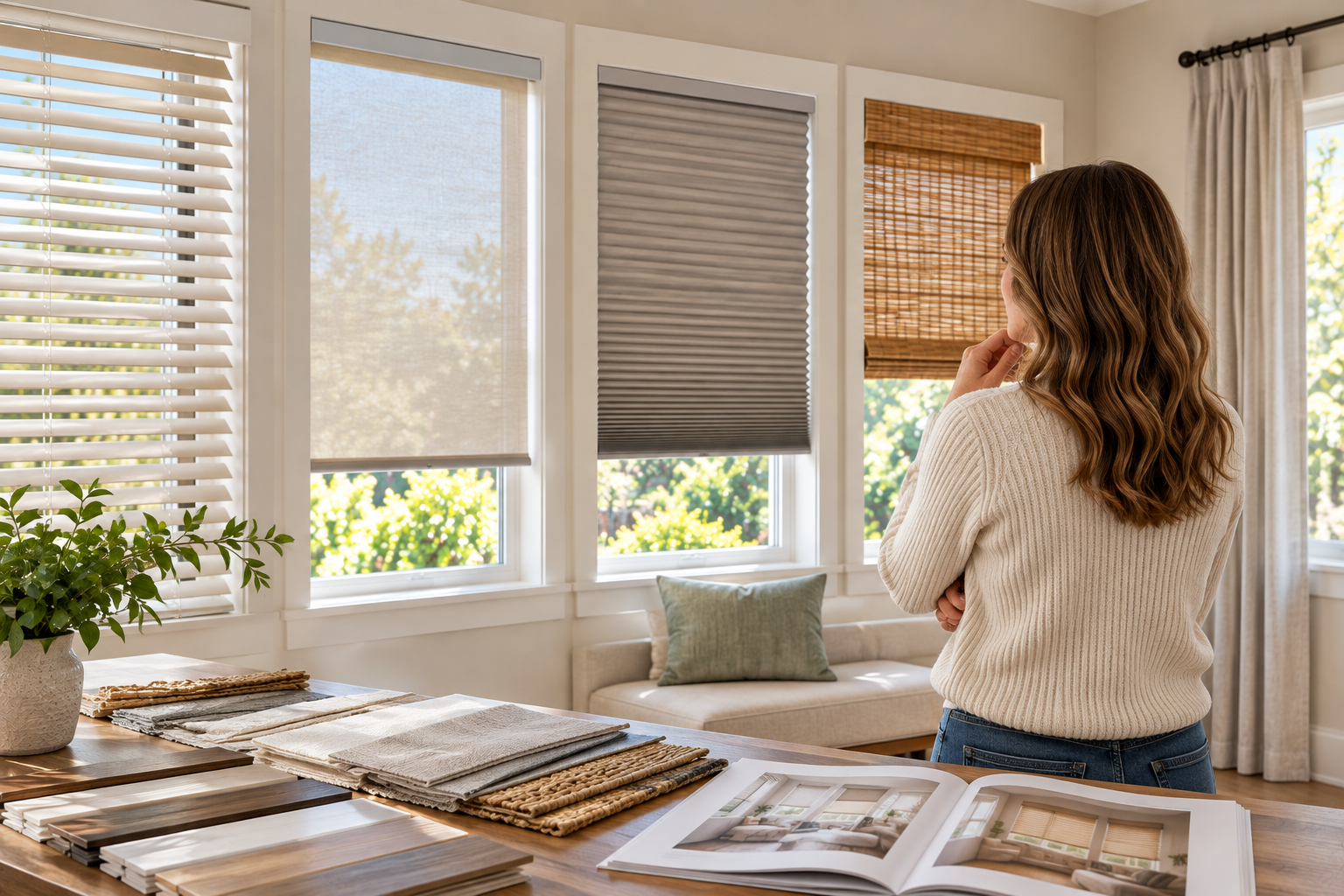
This guide walks you through that decision step by step. If you'd like to explore every product in detail first, see our guides to types of window blinds, types of window shades, and the 16 types of window treatments.
Quick Picks: The Right Window Treatment for Common Situations
| If You Need… | Start With | Why |
|---|---|---|
| A bathroom or kitchen window | Faux wood blinds | Moisture resistant and easy to wipe clean |
| A dark bedroom or nursery | Blackout cellular shades | Block light and insulate, with cordless options |
| A sliding glass door or very wide window | Vertical blinds or panel track blinds | Open side to side and cover large spans |
| Glare control without losing the view | Solar screen shades | Cut glare and UV while you still see outside |
| Privacy with daylight on a street-facing window | Top down bottom up shades | Cover the lower window and let light in up top |
| A warm, natural look | Wood blinds or woven wood shades | Real wood grain and natural textures |
| A soft, tailored look | Roman shades | Fabric folds with hundreds of colors and patterns |
| The lowest cost for many windows | Aluminum mini blinds or roller shades | Simple, durable, and budget friendly |
Step 1: Decide Between Blinds and Shades
This first choice narrows your options by half.
- Blinds have hard slats that tilt. You can angle light up, down, or block it without raising the blind. Choose blinds when you want precise, adjustable light control throughout the day.
- Shades are made of continuous fabric or natural material that raises and lowers. They offer a softer look, more color and texture options, and generally better insulation. Choose shades when you want a set level of light filtering or blackout and a cleaner look.
Many homes use both: blinds in kitchens, baths, and offices, and shades in bedrooms and living spaces.
Step 2: Consider the Room and Moisture
Where the window is matters as much as how it looks.
- Bathrooms, kitchens, and laundry rooms: Steam and splashes can warp real wood and stain some fabrics. Faux wood and aluminum blinds hold up best. Roller shades in vinyl or moisture-resistant fabric also work well.
- Bedrooms and nurseries: Prioritize light blocking and safety. Blackout cellular or roller shades with a cordless or motorized lift are the most common choice.
- Living and family rooms: Balance daylight, glare control, and style. Wood blinds, Roman shades, zebra shades, and solar shades are popular here.
- Home offices and media rooms: Focus on glare. Solar shades reduce screen glare during the day, while blackout shades suit home theaters.
Browse ideas for each space in our window treatments by room collection.
Step 3: Choose Your Level of Light Control and Privacy
Decide how much light you want in the room, and when you need privacy:
- Light filtering softens sunlight and provides daytime privacy, but may show silhouettes at night when lights are on inside.
- Room darkening blocks most light and provides strong privacy day and night.
- Blackout blocks light through the material for sleeping, nurseries, and media rooms.
- Adjustable options like blinds, zebra shades, and top down bottom up shades let you change the balance throughout the day.
For a deeper look, see light filtering vs room darkening vs blackout and our privacy and light control guide.
Step 4: Measure the Window Size and Type
Some window treatments suit certain windows better than others:
- Sliding glass doors and patio doors: Vertical blinds and panel track blinds open to the side, so you can walk through without raising a heavy treatment.
- Very wide windows: Consider splitting the window into two or three treatments, or placing multiple blinds on one headrail. Large faux wood blinds can get heavy to lift.
- Tall or hard-to-reach windows: Motorized shades let you control them with a remote, app, or schedule.
- Skylights: Use purpose-built skylight shades that hold their position overhead.
- Shallow window frames: Check mounting depth before choosing an inside mount. Shades with slim headrails often fit where blinds won't.
Step 5: Set Your Budget
Price depends on the material, the size of the window, and the upgrades you add. As a general guide, from least to most expensive:
- Most affordable: Aluminum mini blinds, vinyl blinds, vertical blinds, and basic roller shades.
- Mid-range: Faux wood blinds, cellular shades, solar shades, and zebra shades.
- Premium: Real wood blinds, Roman shades, woven wood shades, sheer shades, and shutters.
Upgrades like cordless lifts, motorization, top down bottom up, and liners add to the price. Each product on our site is labeled Good, Better, or Best to help you compare quality within your budget, and our economy vs. quality guide explains what the difference means.
Step 6: Plan for Safety
If you have young children or pets, choose window treatments without accessible cords. Cordless and motorized lifts remove hanging lift cords entirely and are available on most blinds and shades. See our child safe blinds and shades and safety upgrades for existing blinds.
Step 7: Think About Energy Efficiency
Window treatments can help keep your home cooler in summer and warmer in winter. Cellular shades insulate best thanks to the air pockets in their honeycomb design. Solar shades and blackout fabrics help block summer heat. Wood and faux wood blinds help when closed but insulate less than cellular shades. Learn more in our energy efficient window treatments guide, or estimate your savings with our energy savings calculator.
Step 8: Choose Your Style, Color, and Mount
Once you've narrowed down the product, the finishing choices bring it together:
- Color: White and neutral shades look clean from the street and match most trim. Wood tones and bolder fabrics add warmth and personality. Order free samples and view them in your own light before deciding.
- Consistency: For a tidy look from outside, many homeowners keep the same color or product on all street-facing windows and vary styles inside.
- Inside or outside mount: An inside mount sits within the window frame for a built-in look. An outside mount covers the frame and blocks more light around the edges. Our measuring instructions explain both.
- Finishing touches: Valances, cassette headrails, and decorative tapes add a finished look. See our appeal upgrades.
Blinds and Shades Compared at a Glance
| Product | Strengths | Keep in Mind |
|---|---|---|
| Faux wood blinds | Wood look at a lower price; moisture resistant; durable | Heavier than real wood on large windows; fewer stain colors |
| Wood blinds | Real wood grain and stains; lighter than faux wood | Not ideal for high-humidity rooms; tall stack when raised |
| Aluminum mini blinds | Very affordable; lightweight; many colors | Low insulation; slats can bend |
| Vertical blinds | Cover wide windows and sliding doors; economical | Vanes can sway when the door is used |
| Cellular shades | Best insulation; small stack when raised; many colors | Less adjustable light control than blinds |
| Roller shades | Clean look; small stack; wide fabric range | Must be raised for a full view |
| Solar shades | Reduce glare and UV while keeping the view | Limited privacy at night with lights on inside |
| Roman shades | Soft, tailored style; liner options | Larger stack when raised; must be raised for a full view |
Common Mistakes to Avoid
- Choosing by looks alone. A beautiful product in the wrong room, like real wood in a steamy bathroom, won't last.
- Forgetting about nighttime privacy. Light filtering and solar fabrics can show silhouettes after dark.
- Ignoring stack height. Blinds and Roman shades take up more space at the top when raised and can block part of the view.
- Skipping samples. Colors look different in your home's light than on a screen.
- Measuring in a hurry. Measure each window separately, even ones that look identical.
Related Guides
- Types of Window Blinds: Complete Guide
- Types of Window Shades
- 16 Types of Window Treatments to Know Before Buying
- Faux Wood vs. Real Wood Blinds
- Best Shades for Privacy
Final Thoughts
The best window treatment is the one that fits the room, the window, and the way you live. Start with blinds or shades, match the product to the room's moisture and light needs, then narrow by budget, safety, and style. Still deciding? Order free samples or contact our design team for free help choosing the right option for every window.
How to Choose Blinds & Shades FAQs
Should I choose blinds or shades?
Choose blinds if you want adjustable light control by tilting the slats, especially in kitchens, bathrooms, and offices. Choose shades if you want a softer look, better insulation, or a set level of light filtering or blackout, especially in bedrooms and living rooms.
What are the best blinds for bathrooms and kitchens?
Faux wood blinds are the most popular choice because they resist moisture and are easy to clean. Aluminum blinds and moisture-resistant roller shades also work well. Avoid real wood in rooms with frequent steam or splashing.
What is the best window treatment for sliding glass doors?
Vertical blinds and panel track blinds are the most practical choices because they open side to side, so you can walk through without raising the treatment. They also cover wide spans that would be heavy for a single horizontal blind or shade.
Should I choose an inside or outside mount?
Choose an inside mount for a clean, built-in look when your window frame is deep enough. Choose an outside mount when the frame is shallow, when you want to block more light around the edges, or when you want the window to look larger.
Can I use different window treatments in the same room?
Yes. It's common to use vertical or panel track blinds on a patio door and matching horizontal blinds or shades on nearby windows. Keeping the color or material consistent helps the room look coordinated.
How do I choose the right color for my blinds or shades?
Start by matching your window trim or wall color for a seamless look, or choose a wood tone or fabric that complements your floors and furniture. Order free samples and view them at the window in daylight and at night before you decide.
Which window treatments are best for homes with children or pets?
Choose cordless or motorized blinds and shades so there are no hanging lift cords. Faux wood blinds and cellular shades are durable, easy to clean, and widely available with cordless lifts.