









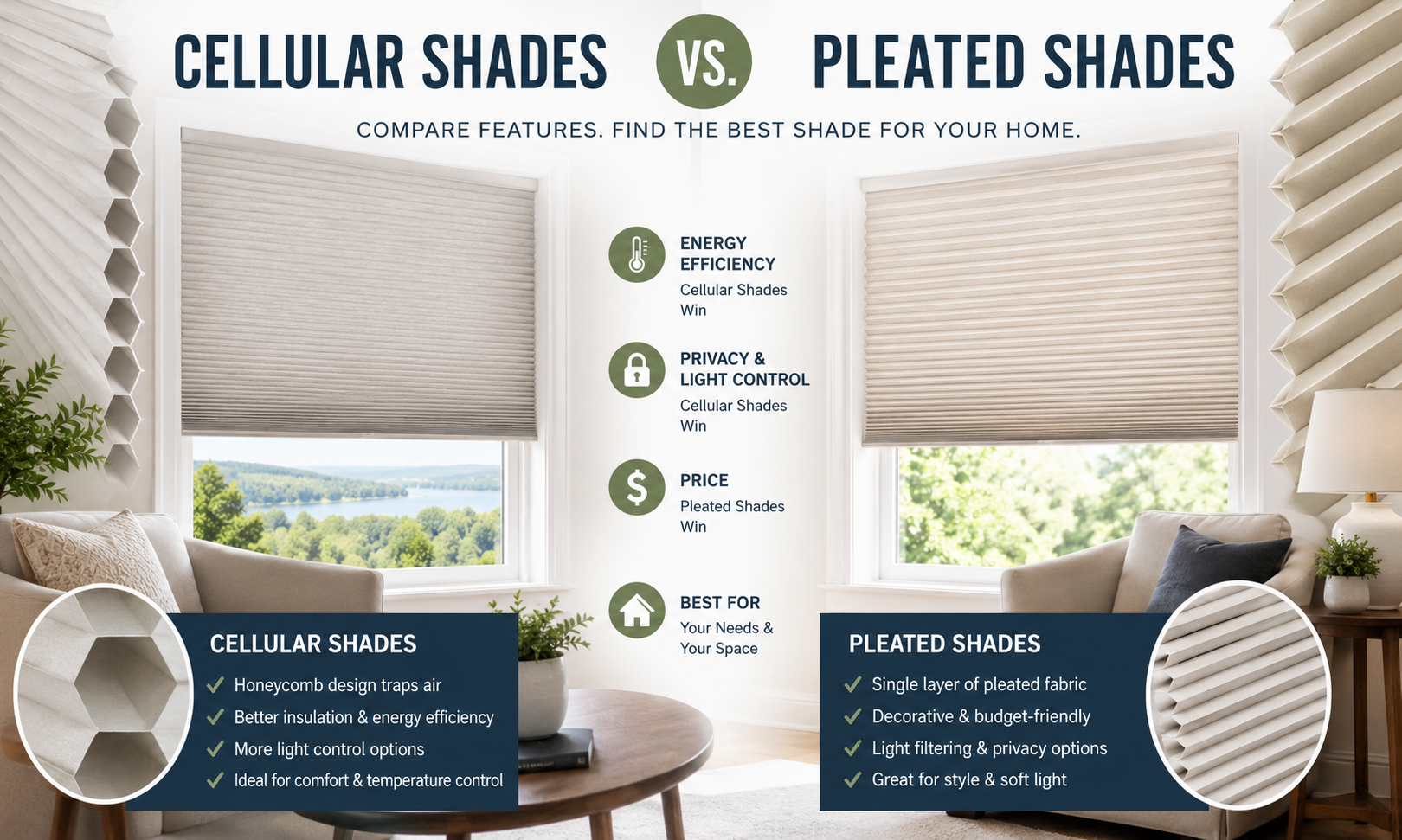
Cellular shades and pleated shades may look similar at first glance, but they perform very differently. Both are soft fabric window shades with crisp folds, but cellular shades use a honeycomb-shaped design that creates insulating air pockets, while pleated shades use a single layer of folded fabric.
If you are deciding between cellular shades and pleated shades, the best choice depends on your goals for insulation, privacy, light control, price, and appearance.
What Are Cellular Shades?
Cellular shades, also called honeycomb shades, are made with fabric cells that trap air between the window and the room. This honeycomb construction helps improve insulation, reduce heat transfer, and create a soft, clean appearance at the window.
Cellular shades are popular for bedrooms, living rooms, offices, cold climates, hot climates, and any room where energy efficiency is important.
Shop our full collection of quality cellular shades.
What Are Pleated Shades?
Pleated shades are made from a single layer of fabric folded into crisp pleats. They provide a similar soft look to cellular shades but do not have the same honeycomb air pockets for insulation.
Pleated shades are often chosen for their clean appearance, lighter profile, and decorative fabric options. They work well in rooms where style and light filtering are more important than maximum energy efficiency.
Browse our custom-made pleated shades.
Cellular Shades vs Pleated Shades: Key Differences
| Feature | Cellular Shades | Pleated Shades |
|---|---|---|
| Construction | Honeycomb air pockets | Single layer of pleated fabric |
| Energy Efficiency | Better insulation | Limited insulation |
| Appearance | Soft, structured look | Crisp folded fabric look |
| Light Control | Light filtering, room darkening, blackout options | Mostly light filtering and privacy options |
| Best Rooms | Bedrooms, living rooms, offices, energy-focused spaces | Living rooms, dining rooms, offices, decorative spaces |
| Price | Usually higher | Often more budget-friendly |
Which Shade Is More Energy Efficient?
Cellular shades are generally more energy efficient than pleated shades because of their honeycomb construction. The cells create pockets of air that help slow heat transfer through the window.
This makes cellular shades a better choice for homeowners who want to reduce heat gain in summer, improve comfort in winter, or add insulation to drafty windows.
For more information, read our guide on do cellular shades save energy or browse energy efficient window treatments.
Which Shade Offers Better Privacy?
Both cellular shades and pleated shades can provide privacy, depending on the fabric selected. Light-filtering fabrics soften incoming light while limiting visibility, while room-darkening or blackout cellular fabrics provide stronger privacy and light control.
For bedrooms, bathrooms, and street-facing windows, cellular shades usually offer more privacy options because they are available in a wider range of light-filtering, room-darkening, and blackout fabrics.
Learn more about light filtering vs room darkening vs blackout window treatments.
Which Shade Looks Better?
The better-looking shade depends on your style preference. Cellular shades have a soft, modern, structured appearance. Pleated shades have a crisp, folded fabric look that can feel slightly more decorative.
If you want a clean, energy-efficient window covering, cellular shades are usually the better choice. If you want a lighter decorative fabric shade and energy efficiency is less important, pleated shades may be a good fit.
Best Rooms for Cellular Shades
Cellular shades are a strong choice for rooms where comfort, privacy, and insulation matter most.
- Bedrooms
- Living rooms
- Home offices
- Nurseries
- Cold-weather rooms
- West-facing windows
Related guides: best shades for bedrooms | best window treatments for cold weather
Best Rooms for Pleated Shades
Pleated shades work well in rooms where a soft fabric appearance and simple light filtering are the main priorities.
- Dining rooms
- Living rooms
- Guest rooms
- Home offices
- Decorative windows
Pleated shades can be a practical option when you want a clean fabric shade without the added insulation of a cellular shade.
Cellular Shades vs Pleated Shades: Which Should You Choose?
Choose cellular shades if you want better insulation, more light-control options, and a higher-performing window treatment for year-round comfort.
Choose pleated shades if you prefer a simple folded fabric shade, want a decorative look, and do not need the added energy efficiency of a honeycomb shade.
For most homeowners, cellular shades are the better all-around choice because they offer more insulation, more privacy options, and greater versatility. Pleated shades remain a good choice for decorative spaces where budget and appearance are the primary concerns.
Related Window Shade Guides
- Cellular Shades
- Pleated Shades
- Cellular Shade Guides
- Pleated Shade Guides
- Single Cell vs Double Cell Shades
- Privacy and Light Control Guides
- Are Cellular Shades in Style?
- Is There a Difference Between Honeycomb and Ceulluar Shades?
- Pleated Shades Compared to Other Window Treatments
- How to Install Pleated Shades
Cellular Shades vs Pleated Shades FAQs
What is the difference between cellular shades and pleated shades?
Cellular shades have honeycomb-shaped air pockets that help insulate the window, while pleated shades are made from a single layer of folded fabric. Cellular shades usually offer better energy efficiency and more light-control options.
Are cellular shades better than pleated shades?
Cellular shades are usually better if you want insulation, privacy, and year-round comfort. Pleated shades may be better if you want a simple decorative fabric shade and energy efficiency is not a major concern.
Do pleated shades insulate like cellular shades?
No. Pleated shades provide some light control and privacy, but they do not have the honeycomb air pockets that make cellular shades more insulating.
Which is better for bedrooms, cellular shades or pleated shades?
Cellular shades are usually better for bedrooms because they are available in light-filtering, room-darkening, and blackout fabrics. They also provide better insulation and privacy than most pleated shades.
Are pleated shades cheaper than cellular shades?
Pleated shades are often more budget-friendly than cellular shades, although pricing depends on the fabric, size, lift system, and available upgrades.
Which shade is better for energy efficiency?
Cellular shades are better for energy efficiency because their honeycomb design traps air and helps reduce heat transfer through the window.
Do cellular shades and pleated shades look the same?
They can look similar from the front because both have horizontal folds, but cellular shades have a honeycomb side profile while pleated shades use a single folded layer of fabric.
If you're ready to get started, take a look at our cellular shades collection to compare options and find the best fit for your home.
For more helpful information, visit our cellular shades guide hub where you'll find in-depth articles and expert recommendations.