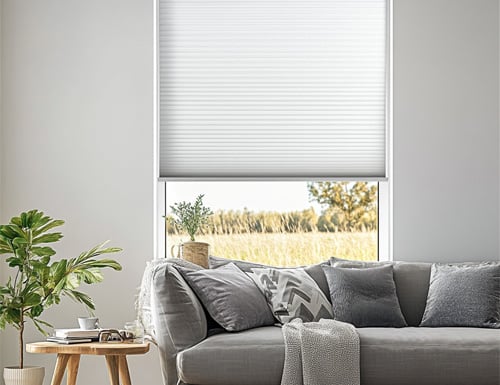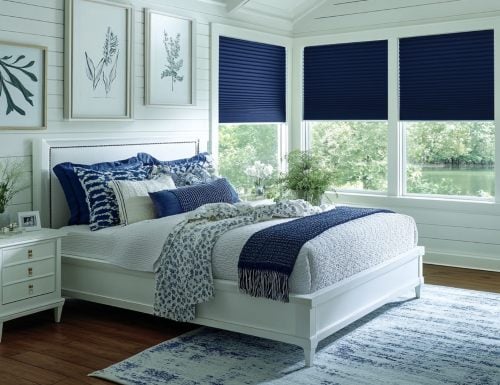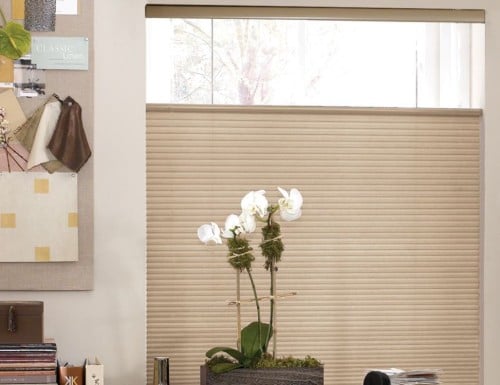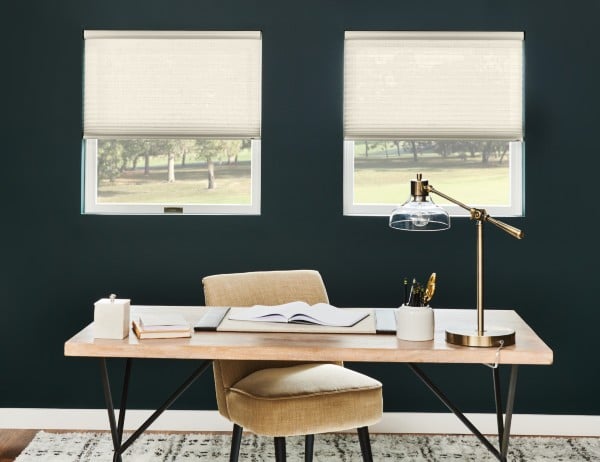








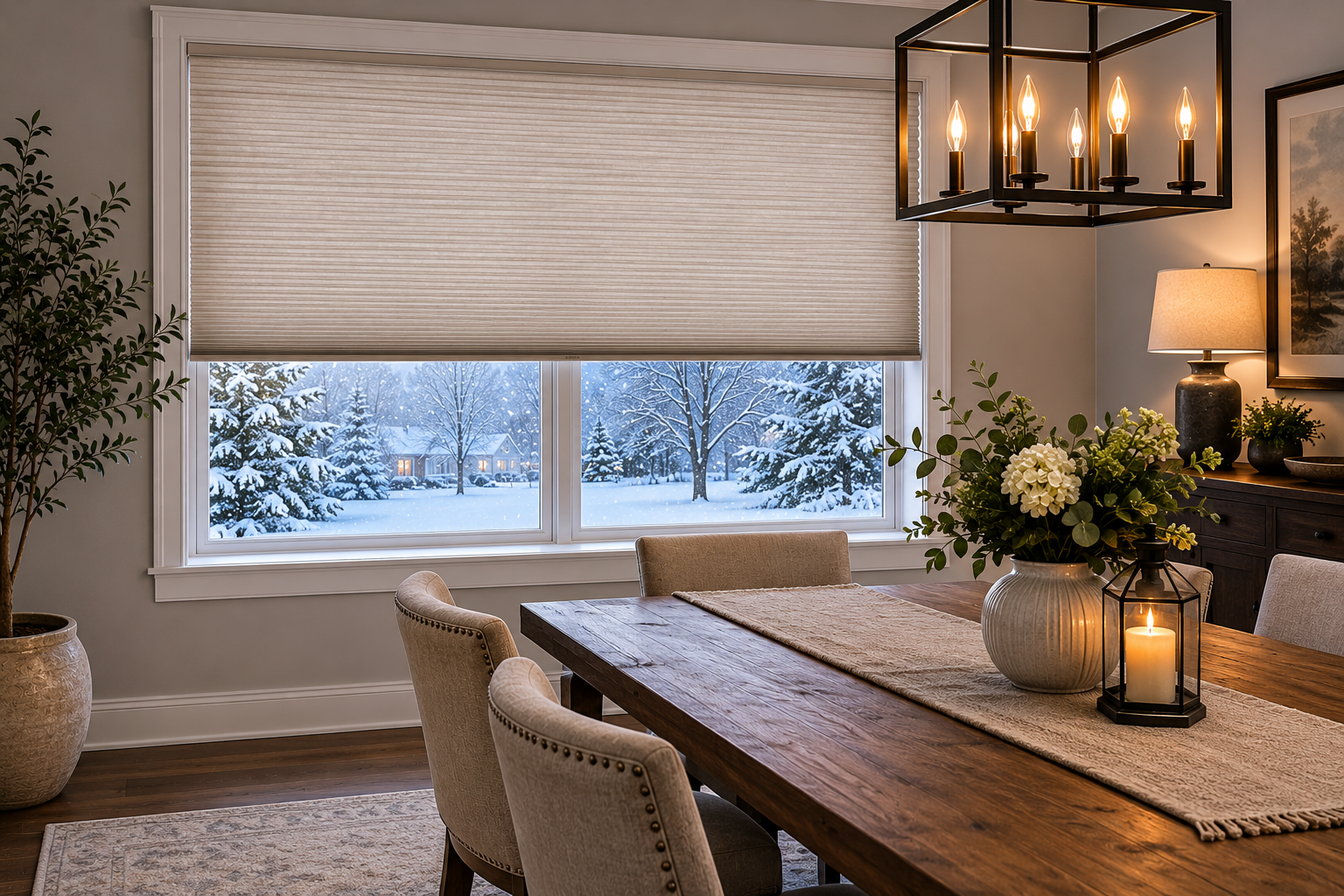
Cellular shades, also known as honeycomb shades, are widely considered one of the most energy-efficient window treatments available. Their unique honeycomb-shaped cells create insulating air pockets that help reduce heat transfer through windows, making it easier to maintain comfortable indoor temperatures throughout the year.
While actual energy savings vary based on climate, window size, sun exposure, and home construction, cellular shades can help improve energy efficiency by reducing unwanted heat gain during summer and heat loss during winter.
Explore our collection of energy-efficient window treatments or use our window treatment energy savings calculator to estimate potential savings.
What Are Cellular Shades?
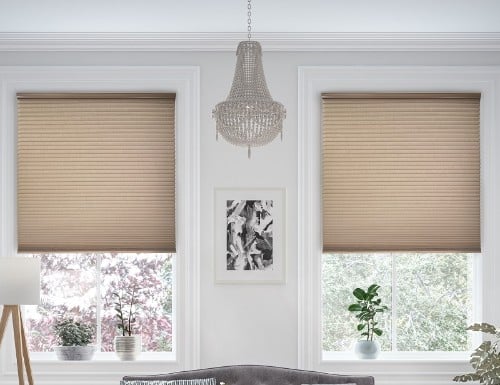
Cellular shades are fabric window shades constructed with pleated cells that resemble a honeycomb when viewed from the side. These cells trap air and create an insulating barrier between the window and the room.
Unlike many traditional blinds and shades, cellular shades are specifically designed to improve thermal performance while providing privacy and light control.
How Cellular Shades Help Save Energy
1. Insulating Air Pockets
The honeycomb-shaped cells trap air and help slow the transfer of heat through the window. This additional layer of insulation can improve comfort year-round.
2. Reduced Summer Heat Gain
During hot weather, cellular shades can help reduce the amount of solar heat entering through windows, which may reduce the workload on air conditioning systems.
This is especially beneficial in sunny climates such as Arizona where large windows can contribute significantly to indoor heat gain.
3. Reduced Winter Heat Loss
In colder climates, cellular shades help retain indoor warmth by reducing heat loss through glass. The insulating cells act as a buffer between the window and the living space.
4. Improved Overall Comfort
Even when utility savings are modest, many homeowners notice improved comfort near windows because cellular shades help reduce hot and cold spots.
Are Cellular Shades More Energy Efficient Than Other Window Treatments?
Cellular shades are often considered among the most energy-efficient window covering options because of their insulating design. Shop the top insulating window treatments.
| Window Treatment | Energy Efficiency |
|---|---|
| Cellular Shades | Excellent |
| Solar Shades | Good |
| Roller Shades | Moderate |
| Wood Blinds | Moderate |
| Aluminum Blinds | Moderate |
| Shutters | Very Good |
Learn more: Are blinds more energy efficient than shutters?
Single Cell vs Double Cell Cellular Shades
Cellular shades are available in both single-cell and double-cell designs.
- Single Cell: One layer of insulating air pockets.
- Double Cell: Two layers of insulating air pockets for increased thermal performance.
Double-cell shades generally provide greater insulation and may be preferred for extreme climates or windows with significant sun exposure.
Best Rooms for Energy-Efficient Cellular Shades
- Living rooms with large windows
- Bedrooms
- Sunrooms
- West-facing rooms
- South-facing rooms
- Home offices
Cellular Shades for Arizona Heat
Cellular shades are particularly popular in Arizona because they help reduce solar heat gain while maintaining privacy and light control. Their insulating design makes them one of the most effective shade styles for managing intense sunlight.
Learn more:Best window treatments for Arizona heat
Do Cellular Shades Help Lower Energy Bills?
Cellular shades may help reduce heating and cooling costs by improving insulation at the window. Actual savings depend on factors such as climate, window orientation, home insulation, and HVAC usage.
Homes with older windows or large glass areas often see the greatest benefit from improved window insulation.
Cellular Shades vs Solar Shades for Energy Efficiency
Both cellular shades and solar shades can improve comfort, but they work differently.
- Cellular Shades: Focus on insulation and heat transfer reduction.
- Solar Shades: Focus on glare reduction and solar heat management while maintaining views.
Homeowners concerned primarily with insulation often choose cellular shades, while those focused on preserving outdoor views frequently prefer solar shades.
Energy-Efficient Window Treatment Resources
- Energy Efficient Window Treatments
- Energy Savings Calculator
- Energy Savings Information
- Best Window Treatments for Cold Climates
- Best Window Treatments for Arizona Heat
- Energy vs Noise Reduction Window Shades
- Energy Efficient Bamboo Shades
Final Thoughts
Cellular shades are one of the most energy-efficient window treatment options available because their honeycomb construction helps reduce heat transfer through windows. They can improve comfort, reduce solar heat gain, minimize winter heat loss, and potentially lower heating and cooling costs.
For homeowners seeking improved insulation and year-round comfort, cellular shades are often one of the best investments among modern window covering options.
Cellular Shades Energy Efficiency FAQs
Do cellular shades save energy?
Yes. Cellular shades help improve insulation by trapping air within their honeycomb cells, which can reduce heat transfer through windows.
Are cellular shades the most energy-efficient window treatment?
Cellular shades are often considered among the most energy-efficient window treatments because of their insulating honeycomb design.
Do double-cell cellular shades save more energy than single-cell shades?
Generally, double-cell cellular shades provide greater insulation because they contain two layers of air pockets.
Are cellular shades good for hot climates?
Yes. Cellular shades are popular in hot climates because they help reduce solar heat gain and improve indoor comfort.
Can cellular shades lower utility bills?
Cellular shades may help reduce heating and cooling costs by improving insulation at the window, though actual savings vary by home and climate.
Shop our collection of cellular shades and honeycomb shades to discover energy-efficient window treatments designed for comfort and style.
You can also explore more topics in our cellular shades expert advice center, including buying guides, comparisons, and design tips.

 (
(