









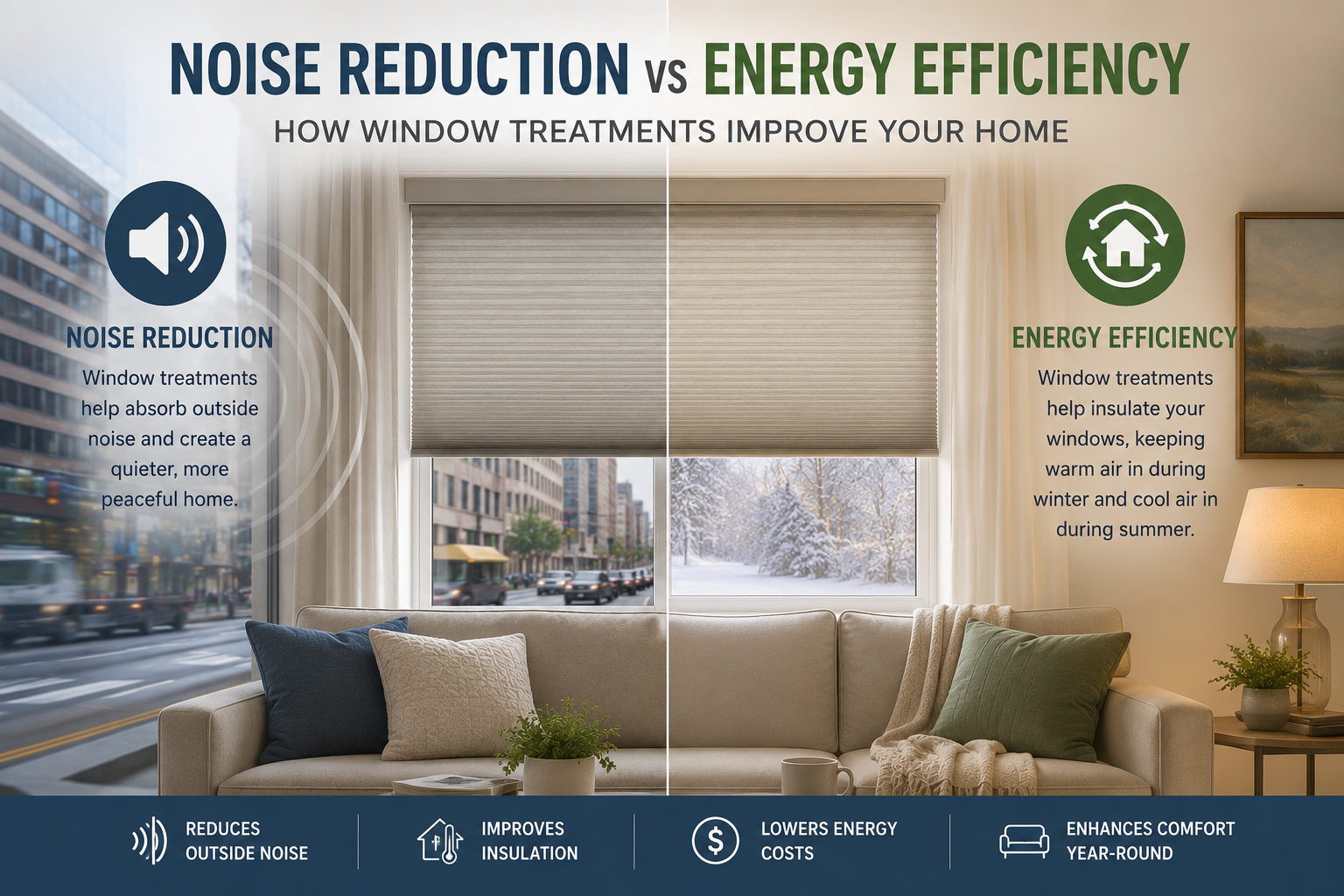
Noise reduction and energy efficiency are two common reasons homeowners shop for upgraded window treatments. While these goals are different, some blinds and shades can help with both by adding an extra layer of coverage over the window.
Understanding how window treatments affect sound, insulation, heat transfer, and comfort can help you choose the best option for your home.
Browse our noise reducing window treatments or compare energy efficient window treatments for comfort-focused options.
Noise Reduction vs Energy Efficiency: What Is the Difference?
Noise reduction focuses on helping absorb or reduce outside sound entering through windows. Energy efficiency focuses on reducing heat transfer, helping keep rooms cooler in summer and warmer in winter. Shop our selection of the window treatments for insulation.
| Goal | What It Helps With | Best Window Treatment Features |
|---|---|---|
| Noise Reduction | Outside noise, echo, sound absorption | Thicker materials, cellular construction, layered treatments |
| Energy Efficiency | Heat gain, heat loss, drafts, comfort | Insulating cells, liners, side tracks, tight coverage |
Can Window Treatments Help with Both Noise and Energy Efficiency?
Yes. Some window treatments can help with both sound reduction and insulation. Products with thicker materials, honeycomb cells, liners, or layered construction often provide the best combination of comfort benefits.
Best Window Treatments for Both Noise and Energy Efficiency
1. Cellular Shades
Cellular shades are one of the best options for both energy efficiency and sound absorption. Their honeycomb cells trap air, which helps reduce heat transfer and can also help dampen sound near windows.
Learn more: do cellular shades save energy?
2. Cellular Shades with Side Tracks
Cellular shades with side tracks provide improved edge coverage, which can help reduce air movement and improve insulation performance. They may also help reduce some sound transfer by creating a tighter barrier at the window. Browse our complete selection of quality honeycomb cellular shades.
3. Roman Shades with Liners
Roman shades with privacy or blackout liners add fabric thickness and coverage, which may improve both room comfort and sound absorption. Shop our custom made Roman shades.
4. Drapery Panels
Drapery panels can help soften sound in a room and add an extra layer over the window. When paired with insulating shades, they can improve both comfort and sound control. Explore our selection of drapery panels custom sewn to your sizes.
5. Shutters
Shutters provide a solid barrier over the window and may help improve comfort while offering durability and long-term value. Explore all of our planation style interior shutters.
Which Is More Important: Noise Reduction or Energy Efficiency?
The best priority depends on your room and location. If your main issue is street noise, sound absorption may matter most. If your room gets too hot or cold, insulation and energy performance should be the focus.
| Room Problem | Best Priority | Recommended Option |
|---|---|---|
| Street noise | Noise reduction | Cellular shades or layered drapery |
| Hot afternoon sun | Energy efficiency | Cellular shades or solar shades |
| Drafty windows | Insulation | Cellular shades with side tracks |
| Echo in room | Sound absorption | Fabric shades or drapery panels |
| Bedroom comfort | Both | Cellular shades or lined Roman shades |
Do Energy Efficient Window Treatments Reduce Noise?
Some energy efficient window treatments can also help reduce noise, especially cellular shades and lined fabric treatments. However, window treatments are not the same as soundproof windows. They can help soften sound, but they usually will not eliminate outside noise completely.
Do Noise Reducing Window Treatments Save Energy?
Some noise reducing window treatments may also improve energy efficiency when they add thickness, insulation, or layered coverage. Cellular shades are one of the best examples because they are designed for insulation and may also help absorb sound.
Energy Efficient Window Treatment Resources
- Energy efficient window treatments
- Best insulating window treatments
- Energy savings calculator
- Best Window treatments for Hot Climates
- Best Cold Climate Window treatments
Noise Reducing Window Treatment Resources
Final Thoughts
Noise reduction and energy efficiency are different goals, but the right window treatments can often help with both. Cellular shades are one of the strongest choices because their honeycomb design improves insulation and may also help absorb sound.
For the best results, choose window treatments based on your main problem: sound, heat, drafts, or overall comfort.
Noise Reduction and Energy Efficiency FAQs
Can window treatments reduce noise and save energy?
Yes. Some window treatments, especially cellular shades and layered fabric treatments, can help reduce noise while also improving insulation and energy efficiency.
What window treatments are best for both noise reduction and energy efficiency?
Cellular shades are one of the best options because their honeycomb cells help insulate windows and may also help absorb sound.
Do cellular shades reduce noise?
Cellular shades may help reduce some outside noise by adding a soft insulating layer over the window, though they do not completely soundproof a room.
Are sound reducing blinds the same as energy efficient blinds?
Not always. Some products help with both, but sound reduction focuses on noise while energy efficiency focuses on reducing heat transfer and improving comfort.