






Blackout Roman Shades

 (
 (
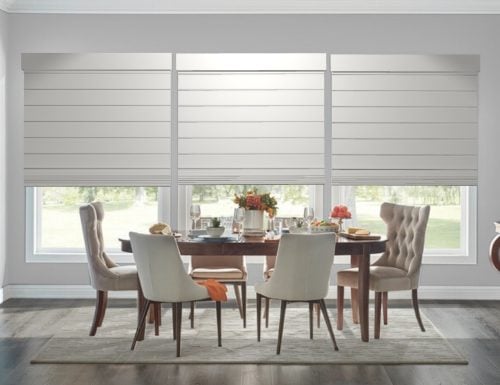
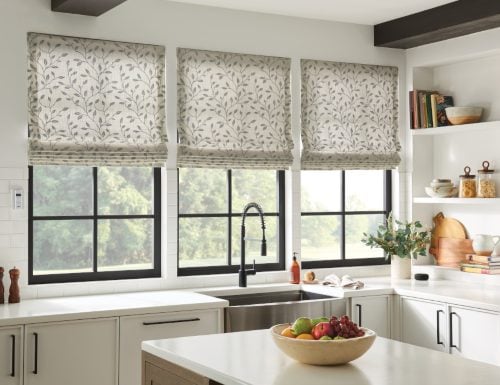
How a Roman Shade Becomes a Blackout Shade
A Roman shade is not blackout on its own. The decorative face fabric, whether linen, cotton or a patterned print, lets light through. To make it blackout, you add a blackout liner when you order. The liner is an opaque layer sewn to the back of the shade, facing the window, and it stops light from passing through the fabric.
When you customize any Roman shade on this page, look for the liner option and choose Blackout. If you skip that step, you will receive an unlined or privacy-lined shade, which will not darken a bedroom the way most people expect.
How to Order a Blackout Roman Shade
- Pick your fabric and fold. Choose the color and pattern you want to see from inside the room. The liner does not change your fabric color on the room side.
- Select the blackout liner. In the product options, choose the blackout liner. Liner availability varies by product, so check the individual product specifications.
- Choose your mount. Inside mount looks tailored but leaves light at the edges. Outside mount overlaps the frame and gets the room darker. More on this below.
- Choose your lift. A lined shade is heavier, so a cordless lift or motorized lift makes daily use easier, especially on wide windows.
- Measure carefully. Follow our step-by-step measuring guide and add overlap if you are mounting outside the frame.
What a Blackout Liner Changes
Adding a liner affects more than light. Before you order, it helps to know how a lined Roman shade looks and works compared with one that has no liner.
| What changes | Unlined Roman shade | With blackout liner |
|---|---|---|
| Light through the fabric | Glows and filters light | Blocked |
| Pattern in daylight | Sun shines through the pattern | Pattern looks solid and even |
| Look from the street | Shows the face fabric | Shows the liner backing, a neutral uniform look |
| Stack height when raised | Slimmer folds | Thicker folds, taller stack |
| Weight | Lighter to lift | Heavier, especially on large shades |
| Sun exposure on face fabric | Face fabric takes direct sun | Liner shields the face fabric from direct sun |
| Price | Base price | Liner adds to the price |
A blackout liner is different from a privacy liner. A privacy liner hides silhouettes and softens light but still lets a glow through. If sleep is the goal, choose blackout. For a deeper look at the two light levels, see blackout vs light filtering Roman shades.
Where Light Still Gets In With Blackout Roman Shades
A liner blocks light through the fabric, not around it. These are the spots we tell customers to expect, so nobody is surprised on the first morning.
The sides of an inside mount
An inside-mounted shade needs a small clearance so it can move up and down without rubbing the frame. That clearance lets in thin lines of light along both sides. It is the most common reason a 'blackout' shade does not feel dark enough.
Above the headrail
On an outside mount, light can escape over the top if the headrail sits close to the frame. Mounting a few inches above the window opening helps block it.
Between folds when partly raised
When the shade is halfway up, light can come in where the folds separate. Fully lowered, the panel is flat and this goes away.
Small pinholes at stitching
Roman shades are sewn, and on some constructions the stitch lines or lift cord routing can show tiny points of light when the sun hits the shade directly. How noticeable this is depends on the product, so check the individual product specifications or ask us before ordering.
How Dark Will Your Blackout Roman Shade Get?
How you mount the shade matters as much as the liner. Here is what we typically tell customers to expect.
| Setup | What to expect | Good for |
|---|---|---|
| Inside mount with blackout liner | Dark room with visible light lines at the sides | Guest rooms, night sleepers who don't mind some edge light |
| Outside mount with blackout liner | Noticeably darker; overlap covers most edge light | Most bedrooms and nurseries |
| Outside mount with liner plus drapery | Darkest result with a Roman shade | Day sleepers, media rooms, east-facing bedrooms |
For an outside mount, we usually suggest overlapping the frame by 2' to 3' on each side and mounting a few inches above the opening. Pairing the shade with custom drapery panels closes the remaining gaps.
When a Blackout Roman Shade May Not Be the Right Choice
- You need near-total darkness with an inside mount. A blackout shade with side tracks seals the edges far better than any Roman shade can.
- Your window is short. The thicker stack of a lined shade can cover a lot of glass when raised. Our guide on how much Roman shades stack helps you estimate it.
- The window is very wide. Lined fabric adds weight, and very wide shades can be hard to lift by hand. Consider motorization or splitting the window into two shades.
- It's a humid bathroom. Fabric and liners can hold moisture. A vinyl or moisture-resistant blackout roller is often a better fit.
- You want the sun to light up the pattern. A blackout liner keeps the fabric from glowing. If that backlit look is why you chose the fabric, use a privacy liner instead.
If one of these sounds like your window, compare other options in our full blackout shades and blinds collection.
Common Mistakes When Ordering Blackout Roman Shades
- Forgetting to select the liner. This is the mistake we see most. Double-check the liner option before you add the shade to your cart.
- Choosing inside mount for a day sleeper. The edge light will still bother you. Go outside mount.
- Not allowing room for the stack. On an outside mount, mount high enough that the raised shade clears the glass.
- Judging fabric samples without the liner. Hold the free fabric samples against the window, then picture them backed by an opaque layer. The color will look more solid, not brighter.
Expert Advice from the Blinds Chalet Design Team
We have helped homeowners choose custom window treatments since 2006, and blackout questions are some of the most common calls we get. Our honest advice is simple: the liner makes a Roman shade blackout, and the mount decides how dark the room actually gets.
For most bedrooms, we recommend an outside-mounted Roman shade with a blackout liner and a cordless lift. For nurseries, day sleepers and home theaters, add drapery or consider a side-track shade instead. If you are unsure, ask one of our design consultants and we will look at your window with you before you order.
Related Guides
Blackout Roman Shades FAQs
Are Roman shades blackout?
Not by default. A Roman shade becomes blackout when you add a blackout liner while ordering. Without the liner, the fabric lets light through.
Can I add a blackout liner to a Roman shade I already own?
Usually not. Liners on custom Roman shades are sewn in during manufacturing and work with the fold and lift system. Adding one later is rarely practical, so choose the liner when you order.
Does the color of the fabric affect how much light a blackout Roman shade blocks?
With a blackout liner, the liner does the blocking, so light and dark fabrics block about the same amount of light through the fabric. Edge light depends on the mount, not the color.
Will a blackout liner make my Roman shade harder to raise?
It adds some weight. On small and medium windows most people don't notice, but on wide shades a cordless or motorized lift makes daily use easier.
What does a blackout Roman shade look like from outside?
From the street you see the liner backing rather than your decorative fabric. This gives your windows a uniform look from outside, which many homeowners prefer.
Do blackout Roman shades help with heat and cold?
The extra layer adds some insulation compared with an unlined shade, but Roman shades are not the most energy-efficient option. If insulation is a priority, compare cellular shades as well.
* Production lead times are only an estimate and does not apply to any colors that are out of stock. Production begins the following business day after ordering. Please allow additional time for shipping.