









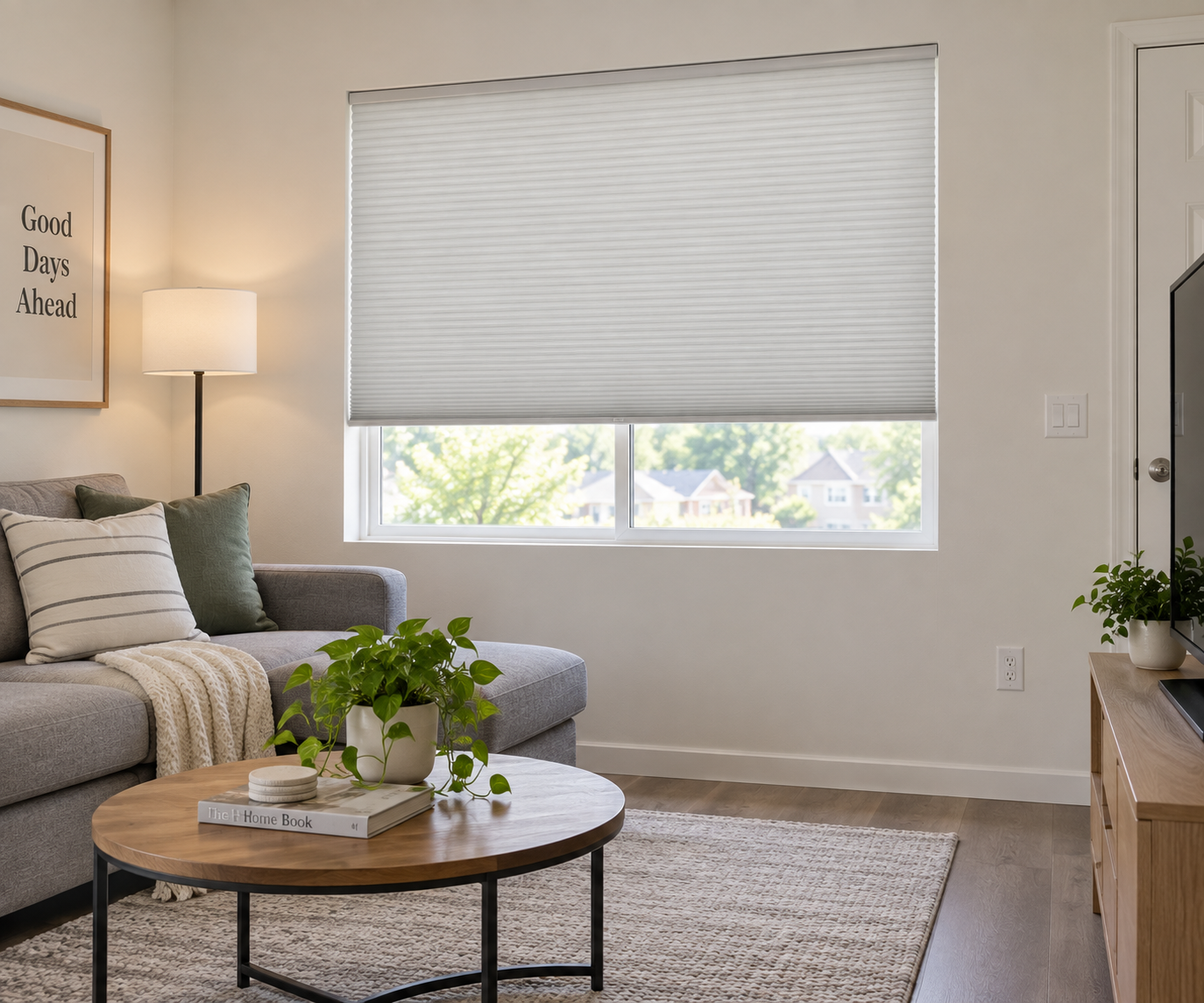
Learn More About No-Drill Blinds and Shades
What this informative video where we show how the different no-tool headrail systems work. This video also explains what no-drill blinds and shades are, how they stay in place, and the different mounting systems available.
What Are the Best No-Drill Blinds and Shades?
For a permanent-looking custom installation, we generally prefer a no-drill system with the tension mechanism integrated into the headrail. It provides the benefits of a pressure-fit installation while keeping the mounting hardware much less visible than systems that require a separate tension rail.
Our second choice is a separate lever-lock tension headrail. It can provide a secure and straightforward installation, but the additional headrail remains visible above or behind the blind or shade.
Peel-and-stick systems can be useful when low cost and temporary installation are the priorities, while magnetic systems are excellent for compatible steel doors or frames but have much more limited applications.
| No-Drill System | Best For | Main Advantage | Main Disadvantage | Our Rating |
|---|---|---|---|---|
| Integrated Tension Headrail | Cleanest permanent-looking installation | Tension mechanism is largely concealed within the product | Requires an appropriate inside-mount opening and accurate measurements | Best Overall |
| Separate Lever-Lock Tension Headrail | Secure pressure-fit installation | Easy to lock into the window opening | Additional mounting rail remains visible | Best Alternative |
| Twist-to-Tighten Tension System | Simple adjustable pressure mounting | No screws or adhesive required | Adjustment components may be visible and design varies by manufacturer | Good |
| Peel-and-Stick / Adhesive | Temporary or inexpensive installations | Very simple installation | Adhesive performance depends on surface, heat, humidity and weight | Best Temporary Option |
| Magnetic Mount | Compatible steel doors or frames | Fast installation and easy removal | Only works on suitable magnetic surfaces | Best Specialty Option |
1. Integrated Tension Headrail — Best Overall
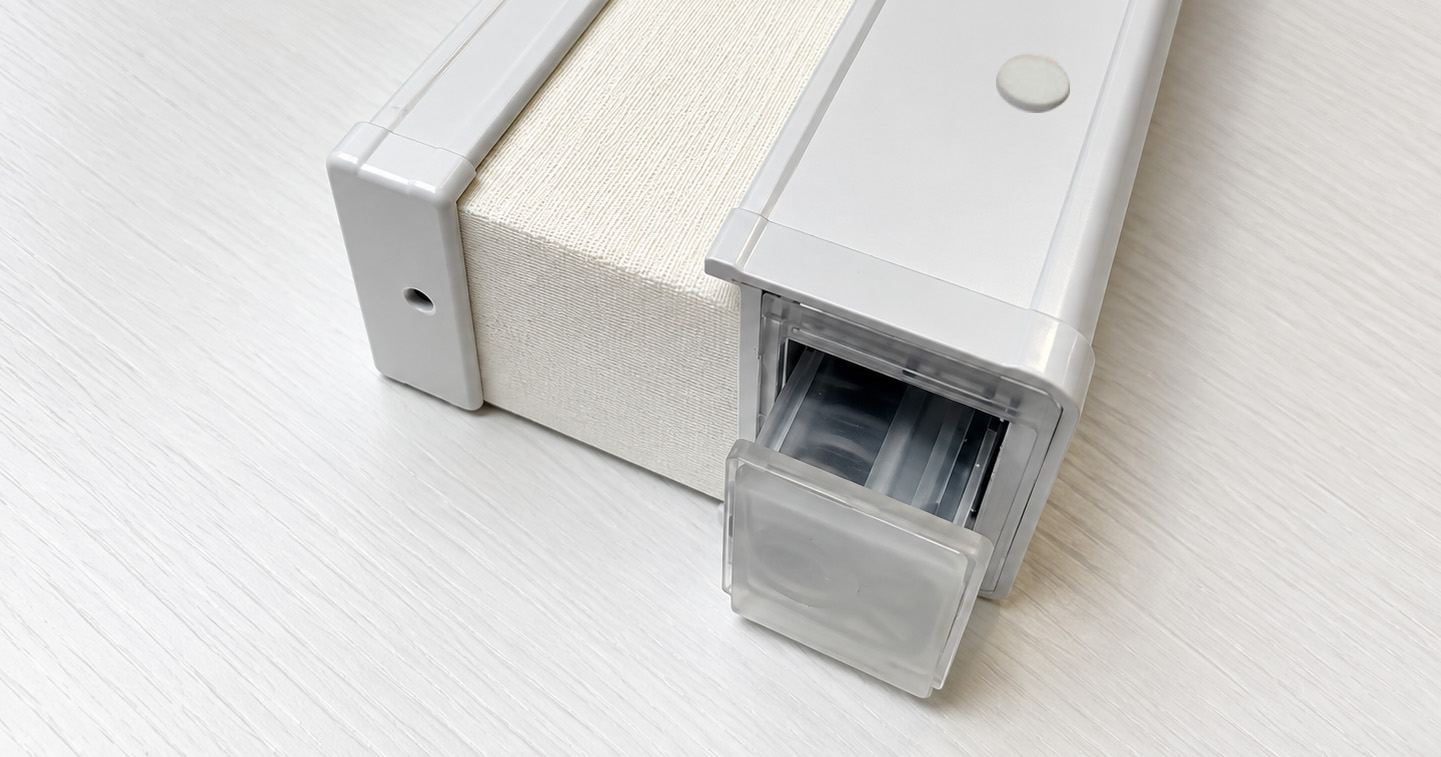
Our favorite no-drill mounting approach places the tension mechanism directly inside the blind or shade headrail instead of requiring a second mounting rail.
The treatment is positioned inside the window opening and the integrated tension mechanism is adjusted outward against the sides of the opening. On the systems we offer, the tension can be tightened with an Allen wrench until the headrail is securely held in place.
Why We Prefer the Integrated Design
The biggest advantage is appearance. Because the mounting system is part of the treatment itself, there is no separate tension rail sitting above the blind or shade.
On some horizontal blinds, a cover slides over the area where the tension mechanism is adjusted. Once installed, even the adjustment opening is largely concealed. The finished product looks much closer to a traditionally installed custom blind.
Advantages
- Cleanest appearance of the pressure-fit systems we offer.
- No separate mounting headrail.
- No screws or drilled holes.
- No adhesive required.
- Fine adjustment using an Allen wrench.
- Mounting mechanism is largely concealed.
- Can be removed without leaving screw holes.
Disadvantages
- Generally requires an inside-mount installation.
- The window opening must fall within the system's allowable dimensions.
- Accurate width measurements are especially important.
- Sufficient mounting depth is required.
- Extremely uneven or irregular window openings may not be suitable.
When available on the blind or shade you want, this is the no-drill system we would generally choose first.
2. Separate Lever-Lock Tension Headrail — Best Alternative
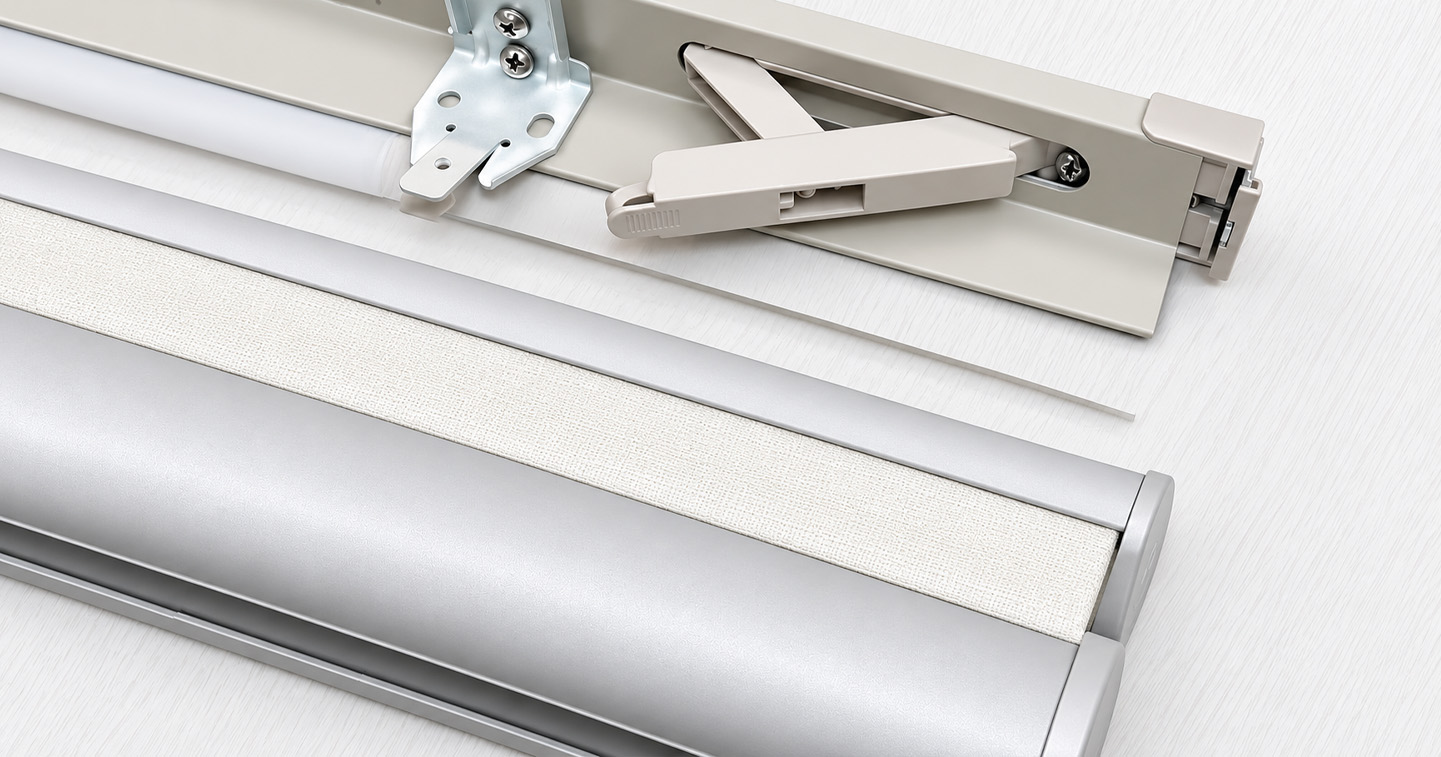
Another common no-drill design uses a separate mounting headrail that is installed inside the window opening before the actual blind or shade.
The mounting rail is expanded against the sides of the window and then secured by compressing or locking a lever. After that rail is installed, the blind or shade is attached to it.
Advantages
- No drilling or screws into the window opening.
- Provides a secure pressure-fit mounting platform.
- Lever makes it relatively easy to lock the system into position.
- Can support multiple types of blinds and shades depending on the manufacturer.
- Can generally be removed without leaving screw holes.
Disadvantages
- The mounting rail is a separate visible component.
- Adds additional height or depth above the actual treatment.
- Can make the finished installation look bulkier.
- The shade sits farther into the room than it would with some integrated systems.
Mechanically, we like this approach. Aesthetically, we prefer an integrated tension system because there is less visible hardware after installation.
3. Twist-to-Tighten No-Drill Systems
Some manufacturers use a twist-to-tighten or threaded tension mechanism rather than an Allen-wrench adjustment or locking lever.
The user turns an adjustment component to extend the ends of the mounting assembly until sufficient pressure is created against the sides of the window opening.
Advantages
- No screws or drilling.
- No adhesive required.
- Adjustable pressure fit.
- Can usually be removed and repositioned.
Disadvantages
- Adjustment hardware may remain visible.
- Appearance varies considerably by manufacturer.
- Generally requires a suitable inside-mount window opening.
- Window width and depth restrictions may apply.
Functionally, this approach is closely related to other tension-fit systems. The primary differences are how the tension is adjusted and how well the mechanism is concealed after installation.
4. Peel-and-Stick No-Drill Shades — Best Temporary or Budget Option
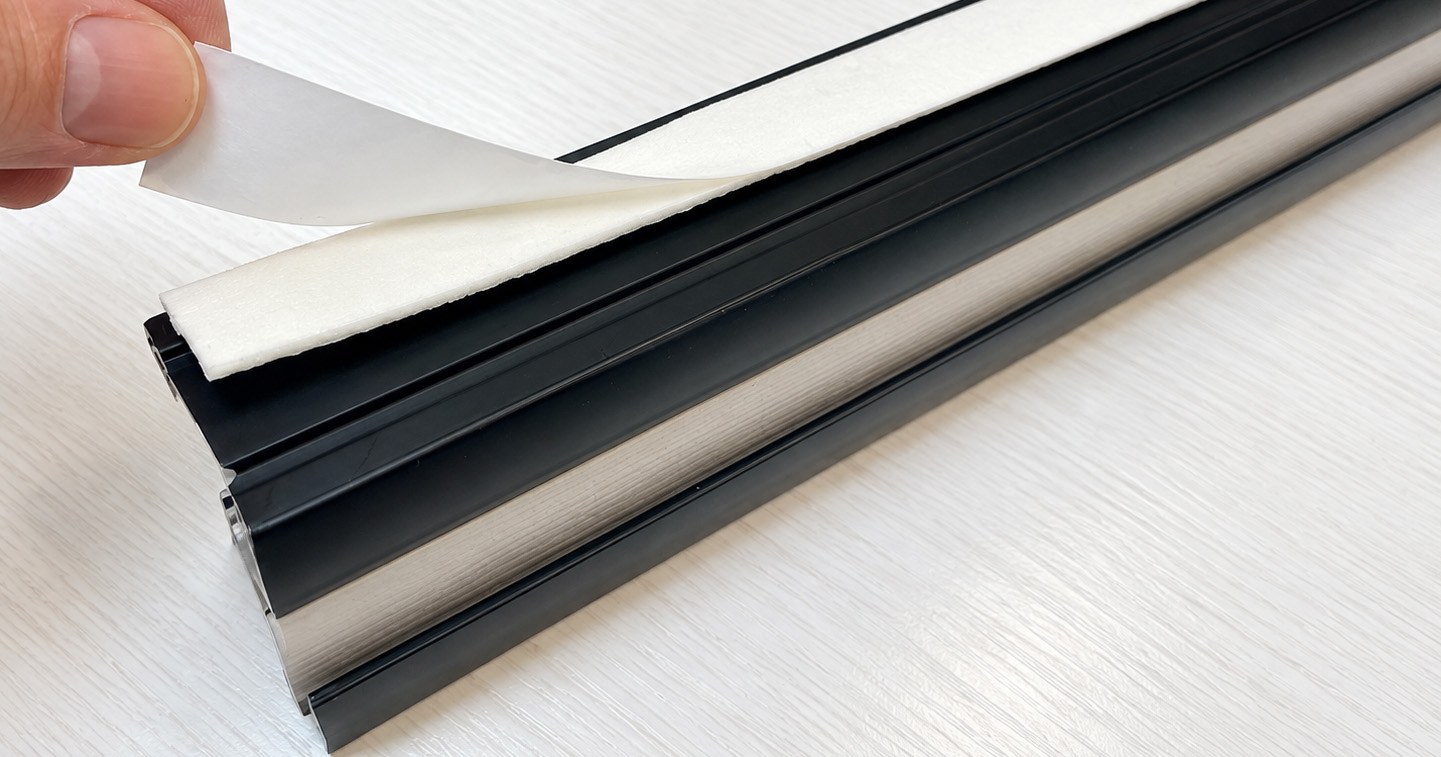
Adhesive no-drill systems use peel-and-stick mounting strips or brackets rather than pressure against the sides of the window opening.
We can offer adhesive-based options, but we generally view them differently from our tension-fit products. They can be an inexpensive and convenient solution, particularly for temporary installations, but they would not normally be our first choice when someone wants the most substantial custom-looking permanent installation.
Advantages
- Usually very easy to install.
- No drill or screws required.
- Can be inexpensive.
- Useful for temporary living situations.
- Can sometimes work where there is not an appropriate opening for a tension system.
Disadvantages
- Adhesive quality and mounting surface matter.
- Heat and humidity can affect some adhesives.
- Heavy or large window treatments may not be suitable.
- Removal may leave residue or affect delicate paint or finishes.
- Generally has a more temporary feel than a custom tension-mounted system.
If you are covering a window for a short period of time or keeping the cost as low as possible, peel-and-stick may make sense. For a treatment you expect to use for years, we generally prefer a mechanical tension-fit system when available.
5. Magnetic No-Drill Blinds — Best for Steel Doors and Frames
Magnetic systems use magnets rather than tension or adhesive to hold a blind or shade to a compatible metal surface.
They can be one of the simplest no-drill mounting solutions when the application is right.
Advantages
- Very fast installation.
- No drilling.
- No adhesive residue.
- Easy to remove or reposition.
- Well suited to certain steel doors and metal frames.
Disadvantages
- Requires a magnetic metal surface.
- Does not work on most wood, vinyl or aluminum window frames.
- Product selection is more limited.
If you are unsure whether a door or frame is compatible, test the surface with an ordinary magnet before selecting a magnetic window treatment.
Which Types of Blinds and Shades Are Best for No-Drill Installation?
The mounting system matters, but so does the weight, headrail design and construction of the window treatment itself.
| Window Treatment | Why It Works Well | What to Check |
|---|---|---|
| Cellular Shades | Relatively lightweight with a compact headrail | Available no-drill system, width and depth limits |
| Roller Shades | Simple construction and compact profile | Cassette size, treatment weight and mounting depth |
| Solar Shades | Similar compact construction to roller shades | Fabric weight and hardware clearance |
| Horizontal Blinds | Select products can use an integrated tension headrail | Product-specific availability and depth requirements |
| Bamboo & Woven Wood Shades | No-drill options are available on select products | Weight and mounting system limitations |
| Roman Shades | Select lighter-weight products may support no-drill mounting | Fabric weight, dimensions and product-specific availability |
Browse the products currently available with no-drill installation options rather than assuming every product within a category can use the same mounting system.
Best No-Drill Blinds for Renters
No-drill window treatments are especially attractive to renters because they can avoid screw holes in the window frame or surrounding wall.
For a longer-term rental, we would generally favor a tension-fit custom treatment over a temporary adhesive shade when the window is compatible.
A tension-mounted cellular, roller or other custom treatment can look much more like a permanently installed blind while still being removable when you move.
Always check your lease and consider the mounting surface before installation, particularly if an adhesive system is being used.
Which No-Drill System Has the Cleanest Look?
Of the systems we work with, we prefer the integrated tension headrail for appearance.
The difference becomes easiest to see from the side or top of the treatment. With a separate tension rail, you effectively have a mounting system plus the window treatment. With an integrated system, the two are combined into a single assembly.
On applicable horizontal blinds, a sliding cover can conceal the tension adjustment area after the Allen-wrench adjustment is completed. This reduces visible hardware even further.
Do No-Drill Blinds Really Stay Up?
Properly sized mechanical tension systems are designed to hold the treatment securely within their stated product limits.
The key is using the correct mounting system for the product and staying within the manufacturer's width, height, weight and mounting-depth requirements.
Adhesive systems rely on different factors. The cleanliness and type of mounting surface, adhesive quality, heat, humidity, treatment weight and installation procedure can all influence how well an adhesive mount performs.
For a more detailed explanation of how these systems generate their holding force, see How Do No-Drill Blinds and Shades Work?.
Do No-Drill Blinds Require an Inside Mount?
Most tension-based no-drill systems require an inside-mount style opening because the system needs opposing surfaces to push against.
This means mounting depth and accurate inside width are particularly important.
Adhesive and magnetic systems can have different requirements because they do not rely on pressure between the two sides of the window opening.
Review our blind and shade measuring instructions before ordering, and always follow the specific measuring requirements for the no-drill product you select. Learn more about measuring your windows for for no-drill blinds and shades
Window Depth Matters With No-Drill Blinds
A no-drill option does not eliminate mounting-depth requirements.
The headrail still has to physically fit inside the window opening, and there must be enough flat surface for the tension mechanism to contact the jamb securely.
Shallow windows, rounded trim, large obstructions or unusually irregular openings may limit which no-drill systems can be used.
Are No-Drill Blackout Shades a Good Choice?
Yes, blackout fabrics can be combined with select no-drill mounting systems. However, no-drill installation does not eliminate the normal light gaps associated with an inside-mounted shade.
If room darkening is especially important, consider the amount of space between the fabric and window opening in addition to the mounting system itself.
An outside mount can often provide more overlap, but most tension-fit no-drill systems are designed for inside mounting. That tradeoff is worth considering before choosing no-drill solely for a bedroom where maximum darkness is the priority.
Are No-Drill Blinds Good for Large Windows?
No-drill systems have size and weight limits. As the treatment gets wider or heavier, the forces placed on the mounting system increase.
For very large blinds and shades, a traditional screw-mounted installation may still be the better choice.
Check the maximum dimensions of the exact no-drill product rather than assuming that a mounting option available at one size remains available at every size.
Related Article: When Should You Use No-Drill Blinds or Shades
When Is a Traditional Drill-Mounted Blind Better?
No-drill installation is convenient, but it is not automatically the best solution for every window.
We would consider traditional brackets and screws when:
- The blind or shade is unusually large or heavy.
- The window opening does not provide appropriate tension surfaces.
- There is insufficient depth for the no-drill system.
- You need an outside mount.
- The treatment uses specialty hardware not compatible with no-drill mounting.
- The application requires the strongest possible permanent mounting method.
The best mounting method is the one appropriate for the window and the treatment, not simply the one that requires the fewest tools.
How to Choose the Best No-Drill Window Treatment
- Decide whether appearance or price is the priority. For the cleanest look, consider an integrated tension system. For an inexpensive temporary solution, adhesive may be enough.
- Measure the window opening carefully. Tension systems depend on an accurate fit.
- Check mounting depth. Make sure the entire headrail and tension mechanism fit properly.
- Look at the finished hardware. Determine whether a separate tension rail will remain visible.
- Check product size limits. No-drill availability can change as the blind becomes larger or heavier.
- Consider how long you plan to keep the treatment. A mechanical tension system generally makes more sense for a long-term custom installation than a temporary peel-and-stick shade.
- Consider your light-control needs. Inside-mounted no-drill shades can still have normal edge gaps.
- Verify availability on the exact product. Not every blind or shade supports every no-drill system.
Shop No-Drill Blinds and Shades
Blinds Chalet offers select custom blinds and shades with no-drill mounting options, allowing you to choose a treatment based on privacy, light control, insulation and style without automatically committing to a traditional screw-mounted installation.
Browse our complete selection of no-drill blinds and shades.
You can also explore our full collections of custom blinds and custom shades.
Expert Guidance from Blinds Chalet
Blinds Chalet has helped homeowners measure and order custom window treatments since 2006. We have worked with more than one type of no-drill mounting system, and there are meaningful differences in how they install and how they look after installation.
For a long-term custom treatment, we generally prefer systems that mechanically secure the shade within the window opening rather than depending entirely on adhesive.
Among the tension systems we offer, our preference is the design with the tension mechanism integrated into the treatment's headrail. The Allen-wrench adjustment allows the pressure to be tightened while keeping most of the mechanism concealed. On applicable horizontal blinds, a sliding cover further hides the adjustment area.
The separate lever-lock headrail is also a practical system, but the additional mounting rail remains visible. That does not affect its basic function, but it can make the finished treatment look bulkier.
If you are unsure which no-drill system is available for the blind or shade you are considering, contact Blinds Chalet before ordering and we can help you compare the options.
Related Guides
- How Do No-Drill Blinds and Shades Work?
- Shop No-Drill Blinds and Shades
- When to Use No-Drill Blinds or Shades
- Do Toolless Blinds and Shades Really Stay Up?
- How to Measure for Blinds and Shades
- Custom Window Blinds
- Custom Window Shades
- Cellular Shades
- Roller Shades
- Solar Shades
Best No-Drill Blinds and Shades FAQs
What are the best no-drill blinds and shades?
For a clean, long-term custom installation, Blinds Chalet generally prefers a mechanical tension-fit system with the tension mechanism integrated into the headrail when available. It avoids a separate visible mounting rail and does not rely entirely on adhesive.
What is the cleanest-looking no-drill mounting system?
An integrated tension headrail generally provides the cleanest appearance because the pressure mechanism is incorporated into the blind or shade instead of requiring a separate mounting rail. On some horizontal blinds, a sliding cover also conceals the tension-adjustment area.
Are tension no-drill blinds better than adhesive blinds?
For many long-term custom installations, we prefer mechanical tension systems because they do not depend on adhesive bonding. Adhesive shades can still be useful when low cost, simplicity or temporary installation is the main priority.
Are peel-and-stick blinds good?
Peel-and-stick shades can be useful for temporary or budget installations. Their performance depends on the mounting surface, adhesive, product weight and environmental conditions, so they are not always the best choice for a long-term custom installation.
Are no-drill blinds good for renters?
Yes. No-drill blinds can be particularly useful for renters because they can avoid screw holes in the window frame. A mechanical tension-fit treatment can provide a more finished custom appearance while remaining removable.
Do no-drill blinds stay securely in place?
A properly measured and installed tension-fit system is designed to remain secure within the manufacturer's size and weight limits. Accurate measurements, sufficient mounting depth and a suitable window opening are important.
Can you get blackout shades without drilling?
Select blackout shades can be ordered with no-drill mounting. Keep in mind that an inside-mounted blackout shade can still have light gaps around its edges, so no-drill mounting does not necessarily create complete room darkness.
Do no-drill blinds work on every window?
No. Tension systems generally require a suitable inside-mount opening with enough depth and appropriate surfaces for the mechanism to press against. Product dimensions and weight limits also apply.
Are magnetic blinds better than tension-fit blinds?
Magnetic blinds can be extremely convenient on compatible steel doors or frames, but their applications are limited. Tension-fit systems work with a much broader range of suitable inside-mount window openings.
Can large blinds be installed without drilling?
No-drill mounting systems have product-specific size and weight limits. Very large or heavy window treatments may require traditional screw-mounted brackets for a secure installation.
Where can I shop for no-drill blinds and shades?
Blinds Chalet offers select custom blinds and shades with no-drill installation options. Availability depends on the product, size and mounting system selected.