






Custom Bali Solar Screen Shades
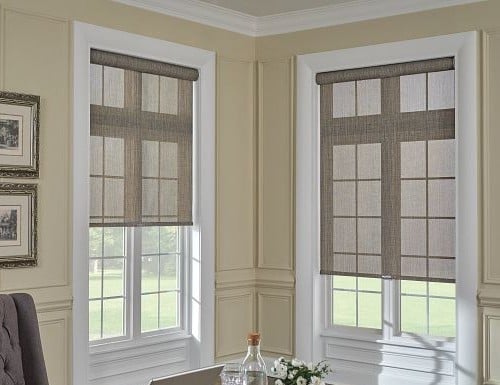

Bali Solar Screen Shades are designed to tame harsh sunlight while preserving your outdoor view. The woven mesh fabric filters glare and blocks a high percentage of UV, helping protect floors, artwork, and upholstery near bright windows. You get crisp, modern lines that work in living rooms, home offices, kitchens, and sunrooms.
Choose an openness percentange: typically 1%, 3%, 5%, or 10%—to tune how much light and visibility you want. Lower openness (1–3%) delivers stronger glare and UV reduction with a dimmer view; mid to higher openness (5–10%) maintains brighter interiors and clearer sightlines outside. It’s an easy way to balance comfort, productivity, and aesthetics room by room.
Color matters, too. Darker fabrics cut glare and boost view clarity/contrast (great for TVs and monitors), while lighter fabrics brighten spaces and reflect more heat. Pair your fabric with a sleek cassette or fascia and a coordinating hem bar for an architectural, finished look that complements contemporary décor.
For control and convenience, Bali offers cordless and motorized options. Cordless keeps the profile clean and child-safe; motorization adds one-touch operation, schedules, and smart-home integration (hub-dependent) for tall, wide, or hard-to-reach windows. If nighttime privacy is a priority, consider layering with drapery or pairing your solar screen with a second roller in room-darkening or blackout.
Installation and care are straightforward. Inside mount gives a built-in look but leaves small side gaps; outside mount adds overlap to reduce edge light. Maintenance is simple—dust with a microfiber cloth or vacuum on low with a soft brush, and spot clean per fabric care guidelines. With the right openness, color, and hardware, Solar Screen Shades by Bali deliver daylight you can live in and outdoor views you’ll actually enjoy.
Upgrades with Solar Screen Rollers by Bali
Customize your Bali solar screens for the way you live. Choose openness levels to balance glare control and view-through, then elevate the finish with architectural hardware—sleek cassettes/fascias and coordinating hem bars. Want better nighttime control? Layer with drapery or pair your solar with a second roller in room-darkening or blackout for 24/7 flexibility.
Wide windows and sliders are easy to manage with multiple shades on one headrail, aligned hem bars, and optional motorization. Darker fabrics sharpen view clarity (great for screens); lighter tones keep interiors bright and reflect more heat.
Motorization
Add one-touch comfort with motorized Bali solar shades. Use a remote, set schedules, and create scenes (e.g., “Work Mode” for morning glare control). With the appropriate hub, you can group rooms, automate by time of day, and enable app or voice control. Power options typically include long-life rechargeable batteries, plug-in, or hardwired for heavy use and very wide spans.
Motorization is ideal for hard-to-reach windows, tall installations, and spaces where you want repeatable, precise light levels—like home offices and media rooms.
Cordless
Cordless lift delivers a clean, child-safe profile with smooth, accurate positioning—no dangling cords, no visual clutter. It’s a great everyday solution for living rooms, kitchens, and sunrooms where you frequently raise and lower shades.
For very large or heavy shades, consider stepping up to motorization to reduce lift effort and keep operation perfectly consistent.
Cassette Headrail
A cassette headrail neatly conceals the roller and brackets for a polished, built-in look. Choose fabric-wrapped for seamless color matching or painted metal for crisp contrast. The cassette’s front lip also helps cover the roll area, reducing top light leaks versus open-roll installs.
Planning an inside mount? Verify recess depth (often ~2.5–3.5" for a flush fit, depending on model). Outside mount with a cassette creates a strong architectural line and can further reduce edge glow with extra overlap.
Reverse roll vs Standard Roll
Simply referring to the direction the fabric rolls off the tube at the top of the roller shades. The standard roller is the most common and rolls off the back, keeping the fabric closest to the window, while the reverse roll comes off the front side, hiding the roll.
Things to Know About Solar Screen Shades
Day vs. night privacy: solar fabrics obscure views in during daylight but become see-through at night with interior lights on. For privacy after dark, layer drapery or add a room-darkening/blackout companion shade. Color choice: darker fabrics improve glare reduction and view clarity; lighter fabrics reflect heat and brighten interiors.
Openness factor: lower openness (1–3%) = stronger glare/UV control with dimmer view; higher openness (5–10%) = brighter view with lighter glare control. Mounting: inside mount looks built-in but leaves small side gaps; outside mount adds overlap for better glare control. Care: dust or vacuum on low with a soft brush; spot clean per fabric guide—avoid harsh solvents.
Bali Solar Shades — FAQs
What are Bali solar screen shades and how do they work?
Which openness should I choose—1%, 3%, 5%, or 10%?
Do Bali solar shades provide privacy at night?
Should I choose a dark or light fabric color for my solar shades?
Will Bali solar screens reduce heat and protect furnishings from UV rays?
Inside mount or outside mount—what’s best for solar shades?
Can Bali solar shades be motorized and controlled by an app or voice?
Are Bali roller shades available cordless for child safety?
How do I clean and maintain Bali solar shade fabrics?
Where do solar screen shades work best in the home or office?
How can I get privacy at night with Bali solar shades installed?
What top treatments and hardware finishes are available for a finished look?
Shop our entire Bali Blinds & Shades Collection Looking for even more options? View our complete line of custom screen roller shades
* Production lead times are only an estimate and does not apply to any colors that are out of stock. Production begins the following business day after ordering. Please allow additional time for shipping.