









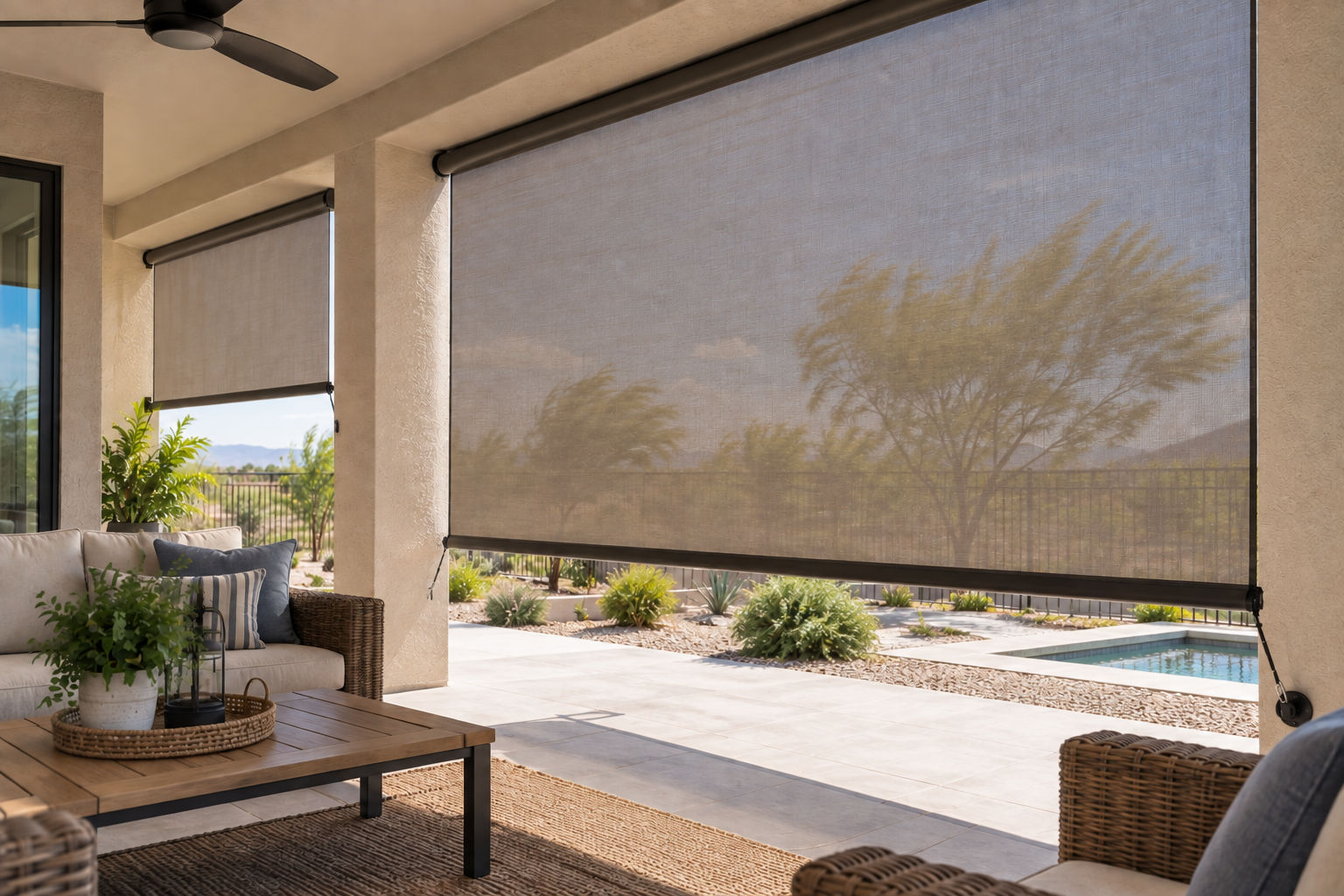
Why There's No Single Wind Number
Manufacturers don't generally publish a certified wind speed rating for exterior shades the way a storm door or hurricane shutter might carry one, because so much depends on the specific installation: fabric type and openness, whether the shade is guided in a side track, how tightly it's secured at the bottom, and even the shape of the space it's mounted in, since wind funneling between structures behaves differently than open exposure. Rather than looking for one number, it's more useful to understand which features actually improve wind performance and which conditions call for retracting the shade regardless of its setup.
What Determines an Outdoor Shade's Wind Resistance
Side Tracks and Cables
Side tracks or guide cables keep the edges of the shade constrained as it moves, which significantly reduces flapping and billowing in a breeze compared to a shade with free-hanging sides. This is one of the single biggest factors in how a shade performs in wind, and it's worth prioritizing on any shade installed in a consistently breezy location.
Hold-Down Brackets and Bottom Bar Weight
A secured bottom rail resists lifting and swaying far better than one left loose. Hold-down brackets anchor the bottom of the shade to the structure, which helps keep the fabric taut and reduces the whipping motion that puts the most stress on fabric and hardware in gusty conditions.
Fabric Openness and Perforation
A more open, perforated mesh fabric lets some wind pass through rather than catching it like a sail, which generally makes it more forgiving in breezy conditions than a solid, tightly woven fabric of the same size. This is a tradeoff, since a more open weave also lets in more light and offers a bit less privacy.
Valance and Headrail Design
A well-fitted valance or headrail reduces the gap where wind can catch the top of the fabric and start it moving. A loose or poorly fitted headrail gives wind an easier entry point at the top of the shade.
Comparing Wind-Resistance Features
| Feature | Effect on wind performance |
|---|---|
| Side tracks or guide cables | Significantly reduces edge flapping and billowing |
| Hold-down brackets | Keeps the bottom rail secured, reducing sway and whipping |
| Open or perforated fabric | Lets wind pass through rather than catching it fully |
| Solid, tightly woven fabric | Catches more wind load; less forgiving in gusty conditions |
| Motorized wind sensor | Automatically retracts the shade before manual intervention is needed |
| No side tracks, no hold-downs, manual operation | Least wind-resistant configuration; most reliant on the user remembering to raise it |
Exact wind tolerance is not something we can quote as a guaranteed figure, since it depends on the full configuration and the specific product, so treat this as a guide to which features help rather than a promise of a specific wind rating.
Signs Your Outdoor Shade Has Been Stressed by Wind
- Visible fraying, stretching, or fabric that no longer sits as taut as it did when new.
- Bent or loosened hold-down brackets, or brackets that have pulled away from the mounting surface.
- A bottom bar that hangs unevenly or has visibly bowed.
- Increased noise or flapping during normal, moderate breeze compared to how the shade behaved when first installed.
- For motorized shades, a motor that struggles or stalls when raising or lowering the shade.
Any of these are worth addressing before the next windy day, since fabric or hardware already under stress is more likely to fail in the next round of gusts.
What to Do Before High Wind or a Storm
Fully raise or retract exterior shades whenever a wind advisory, storm warning, or unusually gusty forecast is expected. For manual shades, this means physically raising them, not just locking them in a lowered position. For motorized shades with a wind sensor, confirm the sensor is functioning and the shade is receiving power, since a sensor can't protect a shade that's lost connectivity or battery charge. In severe weather, such as an approaching hurricane or major windstorm, consider removing the shade fabric entirely if the product allows for it, rather than relying on the mounted hardware to withstand the event.
Common Mistakes
Leaving Shades Down During a Forecasted Storm
The single most common cause of wind damage we see is a shade left extended when high wind was in the forecast. Raising the shade takes a few minutes and is the most reliable protection available, regardless of what features the shade has.
Assuming a Motorized Wind Sensor Removes the Need to Check
Wind sensors are a helpful safeguard, not a guarantee. Power outages, connectivity issues, and sensor placement can all affect whether the system actually triggers in time. Treat it as an added layer of protection, not a replacement for checking the forecast yourself.
Choosing a Solid Fabric for a Consistently Windy Location
A solid, non-perforated fabric might be the right call for maximum privacy or shade, but in a location that regularly experiences breeze, it puts more stress on the hardware than a more open fabric would. Weigh that tradeoff before ordering.
Skipping Side Tracks to Save on Cost
Side tracks add cost, but they're one of the most effective upgrades for wind performance. In a breezy location, this is often the upgrade worth prioritizing over other features.
When Outdoor Shades Aren't the Right Fit
Some locations are exposed enough that no combination of features will make a fabric exterior shade a reliable year-round solution. Unshielded upper-floor balconies, coastal properties with frequent high wind, and areas that regularly see storm-force gusts are all situations where a shade will need to be raised often enough that it may not be worth installing at all, or where a different kind of structure entirely may serve you better. Our guide comparing exterior porch shades to other outdoor window treatments covers some of those alternatives.
Our Take on Wind and Outdoor Shades
Blinds Chalet has sold and supported exterior porch and patio shades for customers since 2006, and wind is the number one factor in outdoor shade longevity, more than sun exposure or general wear. Our honest advice is the same one we give every customer: choose side tracks and hold-down brackets if your space sees regular breeze, consider a wind sensor if you're going motorized, and treat "raise it before the wind picks up" as a habit rather than an afterthought. No feature set replaces that habit entirely.
Related Guides
- Shop Exterior Porch Shades
- Choosing the Right Exterior Porch Shades
- Comparing Exterior Porch Shades to Other Outdoor Window Treatments
- Pros and Cons of Exterior Porch Shades
Frequently Asked Questions
Can I leave my outdoor shades down in windy weather?
For light, everyday breeze, most exterior shades are fine left in place. For forecasted high winds, strong gusts, or storms, we recommend fully raising the shade rather than leaving it extended, regardless of what features it has.
Do side tracks actually make a meaningful difference in wind?
Yes. Side tracks or guide cables constrain the edges of the fabric as it moves, which meaningfully reduces flapping and billowing compared to a shade with free-hanging sides.
Will a wind sensor protect a motorized shade automatically?
A wind sensor can automatically retract a motorized shade once wind speeds cross a set threshold, which is a genuinely useful safeguard. It still depends on the sensor and motor having power and being properly configured, so it's a helpful layer of protection rather than a total guarantee.
Is wind damage to an outdoor shade covered under warranty?
Coverage varies by product and manufacturer, and damage from leaving a shade extended during high winds or a storm is generally not treated the same as a manufacturing defect. Check the specific product's warranty terms, and reach out to our team if you're unsure whether a situation is covered.
What's the single best upgrade for a windy patio or porch?
Side tracks or guide cables tend to offer the most noticeable improvement in wind performance, followed by hold-down brackets to secure the bottom rail. For a hands-off approach, pairing those with a motorized wind sensor adds another layer of protection.