









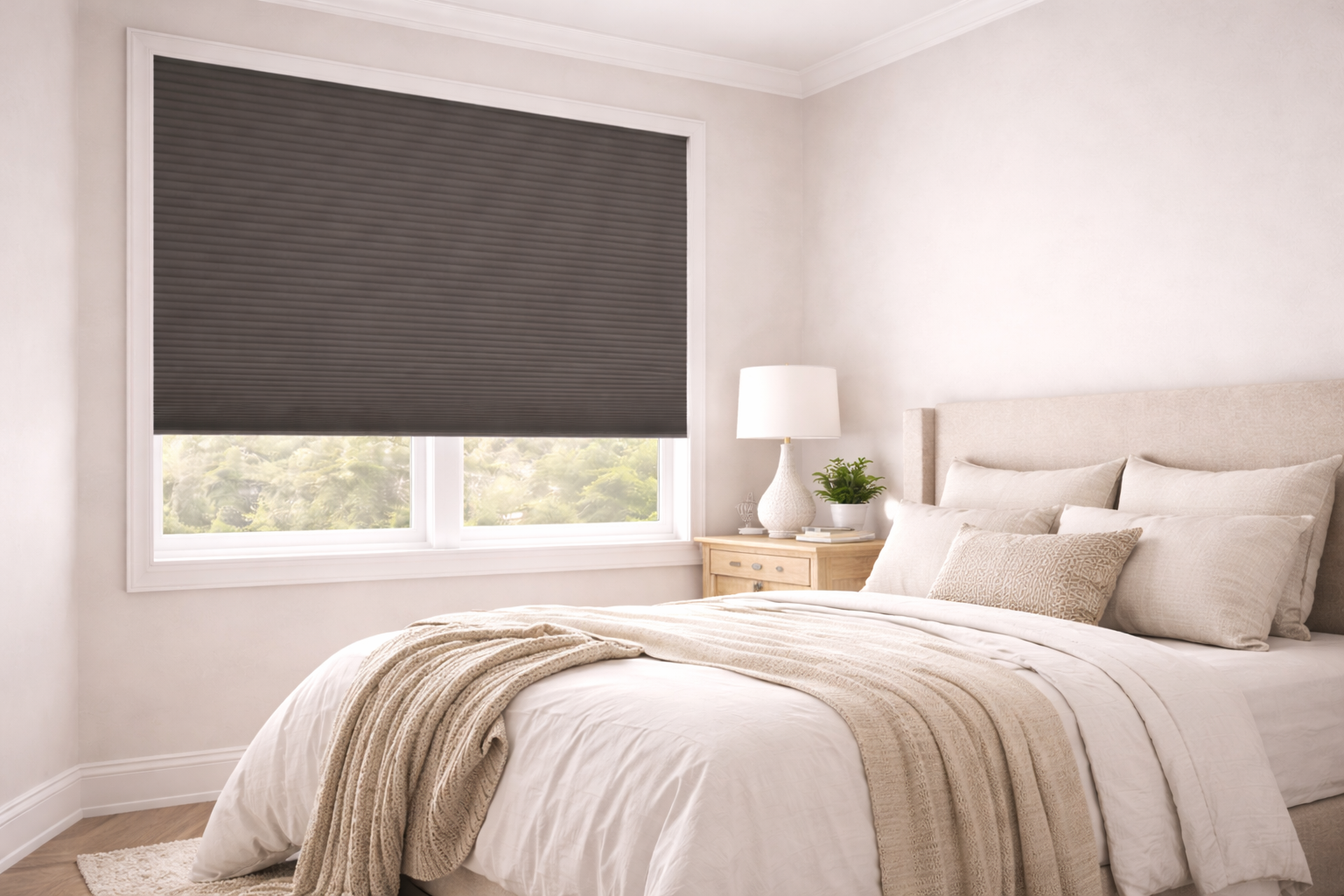
Blackout shades are commonly used to block light, but many homeowners also wonder if they can help reduce heat. In hot climates and sunny rooms, controlling heat gain through windows is essential for comfort and energy efficiency.
The short answer is yes—blackout shades can help reduce heat. However, how effective they are depends on the material, installation, and overall window exposure.
Explore our full range of custom-made window shades as well as blackout window shades. Learn more about heat control solutions in our best window treatments for heat reduction guide.
How Do Blackout Shades Reduce Heat?
Blackout shades can reduce heat primarily by blocking direct sunlight before it spreads into the room. Sunlight that passes through a window can warm floors, furniture, walls and other interior surfaces. A blackout shade helps limit that solar heat gain by creating an opaque barrier between the window and the room.
However, blocking sunlight and insulating a window are not exactly the same thing. A blackout fabric may be excellent at stopping light while providing only moderate insulation. The amount of heat reduction depends on the shade construction, fabric, fit, mounting method and the amount of direct sun the window receives.
Blackout cellular shades can provide an additional advantage because the honeycomb-shaped cells trap air and create an insulating layer at the window. A standard blackout roller shade primarily blocks light and solar gain, while a blackout cellular shade combines light blocking with additional insulation.
Do Blackout Shades Completely Block Heat?
While blackout shades can significantly reduce heat, they do not eliminate it completely. Some heat can still enter through the glass and around the edges of the shade.
Their effectiveness depends on:
- How tightly the shade fits within the window
- The thickness and material of the fabric
- The direction the window faces
- How long the window is exposed to direct sunlight
Which Blackout Shades Are Best for Reducing Heat?
| Window Treatment | Heat Reduction | Insulation | Light Blocking | Best For |
|---|---|---|---|---|
| Blackout Roller Shades | Good | Moderate | Excellent | Bedrooms, media rooms and sunny windows where darkness is the main priority |
| Blackout Cellular Shades | Excellent | Excellent | Excellent | Rooms where both heat reduction and insulation are important |
| Solar Shades | Excellent for solar heat and glare | Limited | Varies by openness factor | Living spaces where reducing glare and heat while preserving some view is important |
| Blackout Roman Shades | Good | Varies by fabric and lining | Excellent with blackout lining | Rooms where decorative style and darkness are both priorities |
Best overall for heat and blackout: If you want both maximum darkness and improved insulation, a blackout cellular shade is generally one of the strongest choices. If your main concern is glare and solar heat while still maintaining some outward visibility, a solar shade may be a better fit.
Blackout Shades vs Other Heat-Reducing Window Treatments
Blackout shades are effective, but they are not always the most efficient option for reducing heat compared to other specialized window treatments.
- Cellular shades: Provide better insulation with air pockets that trap heat
- Solar shades: Reflect and block UV rays while maintaining visibility
- Plantation shutters: Create a strong barrier against heat transfer
Blackout shades are strongest in light blocking, while other options may outperform them in insulation or heat reflection. Shop our top insulating window treatments.
When Blackout Shades Work Best
Blackout shades are especially effective in situations where both light control and heat reduction are important.
- Bedrooms that receive direct morning or afternoon sun
- Media rooms where light needs to be minimized
- Rooms with large windows that allow in intense sunlight
- Homes in hot climates where reducing glare and heat is a priority
Does Inside or Outside Mount Reduce More Heat?
The mounting style can affect how much sunlight and heat enters around the edges of a blackout shade.
Inside mount: An inside-mounted blackout shade provides a clean, recessed appearance, but small operating clearances are normally required along the sides. These gaps can allow some sunlight to enter around the shade.
Outside mount: An outside-mounted shade can extend beyond the window opening, helping cover the edges of the glass and reduce light leakage. This can be especially useful on windows that receive intense direct sunlight.
If maximum light blocking and heat reduction are the priority, an outside mount with adequate overlap may provide better overall coverage. However, the best installation depends on the specific window, product and mounting surface.
What Affects How Much Heat Blackout Shades Reduce?
Shade Construction
The construction of the shade matters. A standard blackout roller shade creates an opaque barrier against sunlight, while a blackout cellular shade also creates insulating air pockets between the room and the window.
Fit and Coverage
Heat and sunlight can still enter around the edges of a shade. A well-fitted shade with good window coverage generally performs better than a treatment with large gaps along the sides or top.
Fabric and Backing
Blackout materials vary in thickness, construction and backing. Some fabrics include reflective or light-colored backing that can help reduce the amount of solar energy absorbed at the window.
Window Direction
Windows that receive strong direct sunlight generally benefit the most from heat-reducing window treatments. East-facing windows can receive intense morning sun, while west-facing windows often experience strong afternoon heat. South-facing windows may receive substantial sun depending on the season and surrounding shade.
Window Size
Large windows and sliding glass doors expose more glass area to sunlight, which can increase solar heat gain. Covering a larger percentage of the glass can make a noticeable difference in comfort.
When the Shade Is Closed
Blackout shades only reduce solar heat gain effectively when they are positioned between the sunlight and the room. Closing shades before or during periods of direct sun can help limit heat buildup.
How to Get More Heat Reduction From Blackout Shades
To improve the performance of blackout shades in hot or sunny rooms:
- Close shades before peak sunlight: Blocking sunlight before surfaces inside the room heat up can be more effective than waiting until the room is already warm.
- Reduce gaps around the shade: Good coverage around the window helps limit sunlight entering around the edges.
- Consider an outside mount: Extending a shade beyond the window opening can improve coverage when maximum light blocking is important.
- Choose an insulating construction: Blackout cellular shades add insulating air pockets in addition to blocking sunlight.
- Consider reflective or light-colored backing: Certain fabrics and backings can help manage solar heat at the window.
- Use side channels when available: Side channels can further reduce edge light and improve room-darkening performance.
Are Blackout Shades Worth It for Heat Control?
Blackout shades are a good option if your main goal is to block light while also reducing some heat. They are particularly useful in bedrooms and spaces where darkness is important.
However, if your primary goal is maximum heat reduction, you may want to consider other options or combine blackout shades with additional insulating window treatments.
Are Blackout Shades the Same as Thermal Shades?
No. Blackout describes how effectively a window treatment prevents visible light from passing through the material, while thermal or insulating describes how well the window treatment slows heat transfer.
A shade can be blackout without being highly insulating. For example, an opaque roller shade may block nearly all visible light but does not create the same insulating air pockets as a cellular shade.
Some window treatments provide both benefits. Blackout cellular shades combine opaque fabrics with a honeycomb structure, making them a strong option when both room darkening and energy efficiency are important.
When Do Blackout Shades Work Best for Heat Control?
Blackout shades are especially useful when the same room needs both darkness and protection from direct sunlight.
- Bedrooms: Blackout shades can reduce early-morning or afternoon sunlight while helping limit heat buildup.
- Nurseries: They can create a darker sleeping environment while reducing direct solar heat through sunny windows.
- Media rooms: Blackout fabrics reduce glare on televisions and screens while limiting sunlight entering the space.
- West-facing rooms: Rooms exposed to strong afternoon sun can benefit from shades being closed before peak sunlight reaches the glass.
- Large sunny windows: Covering a large area of exposed glass can help reduce solar heat gain and improve comfort.
Explore Your Options
If you're comparing different ways to reduce heat and improve comfort, explore these guides:
- Best Window Treatments for Arizona Heat
- Roman Shades vs Cellular Shades
- Are Cellular Shades Worth It
- Shop Privacy Window Shades
Final Thoughts
Blackout shades can help reduce heat by blocking sunlight and limiting how much warmth enters your home. While they are not the most insulating option available, they provide a strong balance of light control and heat reduction, making them a practical choice for many rooms.
Blackout Shades and Heat FAQs
Do blackout shades reduce heat?
Yes. Blackout shades reduce heat by blocking sunlight and limiting how much heat enters through the window.
Are blackout shades good for hot climates?
Yes. Blackout shades can help reduce heat and glare, making them useful in hot climates, especially when paired with proper installation.
Do blackout shades keep rooms cooler?
They can help keep rooms cooler by blocking sunlight, but they may not provide as much insulation as cellular shades or other specialized options.
What is better for heat reduction than blackout shades?
Cellular shades, solar shades, and plantation shutters are often more effective for heat reduction because they provide insulation or reflect sunlight.
Do blackout shades actually keep a room cooler?
They can help. By blocking direct sunlight, blackout shades can reduce solar heat buildup inside a room. The amount of improvement depends on the window, shade construction, fit, and how much direct sunlight the room receives.
Are blackout cellular shades better for heat than blackout roller shades?
Generally, blackout cellular shades provide more insulation because their honeycomb-shaped cells trap air at the window. Blackout roller shades are excellent for blocking light and can reduce solar heat gain, but they typically provide less insulation.
Do blackout shades help reduce air-conditioning costs?
Reducing unwanted solar heat gain can reduce the amount of heat your cooling system needs to remove. Actual energy savings vary based on climate, window size, glass type, shade construction, and how consistently the shades are used.
Should blackout shades be inside or outside mount for heat?
Both mounting styles can help reduce heat, but an outside mount may provide better overall coverage because the shade can extend beyond the edges of the window opening. An inside mount provides a cleaner recessed appearance but normally has small gaps around the sides.
What color blackout shade is best for reducing heat?
The construction and window-facing backing of the shade are generally more important than the decorative room-facing color alone. Light-colored or reflective window-facing materials can help manage solar heat depending on the product design.
Do blackout shades help keep heat in during winter?
Some blackout shades can help reduce heat loss through windows, particularly when the shade has an insulating construction such as a cellular design. A standard blackout fabric may provide less insulation than a shade specifically designed for thermal performance.
Are blackout shades better than solar shades for reducing heat?
It depends on your goal. Blackout shades are better when darkness is a priority. Solar shades are designed to reduce glare and solar heat while preserving some outward visibility. If you want both blackout and added insulation, cellular blackout shades are often a strong option.
Do blackout shades block all heat from a window?
No. Blackout shades can reduce solar heat gain, but they do not completely stop heat transfer through the window. Performance depends on the shade material, construction, fit, mounting method, glass type, and the amount of direct sunlight hitting the window.
When should blackout shades be closed to reduce heat?
For the best heat-control benefit, close blackout shades before or during periods when direct sunlight reaches the window. Blocking the sun before floors, furniture, and other interior surfaces heat up can help limit heat buildup in the room.