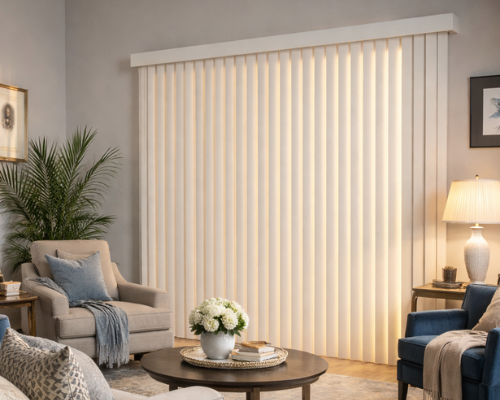









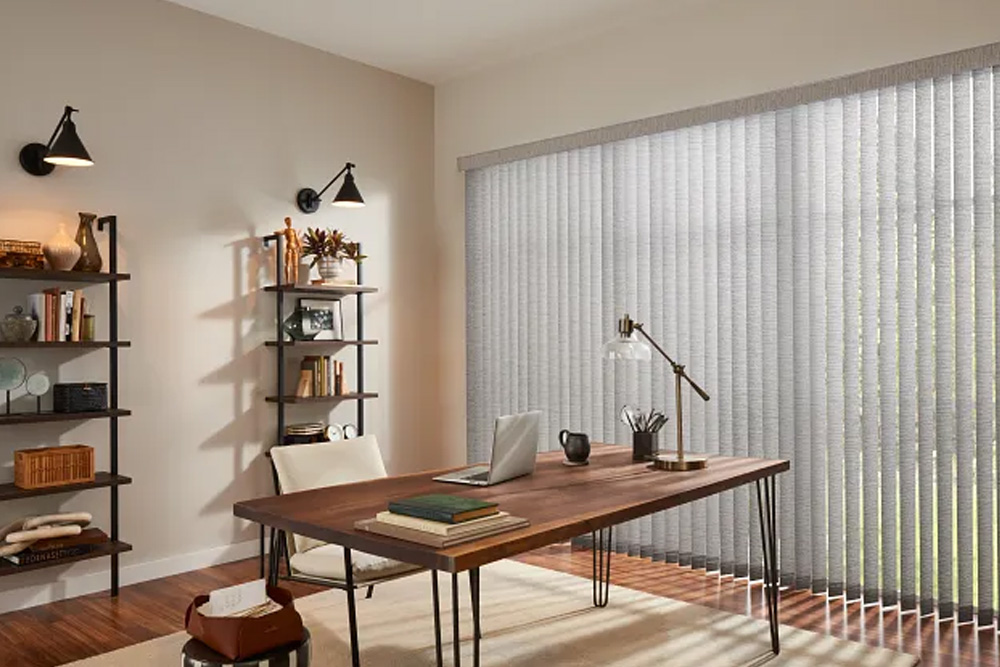
Vertical blinds are a type of window covering made with vertical slats, also called vanes, that hang from a headrail at the top of the window. These vanes can be tilted to control light and privacy or drawn to the side to fully open the window.
They are commonly used for large windows, sliding glass doors, and patio doors because their vertical design makes them easy to operate across wider openings.
If you want to browse available styles, visit our complete selection quality vertical blinds. For even more choices, shop stylish and functional custom-fit blinds tailored to your exact needs.
How Vertical Blinds Work
Vertical blinds operate using a track system mounted at the top of the window. Each vertical vane is attached to the track and can rotate to adjust light and visibility.
The vanes can also be drawn to one side or split from the center, depending on the configuration. This makes vertical blinds especially useful for wide openings where horizontal blinds may be less practical.
What Vertical Blinds Are Made Of
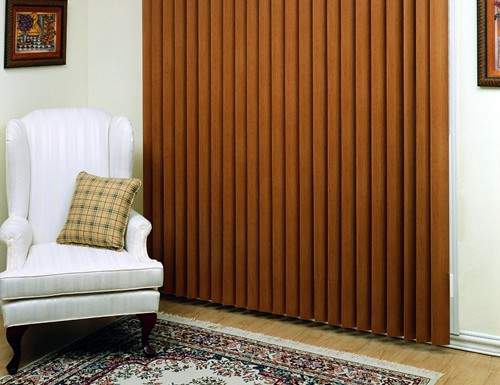
Vertical blinds are available in a variety of materials, including fabric, vinyl, and composite materials. Each option offers a different look and level of light control.
Fabric vanes provide a softer appearance, while vinyl and composite vanes offer a more structured and easy-to-clean surface. The material you choose will affect both the style and functionality of the blinds.
What Vertical Blinds Look Like
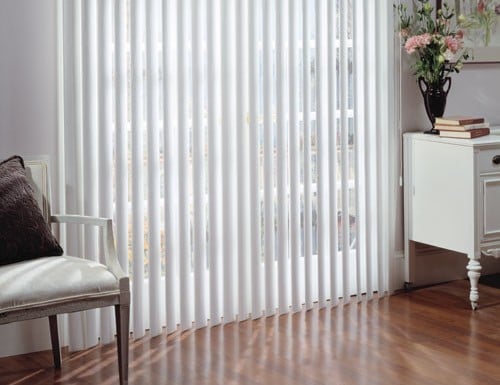
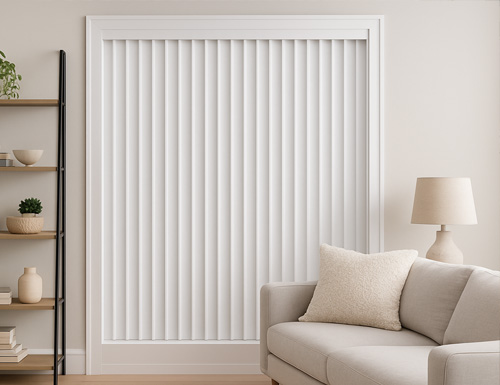
Vertical blinds have a clean, linear appearance created by evenly spaced vertical vanes. When open, the vanes stack neatly to one side, creating an unobstructed view. When closed, they form a continuous surface across the window.
They are available in a wide range of colors, textures, and finishes, making it easy to match different room styles from modern to traditional.
Where Vertical Blinds Are Commonly Used
Vertical blinds are most commonly used on sliding glass doors, patio doors, and large windows. Their design allows them to cover wide spans efficiently while still providing adjustable light control and privacy.
They are also used in living rooms, dining areas, offices, and other spaces where larger windows are present.
Vertical Blinds vs Horizontal Blinds
The main difference between vertical blinds and horizontal blinds is the orientation of the slats. Vertical blinds use upright vanes that move side to side, while horizontal blinds use slats that tilt and lift upward.
Vertical blinds are typically better suited for wide openings, while horizontal blinds are more common on standard-sized windows. Shop Vertical Blind Alternatives
Learn More About Vertical Blinds
To continue exploring this topic, visit our Customizing Vertical Blinds, How to Install Vertical Blinds, Benefits of Vertical Blinds, and Where to Buy Vertical Blinds? guides.
You can also see the advantages and disadvantages of vertical blinds or browse our vertical blinds collection and view our best selling vertical blinds and highest rated vertical blinds.
Learn How to Measure a Sliding Glass Door for Vertical Blinds
Final Thoughts
Vertical blinds are a practical window treatment designed for large openings and flexible light control. By understanding what they are, how they work, and where they are commonly used, you can decide whether they are the right fit for your home.
Vertical Blinds FAQs
What are vertical blinds?
Vertical blinds are window coverings made with vertical slats that hang from a top track. The slats can be tilted for light control or moved side to side to open the window.
How do vertical blinds work?
Vertical blinds use a track system that allows the slats to rotate for light control and slide to the side for full window access.
Where are vertical blinds used?
Vertical blinds are commonly used on sliding glass doors, patio doors, and large windows where wide coverage is needed.
What materials are vertical blinds made from?
Vertical blinds are made from materials such as fabric, vinyl, and composite materials, each offering different styles and levels of durability.
Are vertical blinds good for large windows?
Yes. Vertical blinds are especially well suited for large windows and sliding doors because they are easy to operate across wide openings.
Compare materials, vane sizes, and control options in our selection of custom made vertical blinds to find the best fit for your windows and patio doors.
For more information, visit our vertical blinds guide hub to explore more articles and tips.

 (
(
 (
(