









)
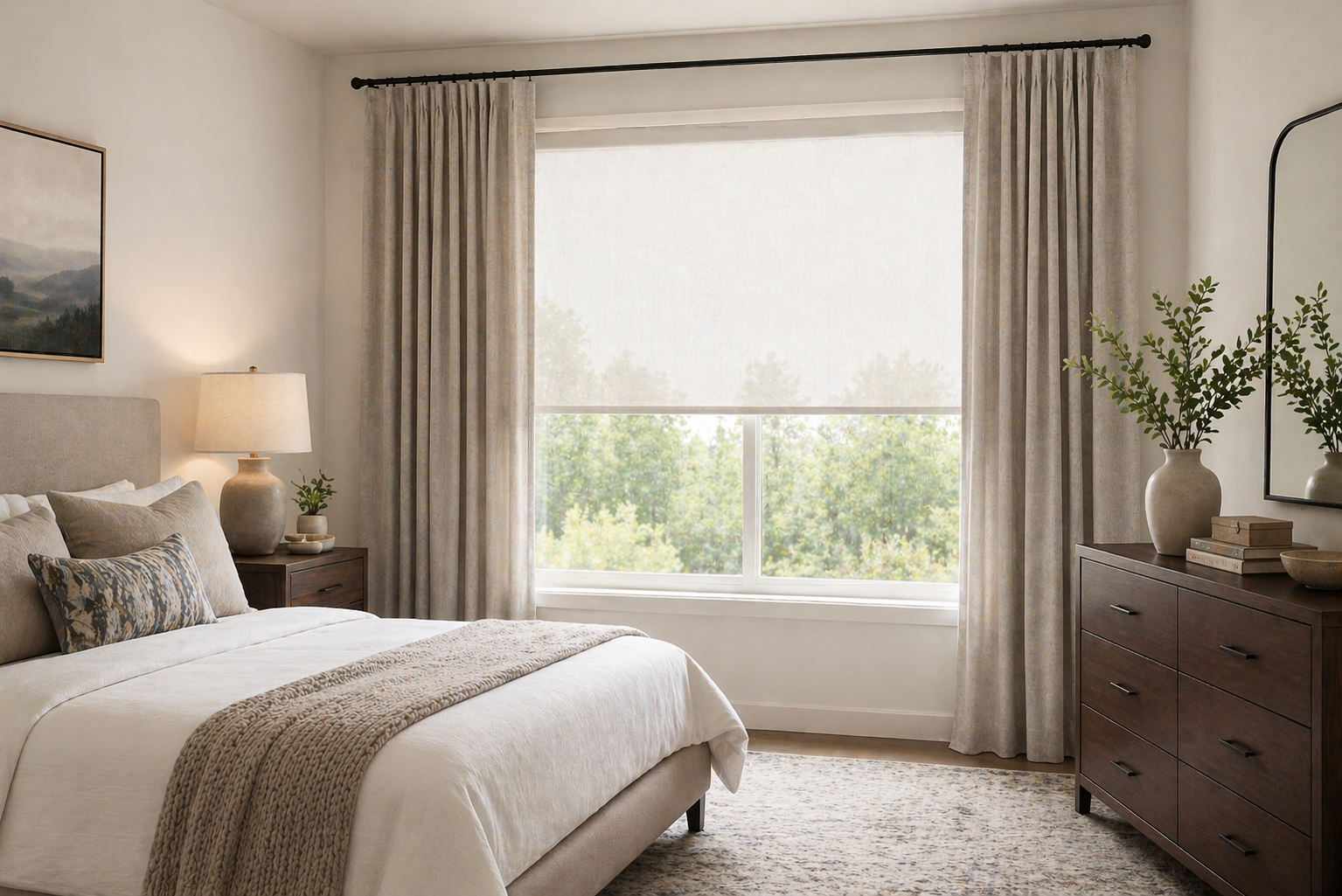
Drapery panels are fabric window treatments designed to hang vertically from a rod or track. They are commonly used to add style, softness, and functionality to a room while providing light control and privacy.
Unlike standard curtains, drapery panels are often made with higher-quality materials and can be customized in terms of size, fabric, lining, and style to fit specific windows and design preferences.
Explore our full collection of custom window shades and browse our quality drapery panels to see available styles and options.
How Drapery Panels Work
Drapery panels are installed on a rod or track above a window and can be opened or closed horizontally. They may be purely decorative or fully functional, depending on the design and hardware used.
- Panels can slide open to allow light in
- They can be closed for privacy and light control
- They are often used alone or layered with other window treatments
Drapery Panels vs Curtains
While the terms are sometimes used interchangeably, drapery panels and curtains are not exactly the same.
| Feature | Drapery Panels | Curtains |
|---|---|---|
| Fit | Custom or tailored sizing | Standard sizes |
| Fabric Quality | Higher-quality or heavier fabrics | Lighter, more casual fabrics |
| Lining | Often lined or layered | Often unlined |
| Appearance | More structured and refined | More casual and relaxed |
Drapery panels are typically chosen when a more finished, custom look is desired. Learn more about the difference between curtains and drapery
Types of Drapery Panels
Drapery panels come in a variety of styles that affect how they hang and operate.
- Grommet panels: modern and easy to operate
- Rod pocket panels: soft and gathered look
- Pinch pleat panels: structured and traditional
- Ripple fold panels: clean, consistent waves
What Are Drapery Panels Used For?
Drapery panels serve both decorative and functional purposes in a home.
- Add softness and texture to a room
- Provide privacy when closed
- Control natural light
- Improve insulation and comfort
- Enhance the overall design of a space
Light Control and Privacy
The level of light control and privacy provided by drapery panels depends on the fabric and lining. Lighter fabrics allow more light through, while heavier fabrics and blackout linings provide greater coverage.
Learn more: Light Filtering vs Room Darkening vs Blackout for privacy and light control
Layering Drapery Panels
Drapery panels are often layered with other window treatments to improve functionality and create a more finished look.
- Drapes over blinds for added privacy
- Drapes over shades for better insulation
- Sheer panels paired with heavier drapes
For example, many homeowners combine drapery panels with Roman shades. See our Roman Shades vs Drapes guide for more information.
Where Are Drapery Panels Used?
Drapery panels are commonly used in rooms where style, softness, and light control are important.
- Living rooms
- Bedrooms
- Dining rooms
- Large windows or sliding doors
Are Drapery Panels Worth It?
Drapery panels are often worth it if you want a more polished, custom look combined with functional benefits like privacy and light control.
Continue reading: Benefits of Custom Drapery Panels
Explore Your Options
Ready to learn more or choose the right drapery panels for your home?
Final Thoughts
Drapery panels are a versatile and stylish window treatment that can enhance both the look and function of a space. By understanding how they work and what options are available, you can choose the right panels to match your design goals and practical needs.
Drapery Panels FAQs
What is the difference between drapery panels and curtains?
Drapery panels are typically more structured, often lined, and may be custom-sized, while curtains are usually lighter, more casual, and come in standard sizes.
Are drapery panels decorative or functional?
Drapery panels can be both decorative and functional. They can enhance a room’s appearance while also providing privacy and light control.
Do drapery panels block light?
Drapery panels can block light depending on the fabric and lining. Blackout-lined panels provide the most light control.
Can drapery panels be used with blinds or shades?
Yes. Drapery panels are often layered with blinds or shades to improve privacy, insulation, and overall design.