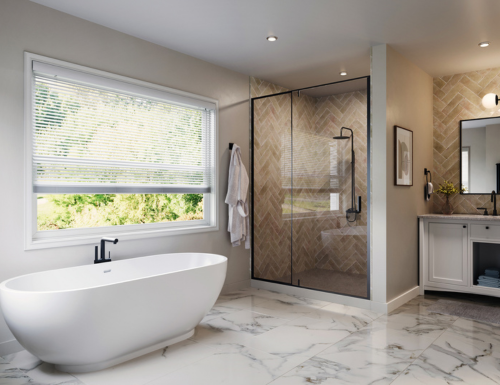









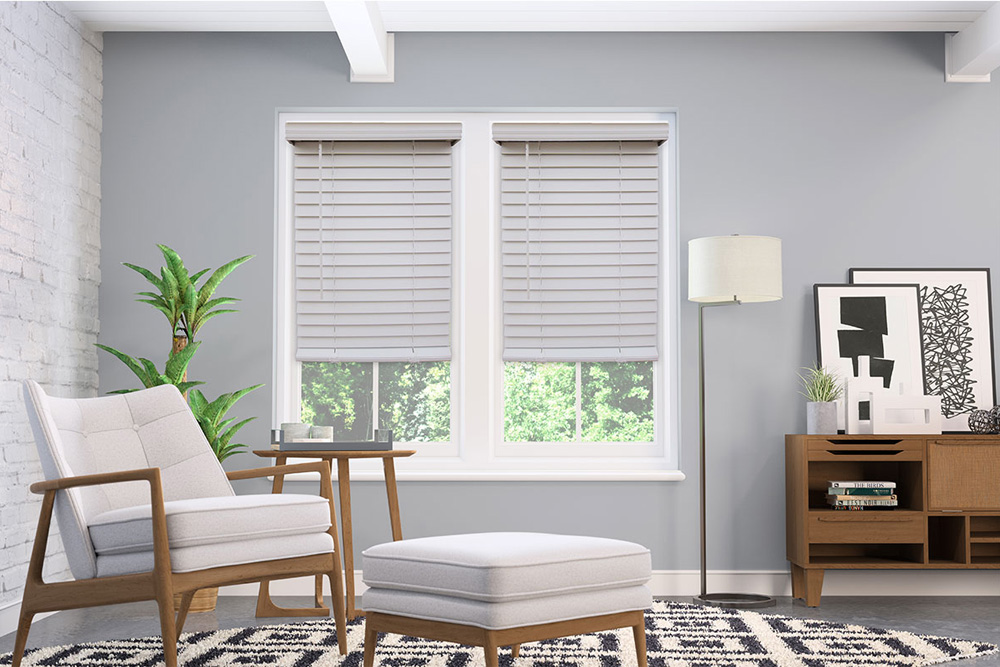
Faux wood blinds are horizontal window blinds made from synthetic or composite materials that are designed to look like real wood. They offer the classic appearance of wood blinds while using durable materials that are well suited for everyday use in a wide range of rooms.
Instead of natural hardwood slats, faux wood blinds are typically made from PVC, vinyl, or composite-based materials. These alternative wood materials are shaped and finished to replicate the look of painted or stained wood while maintaining a consistent appearance across the blind.
If you want to browse available products, visit our see all faux wood blinds. For even more selection, browse our full collection of custom window blinds designed to fit any space.
How Faux Wood Blinds Work
Faux wood blinds use horizontal slats that can be tilted open or closed to control sunlight, privacy, and visibility. A lift mechanism raises or lowers the blind, while a tilt control adjusts the angle of the slats throughout the day.
When the slats are tilted open, they allow more natural light into the room. When the slats are tilted closed, they provide greater privacy and reduce incoming light. This familiar blind design makes faux wood blinds a practical option for spaces where flexible light control is important.
What Faux Wood Blinds Are Made Of
Faux wood blinds are usually made from man-made materials such as PVC, vinyl, or wood-look composite blends. These materials are chosen because they can be formed into sturdy slats and finished with a smooth or textured surface that resembles painted wood.
Because faux wood blinds are not made from natural hardwood, they have a different material composition than real wood blinds. Their structure is designed to provide a wood-style appearance in a more uniform manufactured product.
Key Characteristics of Faux Wood Blinds
- Horizontal slats that tilt for light and privacy control
- Wood-look appearance made from synthetic or composite materials
- Common slat sizes such as 2-inch and 2 1/2-inch styles
- Available in a range of neutral colors and painted finishes
- Commonly used in kitchens, bathrooms, bedrooms, living rooms, and offices
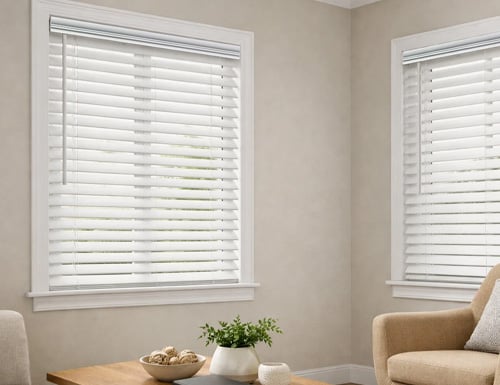
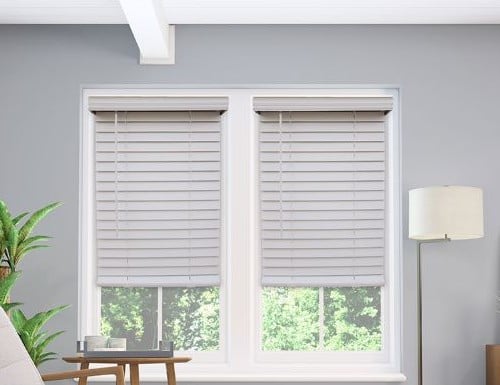
What Faux Wood Window Blinds Look Like
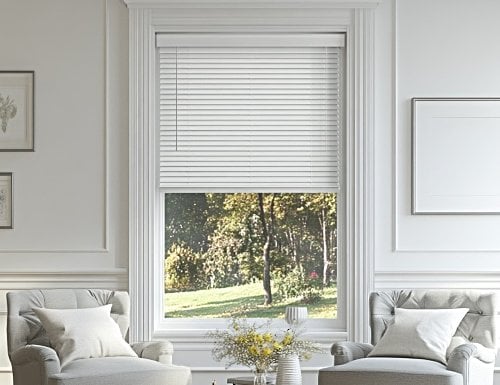
Alternative wood blinds are designed to resemble traditional wood blinds, including broad slats, clean lines, and smooth or lightly textured finishes. Many styles are offered in whites, off-whites, grays, and wood-inspired tones that work well with both classic and modern interiors.
From a distance, faux blinds can look very similar to real wood blinds and are a cost-effective alternative. Up close, the finish is typically more uniform because it is created from manufactured materials rather than natural wood grain.
Where Faux Wood Blinds Are Commonly Used
Faux wood window blinds are commonly installed in:
- Bathrooms
- Kitchens
- Laundry rooms
- Bedrooms
- Living rooms
- Home offices
Their traditional blind style and broad room compatibility make them one of the most familiar window treatment categories for homeowners who want a classic horizontal blind look.
Faux Wood Blinds vs. Real Wood Blinds
Faux wood blinds and real wood blinds share a similar overall appearance and operating style, but they are made from different materials. Real wood blinds are crafted from natural wood, while faux wood blinds use synthetic or composite materials engineered to imitate that look instead of genuine hardwood. Because they are made of synthetic materials, they are a much better option for high humidity areas than real wood.
If you want a deeper comparison, this topic is best handled on our page: how faux wood blinds compare to real wood blinds.
Learn More About Faux Wood Blinds
To continue exploring this faux wood blinds topic cluster, visit the pages below:
- Main Expert Advice Hub about Faux Wood Blinds
- Pros and Cons of Faux Wood Blinds
- Benefits of Faux Wood Blinds
- How to Choose Faux Wood Blinds
- Best Selling Faux Wood Blinds
- Highest Rated Faux Wood Blinds
Final Thoughts
Faux wood blinds are a classic horizontal blind option designed to give homeowners the appearance of wood in a manufactured material. By understanding what they are, how they work, and where they are commonly used, shoppers can better decide whether this category fits their home and style goals.
Ready to browse options? Visit our faux wood blinds category page to see available styles, colors, and product options.
Faux Wood Blinds FAQs
What are faux wood blinds?
Faux wood blinds are horizontal blinds made from synthetic or composite materials that are designed to look like real wood. They offer a wood-style appearance in a manufactured blind format.
What are faux wood blinds made of?
Faux wood blinds are commonly made from PVC, vinyl, or composite materials. These materials are shaped into slats and finished to resemble painted or textured wood.
How do faux wood blinds work?
Faux wood blinds work by using horizontal slats that tilt open or closed for light and privacy control. A lift mechanism also allows the blind to be raised or lowered.
Do faux wood blinds look like real wood?
Faux wood blinds are designed to closely resemble real wood blinds, especially from a distance. They usually have a more uniform finish than natural wood because they are made from manufactured materials.
Are faux wood blinds made from real wood?
No. Faux wood blinds are not made from natural wood. They are made from synthetic or composite materials designed to imitate the look of wood.
Where are faux wood blinds commonly used?
Faux wood blinds are commonly used in bathrooms, kitchens, bedrooms, living rooms, laundry rooms, and home offices. They are a versatile category used throughout the home.
What slat sizes do faux wood blinds come in?
Faux wood blinds are often available in wider slat sizes such as 2-inch and 2 1/2-inch options, which help create a traditional wood-blind appearance.
Browse our selection of selection of faux wood blinds to discover versatile window coverings made for style, privacy, and easy maintenance.
For more information, visit our faux wood blinds guide hub to explore more articles and tips.

 (
(
 (
(