









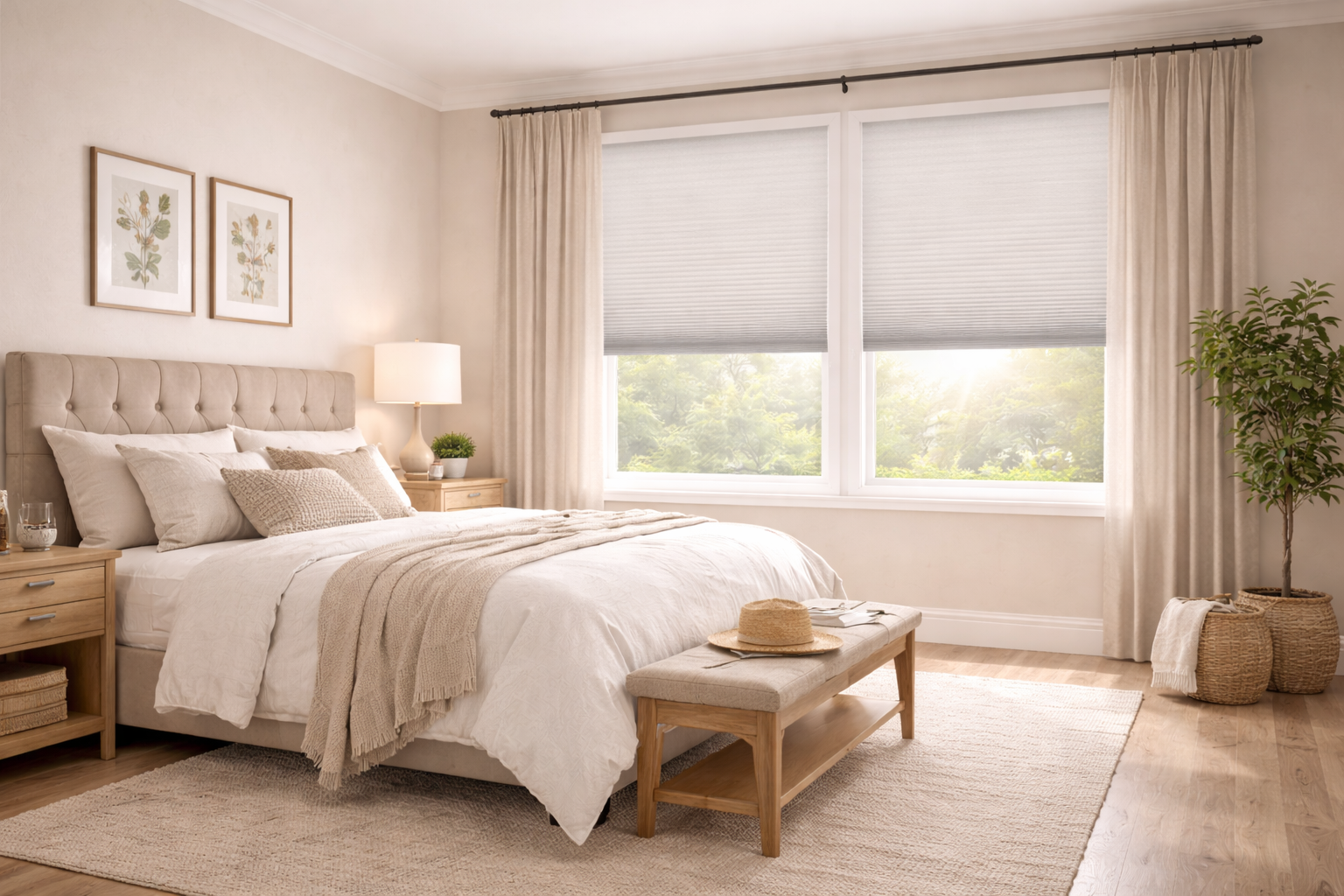
If direct sunlight makes your rooms uncomfortably warm, the right window coverings can help reduce heat, improve comfort, and support better energy efficiency. The best window treatments for heat reduction are designed to limit solar heat gain while still giving you the right balance of light control, privacy, and style.
This guide compares the best options for heat reduction so you can choose the right solution for bedrooms, living rooms, west-facing windows, and other heat-prone areas of your home.
Related resources:
How Window Treatments Help Reduce Heat
Windows can be one of the biggest sources of unwanted heat gain in a home, especially in rooms with strong afternoon sun or large uncovered glass areas. Heat-reducing window treatments help by blocking, filtering, or insulating against sunlight before it overheats the room.
Some products are designed to reflect or filter solar rays, while others create an insulating barrier between the glass and your room. The best option depends on whether your priority is insulation, glare reduction, daytime light, privacy, or a combination of all four.
Best Window Treatments for Heat Reduction
1. Cellular Shades
Cellular shades are one of the best all-around choices for heat reduction. Their honeycomb-shaped pockets trap air and help create insulation at the window, making them a smart option for rooms that get too warm during the day.
- Excellent for insulation
- Useful when heat reduction is the top priority
- Available in light-filtering and blackout styles
Discover: Shop cellular window shades
2. Blackout Shades
Blackout shades are designed to block more light and by doing so they tend to block more heat. They are a strong option for shoppers who want a more dedicated heat-control solution.
- Good for intense sun exposure
- Helpful for bedrooms, living rooms, and sunny windows
- Can also support light control and privacy
Explore: shop blackout shades.
3. Solar Shades
Solar shades are a great choice when glare and harsh sunlight are major concerns, but when you do not want to completely block the view. They help filter sunlight before it enters the room, which can help reduce heat and improve comfort while maintaining a more open daytime feel.
- Great for glare reduction
- Works well in living rooms and offices
- Helps reduce harsh sun exposure
Browse our selection of Solar Screen Roller Shades
Energy Efficient Blinds
Some blinds are built to support better energy performance while still delivering the classic look of blinds. They can be a strong option for homeowners who want heat reduction without switching to fabric shades.
- Good for style-conscious shoppers
- Can help improve overall window performance
- Available in a range of materials and looks
Explore energy efficient blinds.
Quick Comparison of the Best Heat-Reducing Window Treatments
| Window Treatment | Best For | Main Benefit | Things to Consider |
|---|---|---|---|
| Cellular Shades | Overall heat reduction and insulation | Excellent insulating design | Less open daytime view than some other options |
| Blackout Shades | Dedicated light control | Designed to reduce light which helps with heat transfer | Style and light control vary by product |
| Solar Shades | Glare reduction and filtered light | Helps reduce sun and glare | Typically less insulating than cellular shades |
Which Window Treatments Are Best for Different Rooms?
Best for Bedrooms
Bedrooms often benefit from cellular shades or thermal shades because they help reduce heat while also supporting privacy and better light control. If you want to block more light, blackout-friendly options are often the best fit.
Best for Living Rooms
Living rooms with strong sun exposure may do well with solar shades for glare control or cellular shades for stronger insulation. The best choice depends on whether you want an outside view, more privacy, or maximum heat reduction.
Best for Home Offices
Solar shades are often a smart choice for home offices because they help reduce glare on screens while still allowing filtered daylight into the room.
Best for West-Facing Windows
West-facing windows often get intense late-day sun, which can make rooms feel much hotter. Cellular shades and thermal shades are usually among the strongest choices for reducing heat buildup in these spaces.
How to Choose the Right Heat-Reducing Window Treatment
The best option depends on your room, window exposure, and what kind of comfort problem you are trying to solve.
- Choose cellular shades if insulation is your top priority.
- Choose blackout shades if you want a more dedicated light control solution.
- Choose solar shades if glare reduction and daylight matter most.
For more details on insulating performance, visit our guide to insulating blinds. If you want a broader overview of energy-saving options, see our guide to energy efficient window treatments page.
Bottom Line
- Best Overall + Best Budget: Cellular (Honeycomb) Shades
- Best for Light + Heat Control: Blackout Shades
- Best for View + Heat Control: Solar Screen Shades
Shop Heat-Reducing Window Treatments
If you are ready to improve comfort in hot, sunny rooms, explore window coverings designed to help reduce heat, glare, and solar exposure.
Shop Energy Efficient Blinds
Q&A about Thermal Shades
Do Blackout Shades Reduce Heat?
Frequently Asked Questions
What are the best window treatments for heat reduction?
The best window treatments for heat reduction usually include cellular shades, thermal shades, solar shades, and other energy-efficient window coverings. The best choice depends on how much insulation, glare control, privacy, and light filtering you want.
Do cellular shades help keep heat out?
Yes. Cellular shades are one of the best options for heat reduction because their honeycomb-shaped pockets trap air and help insulate windows, which can reduce heat transfer and improve indoor comfort.
Are solar shades good for reducing heat?
Solar shades can help reduce heat and glare by filtering sunlight before it enters the room. They are especially useful in rooms where you want daytime light and reduced glare without fully blocking the view.
What is the difference between thermal shades and insulating blinds?
Thermal shades are designed specifically to help reduce heat transfer through windows, while insulating blinds is a broader term that can describe several window treatment types that improve energy efficiency. Thermal shades are more specific, while insulating blinds can refer to multiple constructions and materials.
Which window treatments are best for west-facing windows?
West-facing windows often benefit from higher-performing heat-control options such as cellular shades and thermal shades because these windows tend to get strong afternoon sun and heat buildup.
Can energy-efficient window treatments help lower cooling costs?
Energy-efficient window treatments can help reduce the amount of heat entering through windows, which may improve comfort and reduce the strain on your cooling system. Results vary based on climate, sun exposure, window type, and the product selected.
What are the best window treatments for hot climates?
In hot climates, the best window treatments are usually those that help block solar heat gain while still fitting your light control and privacy needs. Cellular shades, thermal shades, and solar shades are often among the best choices.
Should I choose blackout or light-filtering shades for heat reduction?
Both can help, but the best option depends on the room. Blackout shades are often ideal for bedrooms and media rooms where you want more light blocking, while light-filtering or solar options may be better for living spaces where you want to reduce heat without making the room too dark.