








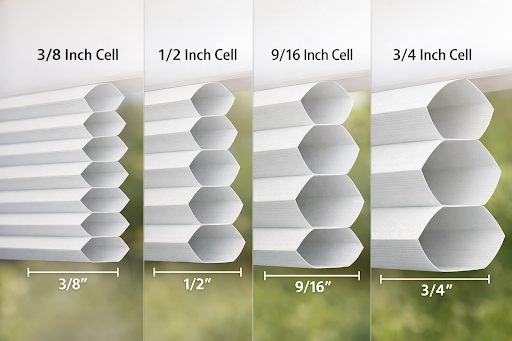
When shopping for cellular shades, one of the most important choices is selecting the correct cell size. Honeycomb shades are available in several cell sizes such as 3/8 inch, 1/2 inch, 9/16 inch, and 3/4 inch. These measurements refer to the width of the honeycomb cells that form the shade’s insulating structure. Choosing the right cell size can affect the appearance of the shade, the amount of insulation it provides, and how well it fits inside your window frame.
Understanding the differences between cellular shade sizes can help homeowners select the best option for their windows. Smaller cells create a more subtle look and work well for smaller windows, while larger cells offer a bolder appearance and may provide greater insulation for larger windows.
Shop elegant and practical custom-fit shades tailored to your exact specifications.
What Do Cellular Shade Cell Sizes Mean?
The cell size of a cellular shade refers to the width of the honeycomb pockets within the fabric. These cells trap air and create insulation between the window and the room. Common cellular shade sizes include 3/8 inch, 1/2 inch, 9/16 inch, and 3/4 inch. Each size offers a slightly different appearance and insulation performance depending on the window size and room requirements.
Common Cellular Shade Cell Sizes
3/8 Inch Cell Shades
3/8 inch cellular shades feature smaller honeycomb cells that create a sleek, subtle appearance. They are commonly used for smaller windows or windows with shallow mounting depth where space inside the frame is limited.
7/16 Inch Cell Shades
7/16 inch cellular shades fall between the smaller 3/8 inch cells and the more common 9/16 inch cells, making them a versatile option for many window sizes. This cell size provides a balanced appearance that works well in both small and medium-sized windows while still offering good insulation. Because the honeycomb pockets are slightly larger than 3/8 inch cells, 7/16 inch cellular shades can improve energy efficiency while still fitting comfortably within most standard window frames.
Many homeowners choose 7/16 inch cell shades when they want a clean, subtle look without the larger profile of bigger honeycomb cells. This size can be a great middle-ground option for rooms where insulation and appearance are equally important.
1/2 Inch Cell Shades
1/2 inch cellular shades provide a balanced look that works well in many standard window sizes. This size offers good insulation while maintaining a clean appearance.
9/16 Inch Cell Shades
9/16 inch cellular shades are one of the most popular options because they provide a noticeable honeycomb structure while still fitting comfortably inside many window frames.
3/4 Inch Cell Shades
3/4 inch cellular shades have larger honeycomb pockets and are often used on larger windows. The bigger cells can enhance insulation and create a slightly bolder visual appearance.
Large Cell Honeycomb Shades
Some cellular shades are designed with extra-large honeycomb cells for oversized windows, patio doors, or specialty installations. Larger cell sizes can provide strong insulation while maintaining a proportional look on large window openings. These shades are often used when homeowners want the energy efficiency benefits of cellular shades combined with a design that complements bigger windows.
How to Choose the Right Cellular Shade Size
| Cell Size | Best For |
|---|---|
| 3/8" | Small windows, shallow mounts |
| 7/16" | Standard windows |
| 1/2" | Medium windows |
| 9/16" | Most Common Size |
| 3/4" | Large Windows |
| 1" - 1-1/2" Options | Oversized Windows |
Single Cell vs Double Cell Shades
Cellular shades are also available in single cell and double cell constructions. Single cell shades feature one layer of honeycomb pockets, while double cell shades stack two layers together for improved insulation. Double cell shades are often chosen for colder climates or rooms where energy efficiency is a priority.
Not sure about single cell vs double cell honeycomb shades? Read more to decide which is best for you.
Frequently Asked Questions About Cellular Shade Sizes
What do cellular shade sizes refer to?
Cellular shade sizes refer to the width of the honeycomb-shaped air pockets within the fabric. These pockets create the insulating structure of honeycomb shades and are typically available in sizes such as 3/8 inch, 1/2 inch, 9/16 inch, and 3/4 inch.
What cellular shade size is most popular?
9/16 inch cellular shades are one of the most popular sizes because they provide a balanced look that works well with many window sizes. This cell size offers good insulation while maintaining a clean, modern appearance.
What is the difference between 3/8 inch and 9/16 inch cellular shades?
3/8 inch cellular shades have smaller honeycomb cells that create a more subtle appearance and work well in shallow window frames. 9/16 inch cellular shades have slightly larger cells that offer a more noticeable honeycomb structure and may provide improved insulation.
Are larger cellular shade cells better for insulation?
Larger honeycomb cells can trap more air, which may improve insulation. However, insulation performance also depends on whether the shade uses a single cell or double cell construction.
Which cellular shade size is best for small windows?
Smaller cell sizes such as 3/8 inch are often recommended for small windows because they create a more proportional appearance and fit better within shallow window frames.
Which cellular shade size works best for large windows?
Larger cell sizes such as 3/4 inch cellular shades are often used for larger windows. The bigger honeycomb structure creates a bold appearance and may provide improved insulation across wider window openings.
Do smaller cellular shades fit better in shallow window frames?
Yes. Smaller cell sizes such as 3/8 inch shades typically require less mounting depth, making them a better option for windows with limited frame depth.
What is the difference between single cell and double cell cellular shades?
Single cell shades feature one layer of honeycomb pockets, while double cell shades include two stacked layers. Double cell cellular shades typically provide improved insulation and energy efficiency.
Does cell size affect the appearance of cellular shades?
Yes. Smaller cells create a subtle, refined appearance, while larger honeycomb cells create a more noticeable texture on the shade fabric.
Are larger honeycomb shades harder to operate?
The cell size itself usually does not affect operation. Instead, the size and weight of the shade determine how it operates, especially for larger windows.
Do cellular shade sizes affect energy efficiency?
Cell size can influence insulation because larger cells may trap more air. However, double cell construction generally has a greater impact on energy efficiency than cell size alone.
What cellular shade size should I choose for my home?
The best cellular shade size depends on the window size, mounting depth, and personal style preference. Smaller windows often use 3/8 inch cells, while medium to large windows commonly use 9/16 inch or 3/4 inch cells.
Looking to learn more about cellular shades? Explore our additional guides to help you choose the right honeycomb window treatments for your home.
Our Ultimate Guide to Cellular Shades explains everything you need to know about how honeycomb shades work and why they are one of the most energy-efficient window coverings available.
You can also read about the benefits of cellular shades and discover the advantages of their insulating design.
If you are still deciding whether they are the right option for your windows, see our guide on the pros and cons of cellular shades.
For help choosing the best style and features, visit our article on choosing the right cellular shades, and compare insulation performance in our guide to single cell vs double cell cellular shades.
These resources will help you better understand cellular shade construction, energy efficiency, and the options available for your windows.
If you're ready to get started, take a look at our cellular shades collection to compare options and find the best fit for your home.
For more helpful information, visit our cellular shades guide hub where you'll find in-depth articles and expert recommendations.

 (
(
 (
(