









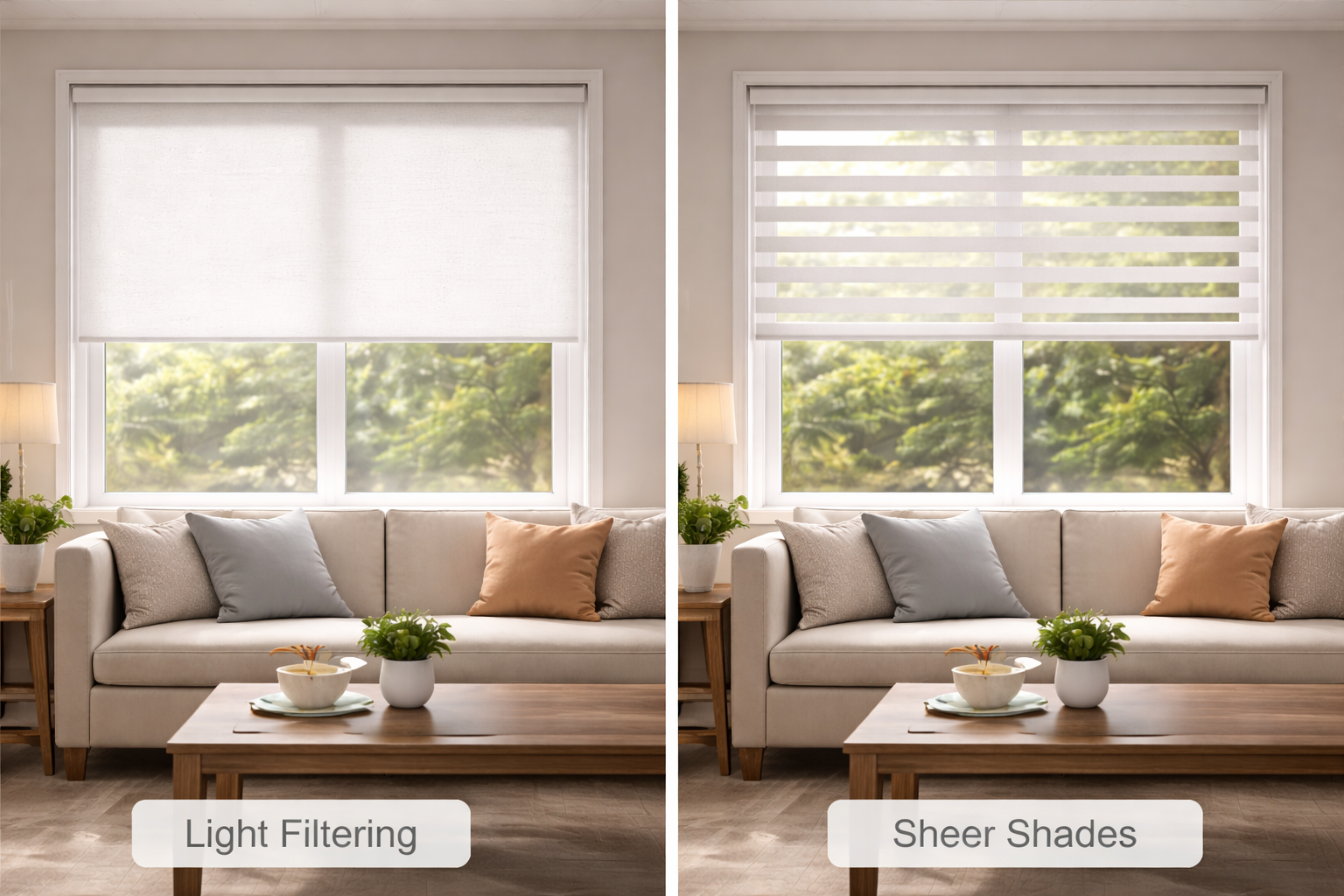
Light filtering and sheer shades are both designed to let natural light into your home, but they do so in different ways. While they may seem similar at first, there are important differences in how they control light, provide privacy, and affect visibility.
Understanding these differences can help you choose the right option based on how much light, privacy, and outside view you want.
Explore our full range of window shades and learn more about light control options in our light filtering vs room darkening vs blackout guide.
Light Filtering vs Sheer Shades: Key Differences
| Feature | Light Filtering Shades | Sheer Shades |
|---|---|---|
| Light Control | Softens and diffuses light | Allows light through sheer fabric layers |
| Visibility | Limited outside view | Maintains partial outside view |
| Privacy | Moderate to high | Lower privacy, especially at night |
| Appearance | Smooth or fabric-based look | Layered, soft, and airy design |
| Best Use | Privacy with natural light | Light diffusion with visibility |
What Are Light Filtering Shades?
Light filtering shades are designed to allow natural light into a room while diffusing it to reduce glare. They typically use fabric materials that soften sunlight and provide a balance between brightness and privacy.
- Creates a bright but softened environment
- Offers more privacy than sheer shades
- Works well in most living spaces
What Are Sheer Shades?
Sheer shades use layers of fabric with horizontal vanes suspended between sheer panels. This design allows you to maintain an outside view while still diffusing incoming light.
- Maintains visibility to the outside
- Creates a soft, elegant appearance
- Allows more light into the room
Privacy Differences
One of the biggest differences between light filtering and sheer shades is privacy.
- Light filtering shades: Provide better privacy during both day and night
- Sheer shades: Offer limited privacy, especially at night when interior lights are on
When to Choose Light Filtering Shades
Light filtering shades are a better option when privacy is a priority but you still want natural light.
- Living rooms facing the street
- Dining rooms
- Bedrooms where full blackout is not needed
- Spaces where glare reduction is important
When to Choose Sheer Shades
Sheer shades are ideal when maintaining a view and creating a soft, airy look are your main goals.
- Living rooms with scenic views
- Spaces where natural light is a priority
- Rooms where privacy is less of a concern
Light Control and Heat Considerations
Both light filtering and sheer shades allow natural light into the room, which means they offer less heat reduction compared to room darkening or blackout options.
For better heat control, see: Best Window Treatments for Arizona Heat
Which Option Is Better?
The better choice depends on your priorities:
- Choose light filtering shades for more privacy and controlled light
- Choose sheer shades for visibility and a softer, more open feel
Explore Your Options
Continue learning with these guides:
- Light Filtering vs Room Darkening vs Blackout
- Do Light Filtering Shades Provide Privacy
- Best Shades For Privacy
Final Thoughts
Light filtering and sheer shades both enhance natural light, but they serve different purposes. Light filtering shades provide a balance of brightness and privacy, while sheer shades offer a more open feel with better visibility. Choosing the right option depends on how you want your space to look and function.
Light Filtering vs Sheer FAQs
What is the difference between sheer and light filtering shades?
Light filtering hades diffuse light and provide more privacy, while sheer shades allow more visibility and create a softer, more open look.
Which provides more privacy, sheer or light filtering shades?
Light filtering shades provide more privacy, especially at night when interior lights are on.
Are sheer shades good for living rooms?
Yes. Sheer shades are a good option for living rooms where natural light and outside views are important.
Do sheer shades block heat?
Sheer shades provide limited heat reduction since they allow light to pass through, but they can help reduce glare.