









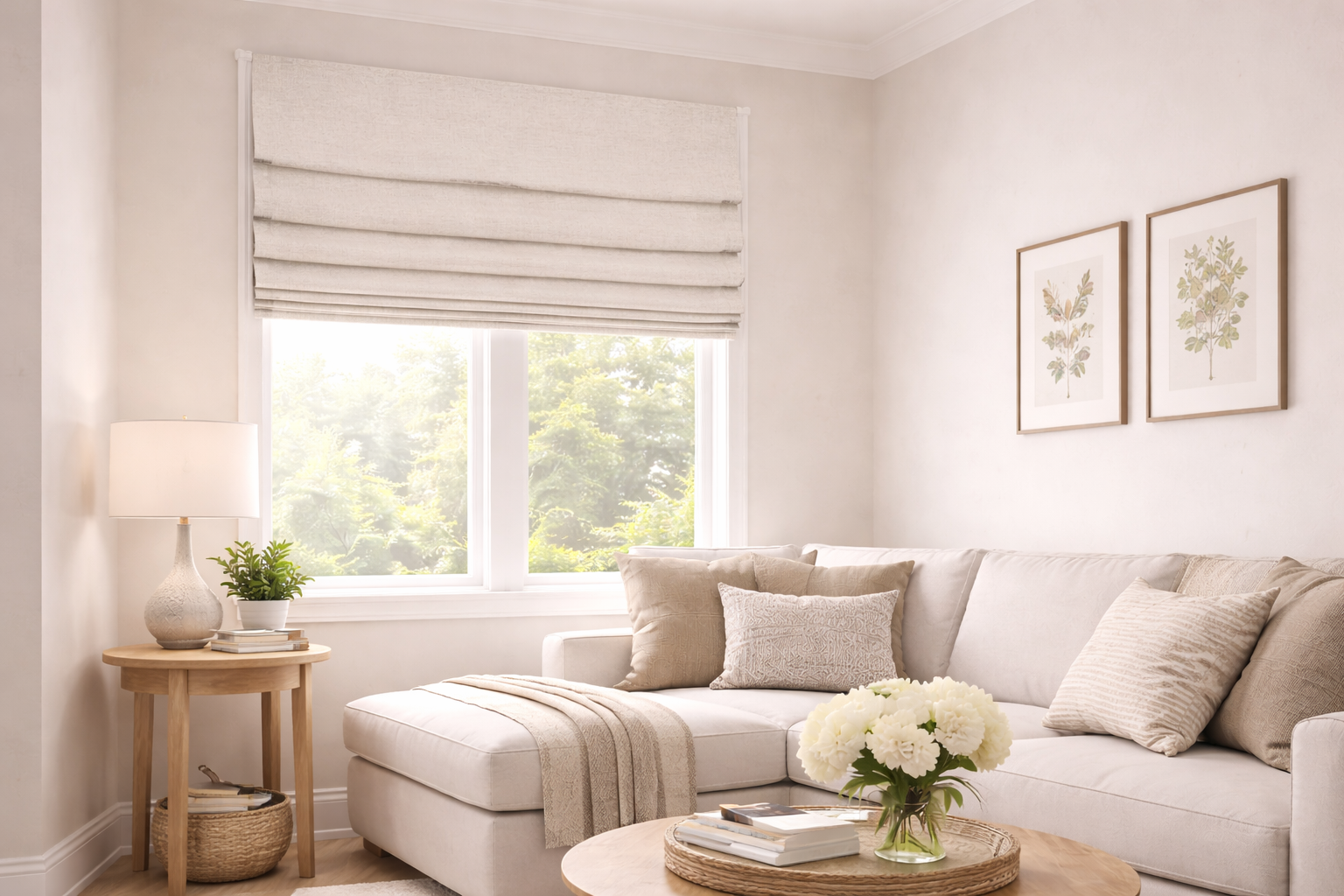
Roman shades are a popular window treatment for homeowners who want a softer, more decorative look than standard blinds while still maintaining light control and privacy. But how much do Roman shades cost?
The answer depends on several factors, including the size of the shade, the fabric you choose, the lift system, liner options, and any upgrades or customizations. Understanding these pricing factors can help you choose the right Roman shades for your space and budget.
Explore our full range of window shades, including our Roman shades collection.
Average Cost of Roman Shades
Roman shades are typically considered a mid-range to premium window treatment, depending on the fabric and options you select. Basic Roman shades usually cost less than highly customized versions with premium materials and upgraded lift systems.
In general, the cost of Roman shades increases as you add larger sizes, decorative fabrics, blackout liners, cordless operation, motorization, or specialty fold styles.
What Affects the Cost of Roman Shades?
Shade Size
Larger windows require more fabric and larger components, which naturally increases the total price. Wider and taller Roman shades often cost more than smaller standard-size shades.
Fabric Selection
Fabric is one of the biggest pricing factors. Simple, standard fabrics are usually more affordable, while designer fabrics, textured materials, woven patterns, and premium textiles increase cost.
Fold Style
Different Roman shade styles can affect pricing. Flat Roman shades are often simpler, while hobbled or more decorative fold styles may cost more because of the added fabric and construction detail.
Learn more about style options in our Guide to Different Styles of Roman Shades.
Liner Options
Liners can also affect price. Light-filtering liners, room-darkening liners, and blackout liners each add different levels of privacy and light control, and upgraded liners generally increase overall cost.
Lift System
The operating system plays a major role in Roman shade pricing. Standard lift systems are often the most budget-friendly, while cordless systems, continuous cord loops, and motorized options typically cost more.
For more on available features, visit our Upgrades Available for Roman Shades page.
Customization and Special Features
Custom fabric choices, edge banding, decorative trims, valances, specialty shapes, and motorization can all raise the price of Roman shades. The more personalized the window treatment, the higher the final cost is likely to be.
Why Roman Shades Cost More Than Some Other Window Treatments
Roman shades are often more expensive than basic blinds because they combine fabric design with functional hardware. They are usually chosen not only for privacy and light control, but also for their softer appearance and decorative value.
Compared to more basic window coverings, Roman shades tend to offer a more finished, custom look, which is part of what drives the higher cost.
Are Roman Shades Worth the Cost?
For many homeowners, Roman shades are worth the cost because they combine style and function in a way that standard blinds often do not. They can soften a room, improve light control, and create a more tailored appearance.
If you are evaluating value as well as price, visit our Are Roman Shades Worth It guide.
How to Get the Best Value from Roman Shades
- Choose a fabric that balances appearance and budget
- Select only the upgrades you will actually use
- Consider cordless or motorization for difficult-to-reach windows
- Match the liner choice to your privacy and light control needs
- Compare style options before committing to a more decorative fold
If you are still comparing options, our Pros and Cons of Roman Shades page can help you decide.
How Roman Shades Compare to Other Shades
Roman shades are often chosen for their appearance first, while other shades may be chosen more for simplicity, insulation, or lower cost. If you want a more decorative window treatment, Roman shades often justify the higher price for homeowners who value style.
Learn more about honeycomb cellular shades vs Roman shades
or drapes vs Roman Shades
Explore Roman Shade Options
If you're ready to explore styles and features, browse our fabric Roman shades and continue with these related guides:
- Benefits of Roman Shades
- Upgrades Available for Roman Shades
- Advancements in Roman Shade Technology
- What are the best rooms for Roman Shades
Final Thoughts
The cost of Roman shades depends on the level of customization, the materials you choose, and the features you want. While they may cost more than basic blinds or simple shades, many homeowners choose Roman shades for their combination of softness, style, and function.
Roman Shade Cost FAQs
How much do Roman shades cost?
Roman shade cost depends on the size, fabric, fold style, liner, and lift system you choose. Basic options cost less, while custom fabrics, blackout liners, and motorization increase the price.
Why are Roman shades more expensive than blinds?
Roman shades are often more expensive because they use more fabric, decorative construction, and upgraded hardware compared to basic blinds.
Do fabric choices affect Roman shade pricing?
Yes. Fabric is one of the biggest factors in Roman shade pricing. Premium fabrics, patterns, textures, and designer materials usually increase cost.
Does motorization make Roman shades cost more?
Yes. Motorization is typically one of the more expensive Roman shade upgrades, but it can add convenience and improve usability for larger or hard-to-reach windows.
Are Roman shades worth the cost?
Roman shades are often worth the cost for homeowners who want a more decorative look, softer fabric styling, and customizable light control.
Compare different fabrics and design styles in our collection of custom Roman shades to create a tailored look for any room in your home.
If you're still exploring, visit our Roman shades guide hub for helpful information and expert tips.