








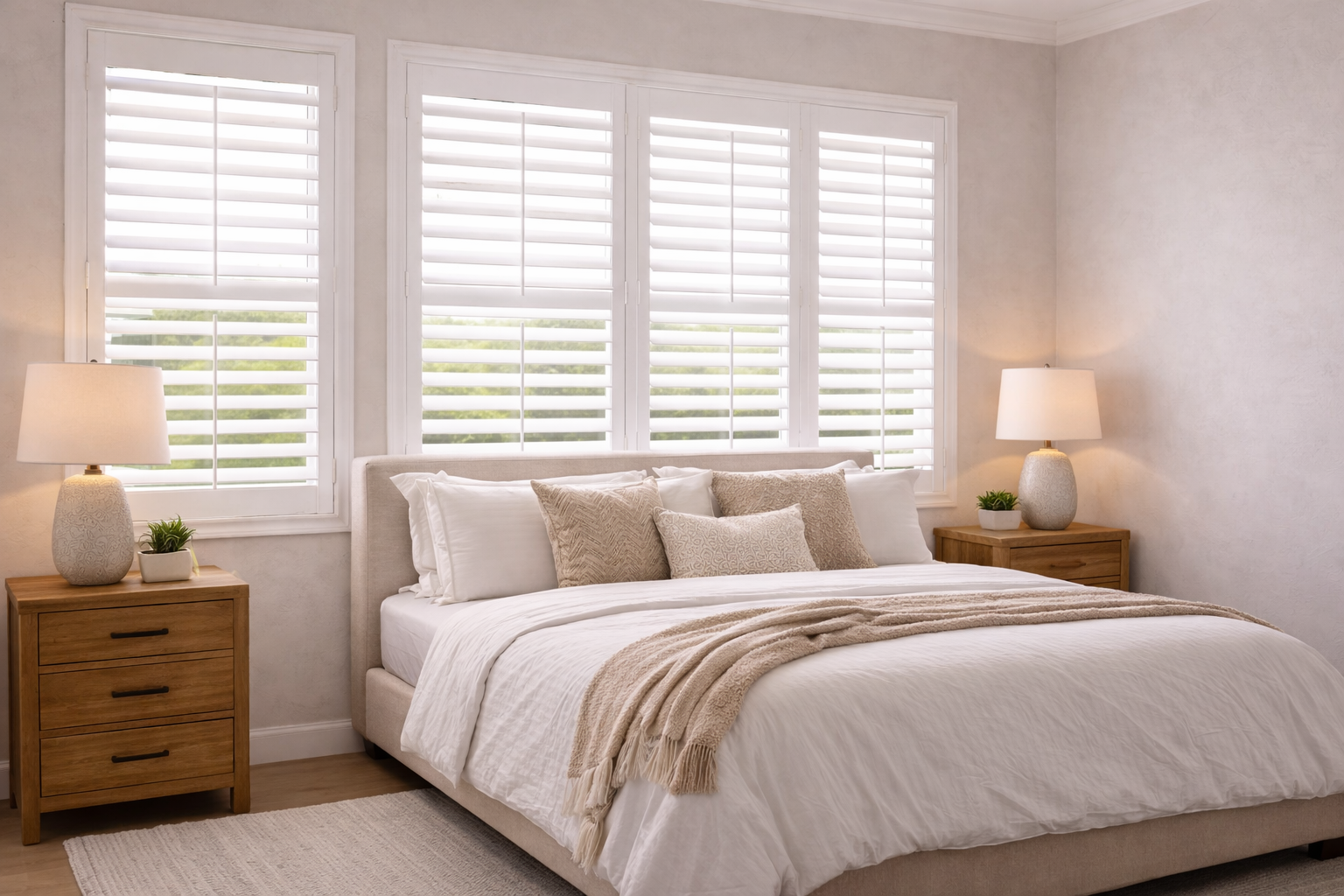
Faux wood shutters—also known as composite shutters or wood alternative shutters—are a popular alternative to real wood shutters. They are designed to offer a similar appearance with added durability and lower maintenance.
While they work well in many homes, they are not the perfect fit for every situation. Understanding the pros and cons of faux wood shutters can help you decide if they align with your needs.
If you’re new to this option, start with our What Are Faux Wood Shutters guide or browse our faux wood shutters collection. Upgrade your space with versatile modern window shutter options designed for light control and privacy.
Pros of Faux Wood Shutters
1. Moisture Resistant
One of the biggest advantages of faux wood shutters is their ability to perform well in humid environments. Unlike real wood, they are less likely to warp, crack, or swell when exposed to moisture.
2. Low Maintenance
Faux wood shutters are easy to clean and maintain. They typically require simple wiping or dusting and do not need refinishing like natural wood.
3. Durable Construction
Composite shutters are built from engineered materials that are designed to withstand everyday use. This makes them a practical choice for busy households.
4. Cost-Effective Alternative to Wood
Faux wood shutters often provide the look of painted wood shutters at a more accessible price point, making them a popular option for homeowners who want shutters without the higher cost of real wood.
5. Consistent Appearance
Because they are manufactured materials, faux wood shutters tend to have a uniform finish and color, which can create a clean and consistent look across windows.
Learn more: Benefits of Faux Wood Shutters
Cons of Faux Wood Shutters
1. Heavier Than Real Wood
Faux wood shutters are typically heavier than natural wood shutters. This can be a consideration for large windows or installations where weight may affect operation.
2. Less Authentic Wood Appearance
While they are designed to mimic wood, faux wood shutters do not replicate the exact grain and texture of real hardwood.
3. Limited Stain Options
Faux wood shutters are usually available in painted finishes rather than natural wood stains, which may limit design choices for some interiors.
4. May Not Feel as Premium
Some homeowners prefer the feel and craftsmanship of real wood shutters, especially in higher-end spaces.
5. Can Be Bulkier in Large Installations
Because of their construction, faux wood shutters may appear slightly bulkier compared to thinner wood options.
Faux Wood Shutters vs Real Wood Shutters
Faux wood shutters and real wood shutters offer similar functionality but differ in material, weight, and appearance. Faux wood shutters focus on durability and moisture resistance, while real wood shutters emphasize natural materials and lighter construction.
For a deeper comparison, see our Composite Shutters vs Real Wood Shutters guide.
Are Faux Wood Shutters Right for You?
Faux wood shutters are a strong option for homeowners who want durability, low maintenance, and a consistent appearance. They are especially well suited for areas where moisture or heavy use is a concern.
However, they may not be the best choice if you prefer natural wood grain, lighter materials, or premium finishes.
Next step: Are Faux Wood Shutters Worth It
Explore Faux Wood Shutters
Ready to explore your options? Browse our faux wood shutters collection.
You can also explore:
- How to Choose Composite Shutters
- Where to Buy Faux Wood Shutters
- Benefits of Wood Alternative Shutters
- How Much do Faux Wood Shuuters Cost?
- Top Selling Composite Shutters
- Highest Rated Plantation Shutters
Final Thoughts
Faux wood shutters offer a balance between durability, cost, and appearance. By understanding both the advantages and limitations, you can decide whether they are the right fit for your home and lifestyle.
Pros and Cons of Faux Wood Shutters FAQs
What are the main benefits of faux wood shutters?
The main benefits include moisture resistance, durability, low maintenance, and a more affordable price compared to real wood shutters.
What are the disadvantages of composite shutters?
The main disadvantages include heavier weight, less natural wood appearance, limited finish options, and a less premium feel compared to real wood.
Are faux wood shutters better than real wood?
Faux wood shutters are better for durability and moisture resistance, while real wood shutters offer a more natural appearance and lighter weight.
Do faux wood shutters last long?
Yes. Faux wood shutters are designed to be durable and long-lasting, especially in high-use or humid environments.
Are faux wood shutters good for bathrooms?
Yes. Faux wood shutters are commonly used in bathrooms because they are more resistant to moisture than real wood.