









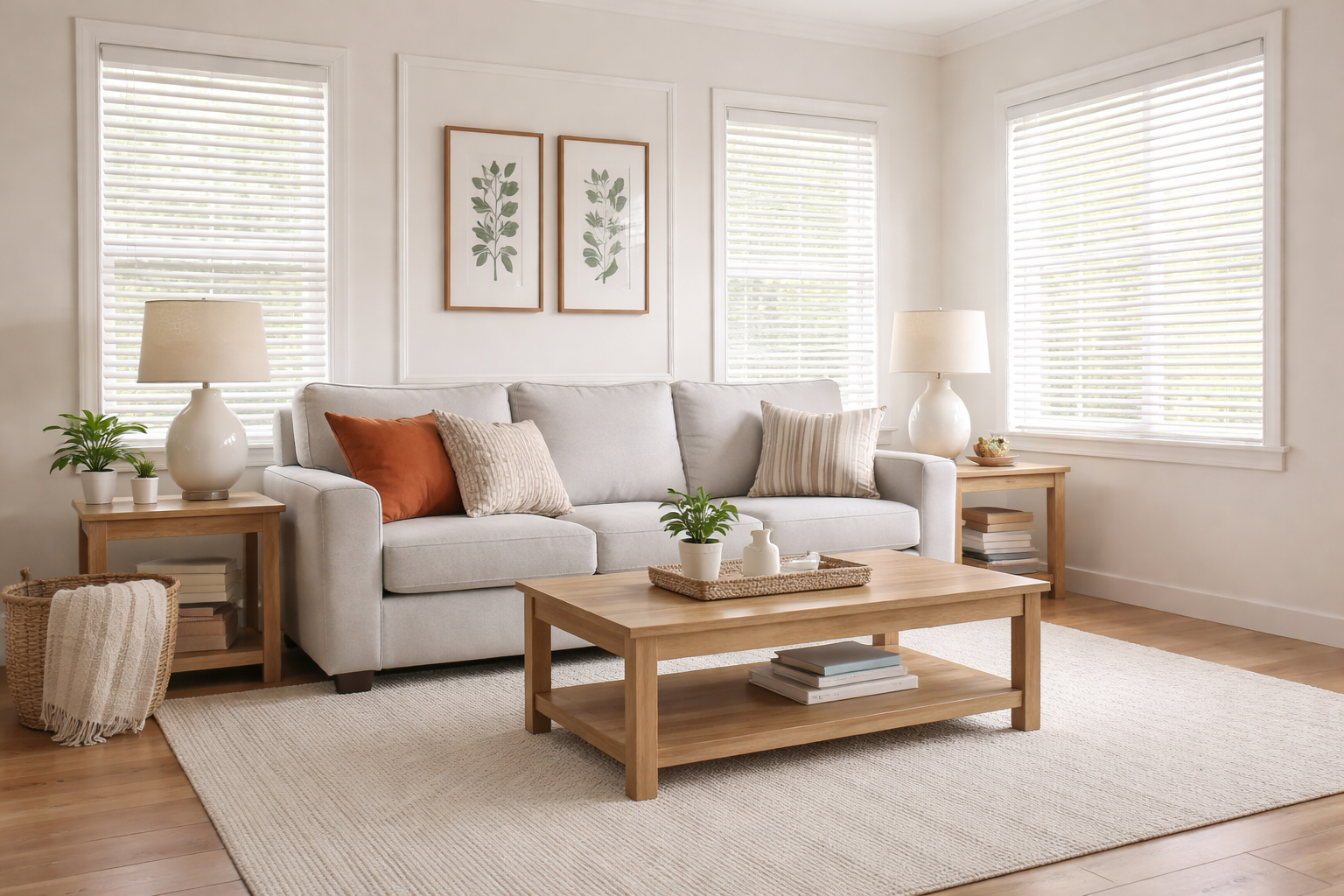
Faux wood blinds are one of the most popular window treatments for homeowners who want the classic look of wood blinds without the higher cost or added maintenance of real wood. They are known for their durability, moisture resistance, and easy-care design, which makes them especially appealing in busy households.
At the same time, faux wood blinds are not the perfect solution for every space. Their heavier weight, slightly less natural appearance, and bulkier stack can be drawbacks depending on the size of your windows and the style you want to achieve.
In this guide, we break down the pros and cons of faux wood blinds so you can decide whether they are the right choice for your home. If you are still comparing options, you can also browse our best selling faux wood blinds, view our highest rated faux wood blinds, or shop the full faux wood blinds category. Shop our full collection of custom window blinds designed to fit any space.
What Are Faux Wood Blinds?
Faux wood blinds are horizontal blinds made from synthetic or composite materials that are designed to look like real wood. They usually feature durable slats with a painted or embossed finish that mimics the appearance of natural grain.
Because they resist moisture better than real wood, faux wood blinds are commonly used in kitchens, bathrooms, laundry rooms, and other areas where humidity can be a concern. Read more about what faux wood blinds are
Pros of Faux Wood Blinds
1. Moisture Resistant
One of the biggest advantages of faux wood blinds is their ability to handle humidity. Unlike real wood, faux wood materials are less likely to warp, crack, or swell when exposed to moisture. That makes them a strong option for bathrooms, kitchens, and other damp environments.
2. More Affordable Than Real Wood
Faux wood blinds give homeowners the warm, traditional look of wood blinds at a more budget-friendly price point. This makes them especially attractive for larger homes, multiple-room projects, or wide windows where real wood can become much more expensive.
3. Durable for Everyday Use
Faux wood blinds are built for practical performance. Their sturdy materials help them stand up well to daily use, making them a reliable choice for family rooms, bedrooms, and high-traffic areas where window treatments need to balance style and function.
4. Easy to Clean
Another major benefit is low maintenance. Faux wood blinds can usually be cleaned with simple dusting or a quick wipe with a damp cloth. They do not require the extra care that some natural materials or fabric window treatments may need.
5. Good Privacy and Light Control
Like other horizontal blinds, faux wood blinds allow you to tilt the slats to adjust natural light and privacy throughout the day. When fully closed, they provide strong privacy. When tilted, they let in light while still helping control visibility.
6. Classic, Versatile Look
Faux wood blinds work well with many decorating styles, from traditional to modern farmhouse to transitional interiors. Their clean lines and familiar appearance make them one of the most versatile choices for everyday window coverage.
Cons of Faux Wood Blinds
1. Heavier Than Real Wood Blinds
One of the most common drawbacks of faux wood blinds is their weight. Faux wood slats are typically heavier than real wood, which can make large blinds harder to lift and lower. On wider windows, this extra weight can also affect ease of operation over time.
2. Less Authentic Than Real Wood
Faux wood blinds are designed to imitate the look of real wood, but they do not always match the depth, richness, and unique grain variation of genuine wood blinds. In upscale spaces or design-focused rooms, some homeowners may still prefer the premium character of natural wood.
3. Bulkier Stack When Raised
Because faux wood slats are often thicker and heavier, they can create a larger stack at the top of the window when fully raised. This can block more of the view than some other window treatments and may be a consideration if you want a cleaner, more open look.
4. Fewer Premium Finish Options
Faux wood blinds are available in a variety of colors and finishes, but they may not offer the same range of stains, textures, and luxury finishes as real wood blinds. If you want a very specific designer finish, real wood may provide more flexibility.
5. Can Feel More Functional Than High-End Decorative
Faux wood blinds are often chosen for practicality first. While they look polished and timeless, they do not provide the softness of fabric shades or the natural texture of woven wood shades. In some rooms, they may feel more functional than decorative.
6. Not the Best Fit for Every Oversized Window
For very large or extra-wide windows, the weight of faux wood blinds can become more noticeable. Depending on the window size, some homeowners may prefer an alternative window treatment that is lighter or easier to operate across a broad span.
Are the Pros Worth the Cons?
For many homeowners, the answer is yes. Faux wood blinds offer an appealing balance of classic style, durability, affordability, and moisture resistance. They are especially well suited for busy homes and rooms where practical performance matters most.
However, they may not be the best choice if you want the most authentic natural wood appearance, a lightweight blind for very large windows, or a softer decorative look. In those cases, it may be worth comparing faux wood blinds with real wood blinds or other shade styles before making a final decision.
Final Thoughts
Faux wood blinds remain one of the most popular window treatment options because they solve several common homeowner needs at once. They are durable, moisture resistant, easy to maintain, and more affordable than real wood, all while offering a timeless look that works in a wide range of rooms.
Understanding both the pros and cons of faux wood blinds can help you choose with confidence and decide whether they are the right fit for your space, style, and budget.
Resources for Faux Wood Blinds
- Guide How to Choose Faux Wood Blinds
- What are Faux Wood Blinds
- Benefits of Faux Wod Blinds
- Compare Faux Wood vs Real Wood Blinds
- Complete Guide to Faux Wood Blinds
Many modern blinds are now available without exposed cords. Learn more about corded blind safety and current options.
Frequently Asked Questions About the Pros and Cons of Faux Wood Blinds
What are the main pros of faux wood blinds?
The main pros of faux wood blinds are moisture resistance, affordability, durability, easy maintenance, strong privacy control, and a classic wood-look style that works in many rooms.
What are the main cons of faux wood blinds?
The main cons of faux wood blinds are their heavier weight, less authentic appearance compared to real wood, bulkier stack when raised, and fewer premium finish options.
Are faux wood blinds better than real wood blinds?
Faux wood blinds are better for moisture-prone spaces and budget-conscious shoppers, while real wood blinds are often preferred for a lighter weight and a more natural, upscale appearance.
Are faux wood blinds good for bathrooms and kitchens?
Yes. Faux wood blinds are one of the best options for bathrooms and kitchens because they hold up well in humid environments where real wood may be more vulnerable to warping.
Why are faux wood blinds heavier than real wood blinds?
Faux wood blinds are made from synthetic or composite materials that tend to weigh more than real wood. That added weight can make a bigger difference on wide or tall windows.
Do faux wood blinds look like real wood?
Faux wood blinds can look very similar to real wood, especially from a distance. However, they usually have a more uniform appearance and may not offer the same natural grain detail as genuine wood.
Explore our full range of quality faux wood blinds to enjoy the look of real wood with added durability and moisture resistance.
Learn more by visiting our faux wood blinds expert advice center for detailed guides and design ideas.